


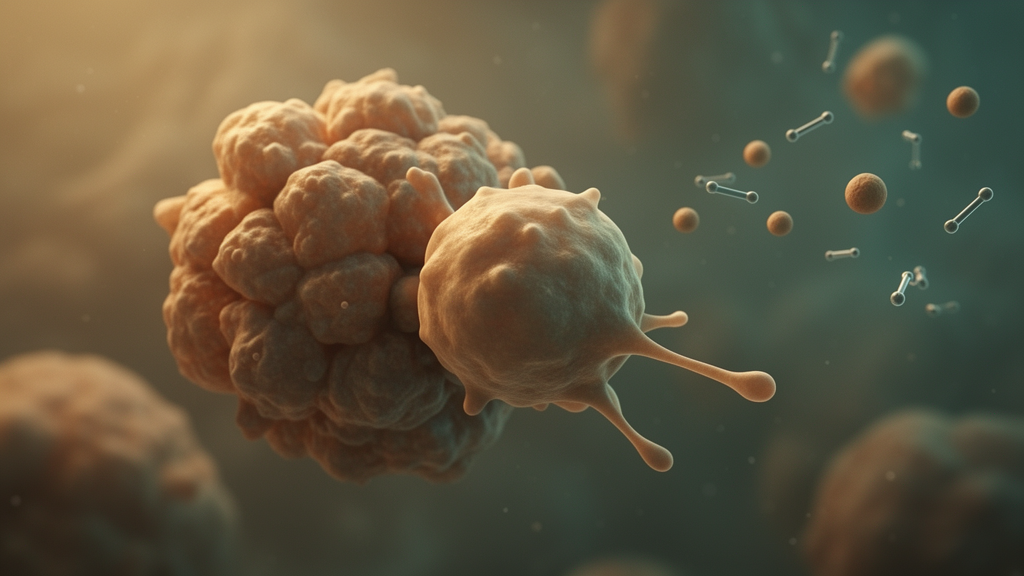
Cancer has long been framed as a disease of damaged DNA, a story written in mutations that accumulate and drive cells toward uncontrolled growth. But a comprehensive new review published in Experimental & Molecular Medicine argues that this genetic narrative, while essential, is incomplete. A team of researchers led by Yoojeong Seo, Jinho Jang and Jae-Il Park of The University of Texas MD Anderson Cancer Center synthesizes decades of evidence showing that tumor cells possess a remarkable and dangerous talent: the ability to change their identity. This property, known as cancer cell plasticity, allows tumor cells to reversibly switch between distinct cellular states, and it has emerged as a central mechanism driving tumor progression, metastasis and, most troublingly, resistance to therapy.
Cell plasticity is not a cancer-specific invention. In healthy adult tissues, cells retain a degree of flexibility that supports regeneration and repair. Under injury or environmental stress, differentiated cells can dedifferentiate into progenitor-like states, transdifferentiate into other lineages or reawaken developmental programs. Cellular identity is constrained by lineage-specific regulatory networks, but it is not permanently fixed. What cancer does is hijack these normally adaptive programs. Tumor cells exploit dedifferentiation, transdifferentiation, epithelial-mesenchymal transition and stem cell-like reprogramming to adapt to hostile microenvironments and therapeutic pressure, generating a form of intratumoral diversity that genetic mutations alone cannot explain.
The review situates plasticity alongside, rather than in opposition to, classical models of clonal evolution. Genetic alterations, including mutations in tumor suppressors and developmental regulators such as TP53, RB1, APC and KRAS, establish a permissive background by disrupting lineage constraints. Yet mutations are often insufficient to account for the rapid, reversible phenotypic changes observed under treatment. Instead, epigenetic remodeling through DNA methylation, histone modifications and chromatin accessibility changes enables dynamic state transitions without altering the underlying DNA sequence. These mechanisms are particularly important for establishing drug-tolerant states and promoting lineage reprogramming, allowing cells to survive chemotherapy, targeted therapy and immunotherapy and then resume proliferation once the pressure subsides.
Some of the most vivid examples come from lineage switching. In EGFR-mutant lung adenocarcinoma, targeted therapy can drive transformation into small-cell lung cancer-like states marked by neuroendocrine features, loss of lineage fidelity and aggressive behavior. In prostate cancer, treatment with androgen receptor-targeted therapies can push tumors toward AR-low or AR-null neuroendocrine prostate cancer, an extreme form of lineage plasticity linked to RB1 loss, activation of neural transcriptional programs such as ASCL1 and epigenetic reprogramming mediated by EZH2. Melanoma cells shift between differentiated MITF-high states and dedifferentiated, invasive AXL-high states, with the latter showing increased resistance to both targeted therapy and immune checkpoint blockade. In glioblastoma, radiation stress drives a proneural-to-mesenchymal transition involving STAT3, C/EBP-beta and NF-kappa-B signaling that is strongly associated with recurrence and poor prognosis.
The mechanisms underlying these transitions form an interconnected regulatory web. Conserved developmental signaling pathways, including TGF-beta, Wnt/beta-catenin and Notch, act as master conductors of epithelial-mesenchymal transition, stemness and differentiation. Transcription factors such as SNAIL, ZEB and TWIST repress epithelial genes while activating mesenchymal programs, and lineage-defining factors from the SOX and KLF families regulate stem-like states. Remarkably, even the cell’s physical architecture participates: loss of CRACD, a regulator of actin dynamics, disrupts the cytoskeleton and triggers neuroendocrine plasticity by suppressing YAP-NOTCH signaling while driving EZH2-dependent chromatin remodeling that represses antigen-presentation pathways and facilitates immune evasion. Noncoding RNAs add another layer, with the miR-200 family forming a feedback loop with ZEB factors that controls the balance between epithelial and mesenchymal states.
The tumor microenvironment acts as an external choreographer of plasticity. Hypoxia stabilizes hypoxia-inducible factors that activate programs of stemness, metabolic reprogramming and EMT, enriching invasive cell populations within oxygen-starved niches. Tumor-associated macrophages secrete TGF-beta, IL-6 and TNF-alpha, reinforcing EMT and immune evasion. Cancer-associated fibroblasts deposit and remodel extracellular matrix, increasing tissue stiffness and activating mechanotransduction pathways such as integrin-FAK-Src and YAP/TAZ that induce EMT and invasion. Endothelial cells contribute angiocrine signals, including Notch ligands and IL-6, that maintain cancer stem cell phenotypes. The extracellular matrix itself is not a passive scaffold but an active regulator whose composition and mechanics drive phenotypic switching and metastatic potential.
Plasticity also shapes how tumors begin. In the intestine, activation of NF-kappa-B signaling can cooperate with Wnt pathway activation to induce dedifferentiation of non-stem epithelial cells into tumor-initiating cells, expanding the pool of cells capable of starting a tumor. During colonic injury, epithelial cells undergo YAP/TAZ-dependent reprogramming toward a fetal-like regenerative state that is normally transient and repair-oriented. But when oncogenic alterations such as APC loss or KRAS activation are present, these regenerative programs can become aberrantly stabilized, supporting neoplastic transformation. In the pancreas, chronic inflammation promotes acinar-to-ductal metaplasia, and persistent inflammation combined with oncogenic KRAS drives progression toward pancreatic ductal adenocarcinoma. Tumor initiation, the review argues, is determined not only by the cell of origin but by the plastic potential of the transformed cell and its microenvironmental context.
Metastasis, too, is increasingly understood as a plasticity-driven performance rather than the work of a fixed population of metastatic cells. During invasion, epithelial tumor cells acquire partial or mesenchymal traits that enhance motility, and hybrid epithelial-mesenchymal states, which retain both migratory and proliferative capacities, confer greater metastatic potential than fully mesenchymal states. Circulating tumor cells in hybrid states survive shear stress and oxidative damage more effectively, and clustered circulating cells show even greater metastatic efficiency. Upon reaching distant organs, many cells must reverse the process through mesenchymal-epithelial transition to regain proliferative capacity and colonize new tissue. A subset of disseminated cells enters dormant, drug-resistant states and can later reactivate, producing metastatic relapse years after clinical remission.
Therapy resistance is where plasticity exacts its greatest clinical toll. Rather than relying on the slow selection of pre-existing mutations, tumor cells can adopt transient drug-tolerant persister states characterized by reduced proliferation, altered metabolism and activated stress-response pathways. These cells harbor no stable resistance-conferring mutations, yet they survive treatment and reenter the cell cycle upon drug withdrawal, giving rise to relapse. Epigenetic reprogramming underpins this reversibility, and the review highlights emerging therapeutic strategies that target it directly. EZH2 inhibition can reverse lineage-infidelity programs in treatment-resistant prostate cancer models and restore sensitivity to androgen receptor-directed therapy. LSD1 inhibition can suppress ASCL1-dependent neuroendocrine plasticity in small-cell lung cancer and restore TP53 signaling in neuroendocrine prostate cancer, while BET protein inhibition blocks treatment-emergent neuroendocrine lineage programs. Because these regulators can have context-dependent effects on cell identity, the authors emphasize that biomarker-guided combinations and careful therapeutic timing will be essential.
Perhaps the most transformative development is technological. Single-cell RNA sequencing has revealed that cancer cells occupy a continuum of transcriptional states rather than discrete fixed identities, exposing rare transitional populations that bulk profiling obscures. But snapshots cannot distinguish interconverting states from independent subclones, which has motivated lineage-recording technologies such as KP-Tracer and iTracer, in which CRISPR-Cas9-mediated barcode editing generates heritable scars that reconstruct clonal history alongside transcriptional profiles. Spatial transcriptomics then restores the anatomical context, revealing that tumor cell heterogeneity is organized across structured tumor regions and linking plastic states to specific microenvironmental niches, with computational tools such as cell2location and RCTD projecting single-cell states onto intact tissue maps. Framed through Waddington’s classical landscape, in which cells roll across valleys of stable identity, plasticity emerges not as a loss of differentiation but as regulated movement between alternative states. The integrated picture is one of cancer as a dynamically adaptive system, and the authors argue that pharmacological strategies designed to block maladaptive state transitions, eliminate drug-tolerant and dormant populations and disrupt the microenvironmental signals sustaining adaptability may offer a path toward preventing metastasis and achieving more durable clinical responses.
Subject of Research: Cancer cell plasticity and its role in tumor progression, metastasis and therapy resistance
Article Title: Cell plasticity in cancer and therapy resistance
Article References: Seo, Y., Jang, J., & Park, J.-I. (2026). Cell plasticity in cancer and therapy resistance. Experimental & Molecular Medicine. https://doi.org/10.1038/s12276-026-01869-y
Image Credits: AI Generated
DOI: 10.1038/s12276-026-01869-y
Keywords: cancer cell plasticity, therapy resistance, epithelial-mesenchymal transition, lineage plasticity, epigenetic reprogramming, tumor microenvironment, drug-tolerant persister cells, single-cell transcriptomics, spatial transcriptomics, cancer stem cells, metastasis, Waddington landscape
Cite Scienmag News
Nathaniel Bowman. (October 8, 2026). How Shapeshifting Tumor Cells Outsmart Cancer Treatment. Scienmag. https://scienmag.com/how-shapeshifting-tumor-cells-outsmart-cancer-treatment/
Nathaniel Bowman. "How Shapeshifting Tumor Cells Outsmart Cancer Treatment." Scienmag, 8 October 2026, https://scienmag.com/how-shapeshifting-tumor-cells-outsmart-cancer-treatment/. Accessed 8 October 2026.
Nathaniel Bowman. "How Shapeshifting Tumor Cells Outsmart Cancer Treatment." Scienmag. October 8, 2026. https://scienmag.com/how-shapeshifting-tumor-cells-outsmart-cancer-treatment/


