

How Shapeshifting Tumor Cells Outsmart Cancer Treatment
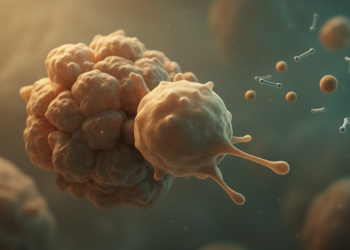
A new review explains how tumor cells reversibly switch identities through epigenetic and microenvironmental programs, driving metastasis and therapy resistance.
A new review explains how tumor cells reversibly switch identities through epigenetic and microenvironmental programs, driving metastasis and therapy resistance.

Researchers in China have shown that the deubiquitinating enzyme USP45 promotes hepatocellular carcinoma progression by removing K48-linked ubiquitin chains from ...
New research shows that the TGF-β2 signaling molecule steers metastatic colon cancer cells toward autophagy-mediated resistance to the chemotherapy drug ...
A clinical trial in ten cats with spontaneous mammary carcinoma shows that gold nanorod-mediated plasmonic photothermal therapy significantly reduced circulating ...
A comprehensive review in Molecular Cancer details how chemical modifications to RNA molecules regulate tumor metastasis and therapy resistance, opening ...
A new review in Molecular Cancer positions patient-derived organoids as living systems for mapping how cancers tolerate, persist through, and ...
New research shows that myeloid-derived suppressor cells drive stem-like properties in esophageal squamous cell carcinoma through an IL-1 beta-regulated HNF1A/CXCL1 ...
A new review proposes a Dynamic Precision Oncology framework that monitors pancreatic cancer's evolving resistance mechanisms through longitudinal genomic, liquid ...
A new review in Cancer Cell International details how the tumor suppressor RUNX3 regulates apoptosis, drug efflux, cell cycle control, ...
Marking the 25th anniversary of Nature Reviews Cancer, six leading researchers assess the transformative advances and unfulfilled expectations of a ...

Embark on a thrilling journey of discovery with Scienmag.com—your ultimate source for cutting-edge breakthroughs. Immerse yourself in a world where curiosity knows no limits and tomorrow’s possibilities become today’s reality!