


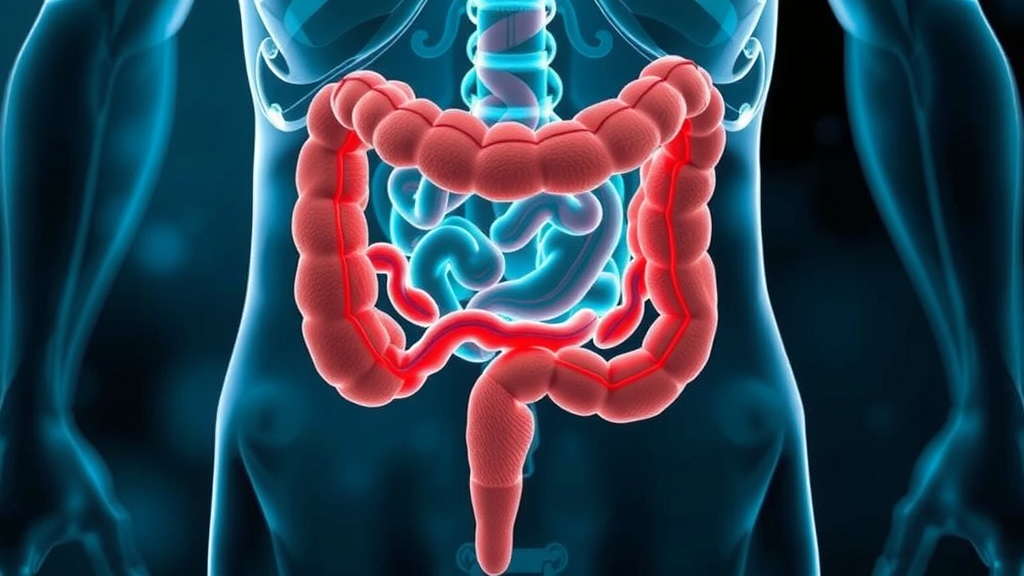
The enzyme LRRK2 has long occupied a strange crossroads in biomedical research, sitting at the intersection of two seemingly unrelated conditions: Crohn’s disease, a chronic inflammatory disorder of the digestive tract, and Parkinson’s disease, a neurodegenerative movement disorder. Genetic studies have repeatedly shown that variants in the LRRK2 gene influence the risk of developing both diseases, fueling speculation that the protein might represent a shared molecular thread connecting gut inflammation with brain degeneration. Now, a team of French researchers has tested one of the most fundamental predictions of that hypothesis directly in human tissue, and the results are surprising: although LRRK2 is dramatically increased in the colons of patients with Crohn’s disease, it is not increased in Parkinson’s disease, nor in isolated REM sleep behavior disorder, a condition widely regarded as an early prodromal stage of Parkinsonism. The findings, published as a correspondence article in Acta Neuropathologica, complicate the idea that LRRK2 expression in the gut is a common feature of Parkinson’s disease and instead point toward inflammation as the dominant driver of the enzyme’s colonic upregulation.
The study was carried out by Johannes van der Haas, Marine Mantel, Laurène Leclair-Visonneau, Pascal Derkinderen, and colleagues working at Nantes Université, the University Hospital of Nantes, and the University Hospital of Angers, within the Enteric Nervous System in Gut and Brain Disorders research group (Inserm U1235). The team set out to quantify LRRK2 expression in colon biopsies obtained from patients with Crohn’s disease, patients with established Parkinson’s disease, patients with idiopathic REM sleep behavior disorder (iRBD), and healthy controls. Idiopathic REM sleep behavior disorder, in which affected individuals physically act out their dreams because the normal muscle atonia of REM sleep is lost, is one of the strongest clinical predictors of future Parkinson’s disease or related Lewy body disorders, making it a valuable population in which to search for the earliest peripheral markers of the disease process.
LRRK2, which stands for leucine-rich repeat kinase 2, is a large, multifunctional protein with both kinase and GTPase domains. Mutations in its gene are among the most common known genetic causes of familial and sporadic Parkinson’s disease, and pharmacological inhibitors of LRRK2 kinase activity are currently being evaluated in clinical trials. At the same time, genome-wide association studies identified LRRK2 as a susceptibility gene for Crohn’s disease, and functional work has shown that the protein participates in the interferon-gamma response and in host defense against pathogens. Macrophages exposed to interferon-gamma upregulate LRRK2 through an ERK5-dependent signaling pathway, and the protein modulates cytokine production in human monocytes and macrophages. This immunological pedigree made the gut, with its dense population of immune cells and its intimate contact with the microbiota, a natural place to look for LRRK2 dysregulation in disease.
Earlier work from the same Nantes group had already produced an unexpected result along these lines. In a 2021 study published in Acta Neuropathologica, the researchers reported that LRRK2 was actually reduced, not increased, in the gut of patients with Parkinson’s disease. A follow-up study in 2023 mapped LRRK2 expression in normal and pathological human gut tissue and in rodent enteric neural cell lines, clarifying which cell types produce the protein under physiological conditions. The new correspondence extends this line of investigation in two important directions. First, it establishes a positive control: Crohn’s disease, an unambiguously inflammatory bowel condition, where the hypothesis predicts upregulation. Second, it examines idiopathic REM sleep behavior disorder, allowing the researchers to ask whether colonic LRRK2 changes emerge before the motor symptoms of Parkinson’s disease appear.
The answer to the first question was clear. In colon biopsies from patients with Crohn’s disease, LRRK2 expression was significantly increased compared with healthy controls. This result fits seamlessly with a substantial body of experimental literature. Studies in cell culture have demonstrated that the inflammatory cytokine interferon-gamma induces LRRK2 expression in macrophages, and that tumor necrosis factor-alpha and interferon-gamma cooperate to modulate cytokine signaling in human monocytic cells. Mouse experiments have reinforced the connection: animals lacking LRRK2 show attenuated colitis progression, with better resolution of inflammation and restored homeostasis of the gut microbiota, while mice carrying LRRK2 mutations develop parkinsonian features when challenged with mild chronic colitis through activation of the TNF-alpha pathway. The elevation of LRRK2 in inflamed Crohn’s tissue is exactly what one would expect if the protein is an inducible component of the mucosal immune response.
The answer to the second question was more provocative. Colonic LRRK2 expression was not increased in patients with Parkinson’s disease, and it was not increased in patients with idiopathic REM sleep behavior disorder either. In other words, even at the prodromal stage of the Lewy body disease spectrum, when alpha-synuclein pathology is thought to be spreading through the peripheral nervous system and gastrointestinal symptoms are already common, the colonic upregulation of LRRK2 that a shared gut-brain mechanism would predict is simply absent. The authors had previously shown that LRRK2 is reduced in the Parkinson’s disease gut; the new data confirm that this is not merely a medication effect or a late-stage artifact, because the same pattern of non-elevation holds in drug-naïve or early prodromal iRBD patients who have not yet developed Parkinsonism.
This dissociation carries real conceptual weight for the field. The idea that Parkinson’s disease begins in the gut was propelled by landmark neuropathological studies showing that phosphorylated alpha-synuclein, the hallmark protein aggregate of Lewy body disorders, is distributed across multiple organs, including the gastrointestinal tract, in affected individuals. The presence of enteric alpha-synuclein pathology early in the disease course, together with the well-documented burden of gastrointestinal dysfunction in Parkinson’s patients, some studies showing that objective colonic dysfunction is far more prevalent than subjective constipation, gave rise to the notion that environmental or immunological insults in the gut might trigger or accelerate the neurodegenerative process. If colonic inflammation were a common initiating factor, one might expect inflammatory response genes such as LRRK2 to be activated in the Parkinson’s colon. The new findings argue against that simple model: the colonic biology of Parkinson’s disease, at least as reflected in LRRK2 expression, is distinct from the colonic biology of overt inflammatory bowel disease.
The study also speaks to an epidemiological puzzle. Meta-analyses encompassing more than 13.4 million individuals have reported that inflammatory bowel disease is associated with an increased risk of subsequently developing Parkinson’s disease, and experimental work suggests that mild chronic colitis can exacerbate intracerebral inflammation in mouse models of the disease through LRRK2-mediated regulation of NF-kappaB activation and inhibition of the antioxidant regulator Nrf2. How can inflammatory bowel disease raise Parkinson’s risk if the Parkinson’s colon does not show LRRK2 upregulation? One possibility is that the relevant inflammatory signal is transient or occurs in a specific window, or that only a subset of inflammatory bowel disease patients, perhaps those with particular genetic backgrounds or microbiome configurations, experience the gut-to-brain propagation that animal models simulate. Another possibility, highlighted by the Nantes group’s related work, is that subtler immune changes are present in the prodromal gut. Indeed, the same consortium recently reported elevated levels of the inflammatory cytokines interleukin-1beta and interleukin-8 in the colon of patients with isolated REM sleep behavior disorder, even in the absence of measurable changes in intestinal permeability. Cytokine elevation without LRRK2 induction suggests that prodromal Parkinson’s involves a distinctive, low-grade inflammatory signature rather than a full-throttle interferon-driven response of the kind seen in Crohn’s disease.
From a methodological standpoint, the study benefits from a carefully assembled clinical cohort. Sigmoid biopsies from the iRBD, Parkinson’s disease, and control groups were collected under a protocol approved by the local Committee for the Protection of Persons (Comité de Protection des Personnes Ouest VI) and registered on ClinicalTrials.gov under identifier NCT04652843. Colonic biopsies from Crohn’s disease patients were obtained through the biobank federation of the University Hospital of Nantes under approval number DC-2008-402. The work was supported by grants from Nantes University Hospital, France Parkinson, SFN/Novartis, and the Fondation de France, with PhD and fellowship support for several of the young investigators involved. The authors declare no competing interests, and the data supporting the findings are available from the corresponding author upon reasonable request.
For the broader research community, the message is one of disciplined specificity. LRRK2 appears to be a sensitive readout of mucosal inflammation, a marker that lights up robustly in Crohn’s disease where interferon-gamma and related cytokine cascades are active, but it is not a universal marker of the gut involvement that characterizes Parkinsonian disorders. Therapeutic strategies that target LRRK2 kinase activity, currently in development for Parkinson’s disease, will therefore need to reckon with the possibility that the protein’s expression and function in the Parkinson’s gut follow rules different from those governing it in inflammatory bowel disease. Conversely, for Crohn’s disease researchers, the confirmed upregulation of LRRK2 in inflamed colon tissue strengthens the case for exploring LRRK2-targeted anti-inflammatory approaches, an idea already supported by the mitigating effects of LRRK2 deficiency in experimental colitis. As the search for peripheral biomarkers of prodromal Parkinson’s disease intensifies, this study provides a sober and valuable data point: the inflammatory fingerprint of Crohn’s disease is real and measurable in the colon, but it does not stamp itself onto the prodromal Parkinsonian gut, at least not through LRRK2. Untangling what does change in that tissue, cytokine by cytokine and cell type by cell type, remains the next great challenge for the gut-brain axis in neurodegeneration.
Subject of Research: Colonic expression of the LRRK2 protein in Crohn's disease, Parkinson's disease and idiopathic REM sleep behavior disorder
Article Title: Colonic LRRK2 expression is increased in Crohn’s disease but not in Parkinson’s disease and idiopathic RBD
Article References: van der Haas, J., Mantel, M., Sellier-Montaigne, L., de Guilhem de Lataillade, A., Durand, T., Oullier, T., Le Berre, C., Letournel, F., Rolli-Derkinderen, M., Leclair-Visonneau, L., & Derkinderen, P. (2026). Colonic LRRK2 expression is increased in Crohn’s disease but not in Parkinson’s disease and idiopathic RBD. Acta Neuropathologica, 152(1), Article 38. https://doi.org/10.1007/s00401-026-03087-2
Image Credits: AI Generated
DOI: 10.1007/s00401-026-03087-2
Keywords: LRRK2, Crohn's disease, Parkinson's disease, REM sleep behavior disorder, colon, inflammation, alpha-synuclein, gut-brain axis, enteric nervous system, interferon-gamma, biomarkers, neurodegeneration
Cite Scienmag News
Diana Fleming. (September 20, 2026). Gut Enzyme LRRK2 Rises in Crohn’s Disease but Not in Parkinson’s or REM Sleep Disorder. Scienmag. https://scienmag.com/gut-enzyme-lrrk2-rises-in-crohns-disease-but-not-in-parkinsons-or-rem-sleep-disorder/
Diana Fleming. "Gut Enzyme LRRK2 Rises in Crohn’s Disease but Not in Parkinson’s or REM Sleep Disorder." Scienmag, 20 September 2026, https://scienmag.com/gut-enzyme-lrrk2-rises-in-crohns-disease-but-not-in-parkinsons-or-rem-sleep-disorder/. Accessed 4 October 2026.
Diana Fleming. "Gut Enzyme LRRK2 Rises in Crohn’s Disease but Not in Parkinson’s or REM Sleep Disorder." Scienmag. September 20, 2026. https://scienmag.com/gut-enzyme-lrrk2-rises-in-crohns-disease-but-not-in-parkinsons-or-rem-sleep-disorder/


