


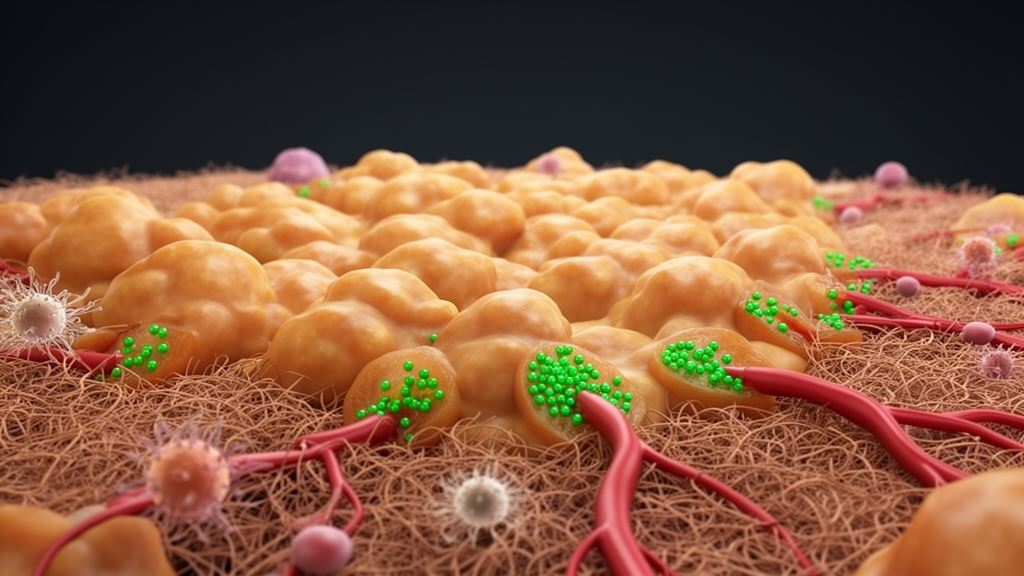
A tumor is never just a ball of malignant cells. It is a crowded, constantly renegotiated ecosystem in which cancer cells, immune cells, fibroblasts, blood vessels and a dense meshwork of signaling molecules compete and cooperate in ways that ultimately decide whether a patient responds to treatment. A new review published in the Journal of Translational Medicine argues that one family of proteins, long studied as intracellular tuning knobs for G protein-coupled receptor signaling, deserves far more attention as a master regulator of that ecosystem. The proteins in question are the Regulators of G protein signaling, or RGS proteins, and the review, led by researchers at Tongji Hospital of Huazhong University of Science and Technology in Wuhan, lays out a comprehensive case that these molecules help remodel the tumor microenvironment in ways that foster immunosuppression and resistance to immunotherapy.
To understand why RGS proteins matter, it helps to start with the signaling system they control. G protein-coupled receptors, or GPCRs, form the largest family of cell-surface receptors in the human genome and translate external cues, from chemokines to hormones, into internal commands. When a ligand binds a GPCR, the associated G protein swaps its bound GDP for GTP, switching the pathway on. RGS proteins act as the off switch. Each carries a conserved RGS domain that functions as a GTPase-activating protein, dramatically accelerating the hydrolysis of GTP back to GDP on the G alpha subunit and thereby terminating the signal. In effect, RGS proteins determine how long a GPCR signal stays lit, and because GPCRs sit upstream of cascades such as MAPK, PI3K-AKT and Rho signaling, that timing decision ripples through nearly every aspect of cell behavior.
The review emphasizes that the roughly forty members of the RGS family are not interchangeable. Their domain architectures vary widely, incorporating DEP, PH, PDZ, GGL and other modules that tether them to specific membranes, scaffolds and receptor complexes, and this structural diversity underlies their context-dependent roles in cancer. In some settings, individual RGS proteins behave as tumor suppressors, damping proliferative signals. In others, they promote malignancy, enhancing invasion, metastasis, stem-like properties and resistance to chemotherapy or targeted drugs. The authors frame this duality as a central challenge for the field: therapeutic strategies cannot assume that blocking or boosting RGS activity will have a uniform effect, because the same protein can play opposite roles in different tumor types or even at different stages of the same disease.
What elevates this review beyond a conventional catalog of cancer-associated signaling molecules is its focus on the non-malignant half of the tumor. Growing evidence, the authors argue, shows that RGS proteins expressed in immune and stromal cells broadly shape the composition and behavior of the tumor microenvironment. Tumor-associated macrophages, myeloid-derived suppressor cells, dendritic cells, regulatory T cells, natural killer cells, cytotoxic T lymphocytes and cancer-associated fibroblasts all depend on GPCR-driven chemokine and chemoattractant signaling to find their way into tumors, to polarize into particular functional states and to communicate with one another. By tuning the duration and intensity of those signals, RGS proteins can influence which cell populations accumulate, which suppressive programs they adopt and how effectively anti-tumor immune responses are mounted or extinguished.
The practical consequence of this remodeling is the formation of what the authors call an immunosuppressive niche, a localized microenvironment in which immune evasion becomes the default state. Chemokine gradients governed by RGS-regulated signaling help determine whether cytotoxic T cells are recruited into tumor tissue or excluded from it, whether macrophages adopt an inflammatory or a wound-healing, tumor-promoting phenotype, and whether regulatory T cells and myeloid suppressor cells are drawn in to dampen immunity. Because immune checkpoint blockade, the class of therapies behind some of the most striking recent advances in oncology, depends on pre-existing anti-tumor T cell activity, a microenvironment sculpted by RGS signaling can quietly undermine even the best antibodies. The review positions RGS proteins, therefore, not merely as modulators of tumor cell intrinsic behavior but as potential determinants of who responds to immunotherapy and who does not.
The molecular detail assembled in the review illustrates how deep this influence runs. RGS proteins intersect with pathways as varied as NF-kappaB-driven inflammatory transcription, TGF-beta signaling, the STAT family of transcription factors, epithelial-mesenchymal transition programs and the maintenance of cancer stem cells, the slow-dividing subpopulations implicated in relapse and treatment resistance. They also connect to the extracellular matrix, with cancer-associated fibroblasts using RGS-modulated Rho and related signaling to remodel matrix stiffness and architecture, physical properties now recognized as barriers to immune infiltration. In the authors’ synthesis, these threads converge on a single theme: RGS proteins operate at junctions where malignant cell behavior and microenvironmental conditioning meet, making them unusually well placed to coordinate the two.
Translating that biology into therapy is the review’s second major theme, and here the authors are candid about both the promise and the difficulty. Directly drugging protein-protein interactions such as the contact between an RGS domain and its G alpha substrate has historically been hard, and the field has relied on indirect approaches: exploiting upstream GPCRs whose signals RGS proteins terminate, targeting the transcriptional or post-translational regulation of specific RGS family members, or designing molecules that disrupt RGS interactions with their binding partners. The review also surveys emerging modalities, including the possibility of combining RGS-directed strategies with immune checkpoint blockade, chimeric antigen receptor T cell therapy and conventional cytotoxic or targeted agents, on the logic that normalizing microenvironmental signaling could convert cold, immune-excluded tumors into ones that respond to immunotherapy.
The authors, Daluo Mei, Hongtao Zhu, Kai Shu and Suojun Zhang, along with their colleagues, ground their synthesis in large-scale genomic resources such as The Cancer Genome Atlas and the Gene Expression Omnibus, which have made it possible to correlate RGS expression patterns with immune infiltration signatures, clinical outcomes and treatment response across tumor types. That data-rich perspective strengthens one of the review’s key arguments: RGS proteins should be viewed as biomarkers as well as targets. Expression signatures of particular family members may eventually help clinicians stratify patients, predicting, for example, which tumors are likely to harbor immunosuppressive, RGS-driven microenvironments and therefore require combination approaches rather than checkpoint blockade alone.
None of this diminishes the obstacles. Context dependence cuts both ways: a strategy that suppresses a tumor-promoting RGS protein in one cancer could disable a tumor-suppressive one in another, and the widespread expression of RGS proteins in normal tissues raises the specter of on-target toxicity. The review also notes that much of the evidence linking specific RGS proteins to specific microenvironmental phenotypes comes from correlative and preclinical work, and that mechanistic validation in human tumors remains incomplete. The authors call for deeper structural studies of RGS domain interactions, better chemical probes and more sophisticated models of the tumor immune microenvironment to move the field from association to causation.
Even so, the central message is likely to resonate at a moment when the oncology community is searching for ways to extend the benefits of immunotherapy to the majority of patients who still do not respond. For two decades, RGS proteins were studied mostly as cellular housekeeping, the brakes on GPCR signaling. The new synthesis reframes them as orchestrators of the tumor’s social environment, molecules whose activity helps decide which immune cells enter a tumor, what those cells do once they arrive and whether the resulting ecosystem supports or sabotages anti-cancer immunity. If even a fraction of the therapeutic opportunities the review outlines can be realized, the humble GTPase-accelerating domain may become one of the more consequential targets in the next generation of cancer combination therapy.
Subject of Research: The role of RGS proteins in remodeling the tumor microenvironment and modulating tumor immunity
Article Title: RGS protein–orchestrated microenvironment remodeling in tumor immunity: from mechanism to therapy
Article References: Mei, D., Zhu, H., Shu, K., & Zhang, S. (2026). RGS protein–orchestrated microenvironment remodeling in tumor immunity: from mechanism to therapy. Journal of Translational Medicine. https://doi.org/10.1186/s12967-026-09073-2
Image Credits: AI Generated
DOI: 10.1186/s12967-026-09073-2
Keywords: RGS proteins, GPCR signaling, tumor microenvironment, tumor immunity, immunosuppression, immune evasion, immunotherapy resistance, cancer-associated fibroblasts, tumor-associated macrophages, immune checkpoint blockade, targeted therapy, Journal of Translational Medicine
Cite Scienmag News
Nathaniel Bowman. (October 9, 2026). RGS Proteins Emerge as Hidden Architects of the Tumor Microenvironment. Scienmag. https://scienmag.com/rgs-proteins-emerge-as-hidden-architects-of-the-tumor-microenvironment/
Nathaniel Bowman. "RGS Proteins Emerge as Hidden Architects of the Tumor Microenvironment." Scienmag, 9 October 2026, https://scienmag.com/rgs-proteins-emerge-as-hidden-architects-of-the-tumor-microenvironment/. Accessed 9 October 2026.
Nathaniel Bowman. "RGS Proteins Emerge as Hidden Architects of the Tumor Microenvironment." Scienmag. October 9, 2026. https://scienmag.com/rgs-proteins-emerge-as-hidden-architects-of-the-tumor-microenvironment/


