

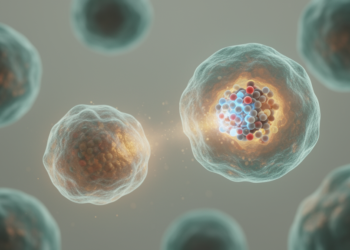
Gene brake ZMYND8 drives T-cell exhaustion and blocking it may strengthen immunotherapy
St. Jude scientists found that deleting the gene ZMYND8 relieves CD8-positive T-cell exhaustion and synergizes with immunotherapy to improve anti-tumor ...
St. Jude scientists found that deleting the gene ZMYND8 relieves CD8-positive T-cell exhaustion and synergizes with immunotherapy to improve anti-tumor ...

A new review outlines how drug-tolerant persister cells hidden within minimal residual disease drive cancer relapse and how pathway inhibitors, ...
New research identifies the secreted protein SRPX2 as a molecular switch that stabilizes the TGF-beta receptor to drive metastasis and ...
Danish researchers report that low-level skipping of CD19 exon 2, detectable in pre-treatment RNA-sequencing data, correlates with relapse after anti-CD19 ...
A machine learning analysis of inflammation and metabolism genes across seven lung adenocarcinoma cohorts identifies the calcium pump gene ATP2A2 ...
A new review explains why BCG immunotherapy fails in some bladder cancer patients and outlines emerging combination strategies designed to ...
New research shows that oxygen-starved neuroblastoma cells stabilize HIF-1α, which directly activates PD-L1 transcription and drives CD8+ T-cell dysfunction, a ...
A new multi-omics framework proposes that tumor immunogenicity emerges only when epigenetic permissiveness, DNA damage response configuration and immune activation ...
An international research team reports that the sphingosine-1-phosphate signaling long thought to operate inside colorectal cancer cells instead builds an ...
A single-cell analysis of nearly half a million cells from pancreatic tumors reveals how evolving clones reshape their DNA to ...

Embark on a thrilling journey of discovery with Scienmag.com—your ultimate source for cutting-edge breakthroughs. Immerse yourself in a world where curiosity knows no limits and tomorrow’s possibilities become today’s reality!