


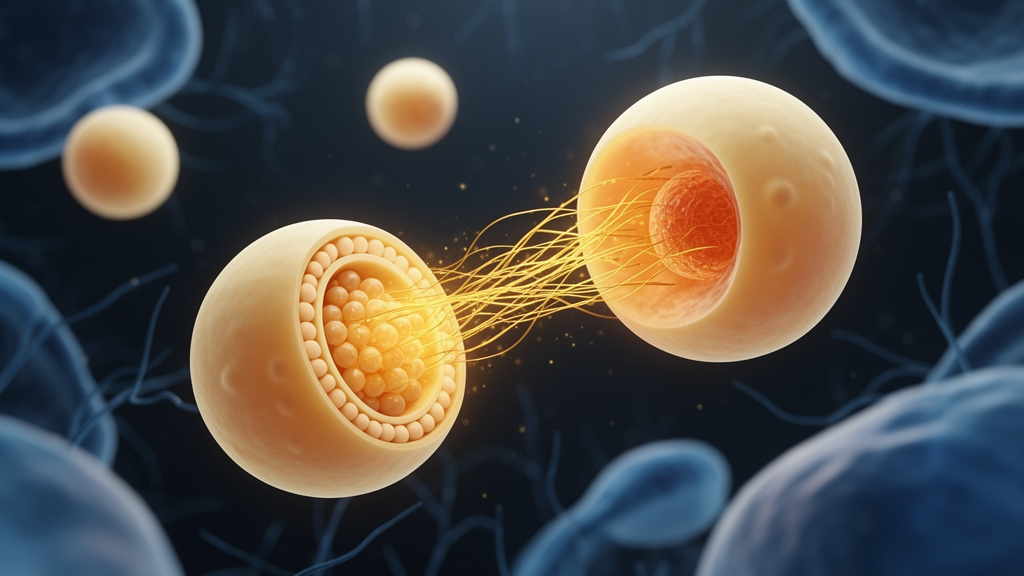
Lipid nanoparticles, the delivery platform behind the most successful mRNA medicines, are being repositioned as a vehicle for attacking one of cancer’s most important targets: the tumour suppressor protein p53. A new review in Cancer Nanotechnology argues that p53, which is directly mutated or functionally silenced through pathway dysregulation in more than half of human cancers, offers a unifying therapeutic target that could bring coherence to a fragmented cancer nanomedicine field.
The review, published on 23 October 2026, traces the evolution of lipid nanoparticles from liposomal chemotherapy to the cornerstone of mRNA-based therapeutics, describing them as the most clinically validated nanocarrier platform in oncology with multiple FDA-approved formulations. Its central argument is that reframing LNP development around p53 biology could yield a mechanistically coherent strategy for restoring tumour-suppressor function across diverse tumour types.
At the heart of the analysis is a synthesis of p53-directed nucleic acid strategies that LNPs can deliver. These include p53 mRNA to restore wild-type p53 in tumours that have lost it, siRNA to silence dominant-negative mutant p53, miR-34a mimics that engage the p53 downstream axis, and CRISPR-Cas9 components aimed at correcting TP53 itself. Each approach depends on the same core engineering problem: getting fragile genetic cargo intact into tumour cells and releasing it where it can act.
That problem turns on the ionizable lipids at the platform’s core. According to the review, ionizable lipids with optimized pKa values between 6.0 and 7.0 enable efficient endosomal escape, the step that determines whether encapsulated RNA actually reaches the cytoplasm. The review connects this physicochemical tuning directly to the performance of p53 mRNA and miR-34a therapeutics in oncology settings.
Preclinical evidence summarized in the review indicates that p53 mRNA-LNPs can restore wild-type p53 function in TP53-deficient tumours, reprogramming the cell cycle and sensitizing cancers to mTOR inhibition and immune checkpoint blockade. The review also describes emerging preclinical and early exploratory p53 mRNA-LNP programs in hepatocellular carcinoma, non-small cell lung cancer, and pancreatic cancer. These remain preclinical or early-stage findings, and the review is careful to frame them as such rather than as validated clinical results.
The strongest clinical validation cited for the underlying mRNA-LNP platform comes from a different application: personalized neoantigen cancer vaccines. In the KEYNOTE-942 Phase IIb trial, the personalized mRNA vaccine mRNA-4157 demonstrated a 44% reduction in cancer recurrence and earned a Breakthrough Therapy Designation, a milestone the review treats as clinical proof that the mRNA-LNP platform works in oncology, even though that trial did not target p53.
Engineering advances feature prominently in the review’s forward-looking sections. Stimuli-responsive LNPs that react to pH, redox state, or enzyme activity in the tumour microenvironment are described as achieving tumour-selective p53 cargo release, potentially improving therapeutic index over conventional formulations. Artificial intelligence is also reshaping lipid discovery: an AI-driven screen of 1.6 million virtual lipids identified novel structures with superior p53 cargo delivery efficiency, alongside biomimetic approaches that borrow from biological membranes.
Integration with immunotherapy emerges as a recurring theme. The review evaluates how p53 nanotherapy could be combined with immune checkpoint blockade, reflecting evidence that restoring p53 function can reprogram the tumour immune microenvironment rather than acting only on tumour cells directly. This immunological dimension, the author argues, is part of what makes p53 a strategically attractive target for nanoparticle-based delivery.
Significant obstacles remain. The review catalogues persistent challenges including the liver-dominant biodistribution of LNPs, which limits delivery to tumours outside the liver; anti-PEG immunogenicity, which can compromise repeated dosing; manufacturing scalability; and regulatory complexity.
The review’s conclusion is that p53-focused LNP engineering represents a convergent opportunity: a single, biologically grounded therapeutic paradigm that could extend LNP clinical benefit beyond the liver compartment and unify diverse cancer nanomedicine efforts. Whether tumour-suppressor restoration can translate from preclinical promise into demonstrated patient benefit remains the open question the field must now answer.
Subject of Research: Lipid nanoparticle platforms for delivering p53-targeted nucleic acid cancer therapies
Article Title: Lipid nanoparticle platforms for p53-targeted cancer therapy
Article References: Madison, R. (2026). Lipid nanoparticle platforms for p53-targeted cancer therapy. Cancer Nanotechnology. https://doi.org/10.1186/s12645-026-00431-9
Image Credits: AI Generated
DOI: 10.1186/s12645-026-00431-9
Keywords: lipid nanoparticles, p53, cancer nanotechnology, mRNA therapeutics, TP53, siRNA, CRISPR-Cas9, miR-34a, KEYNOTE-942, ionizable lipids, tumour suppressor, immunotherapy
Cite Scienmag News
Nathaniel Bowman. (October 27, 2026). Lipid nanoparticles bring p53-targeted cancer therapy into focus. Scienmag. https://scienmag.com/lipid-nanoparticles-bring-p53-targeted-cancer-therapy-into-focus/
Nathaniel Bowman. "Lipid nanoparticles bring p53-targeted cancer therapy into focus." Scienmag, 27 October 2026, https://scienmag.com/lipid-nanoparticles-bring-p53-targeted-cancer-therapy-into-focus/. Accessed 27 October 2026.
Nathaniel Bowman. "Lipid nanoparticles bring p53-targeted cancer therapy into focus." Scienmag. October 27, 2026. https://scienmag.com/lipid-nanoparticles-bring-p53-targeted-cancer-therapy-into-focus/


