


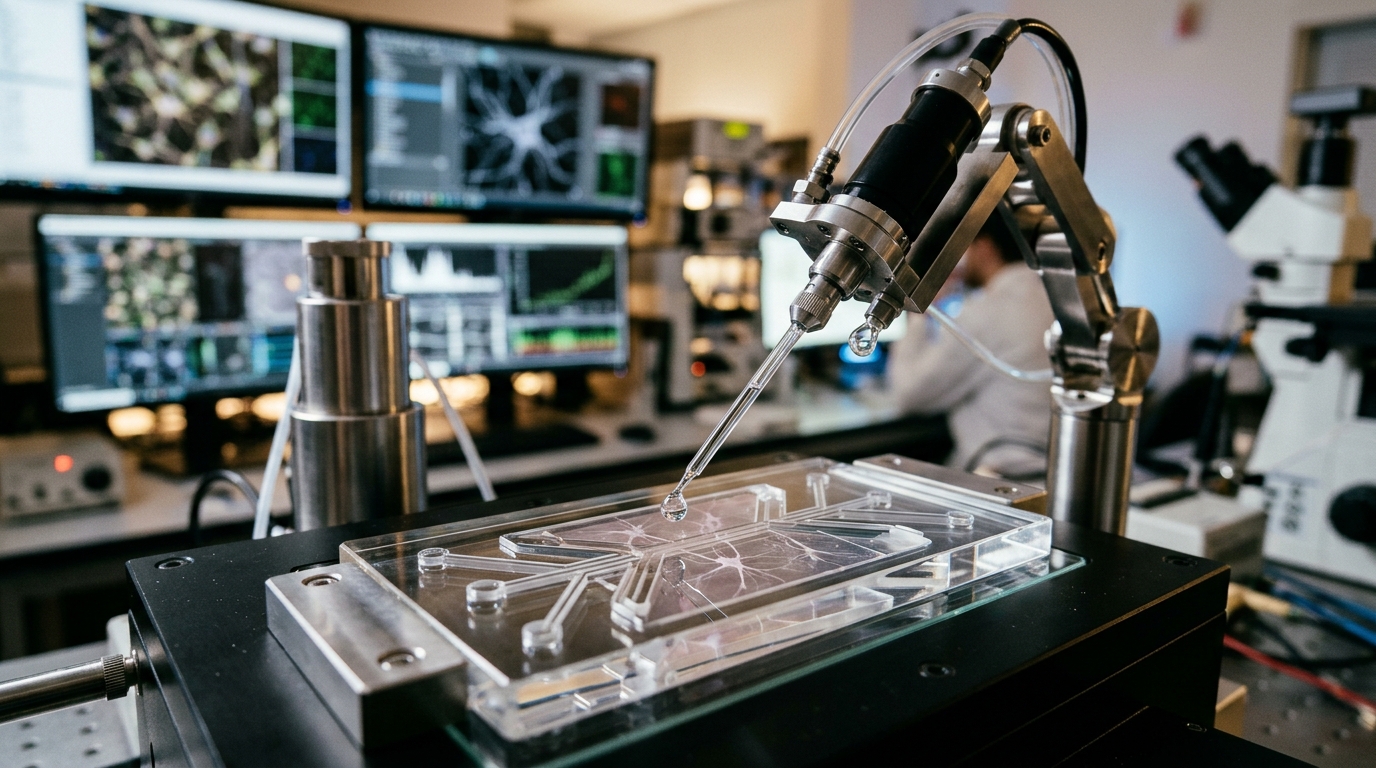
Neurodegenerative diseases such as Alzheimer’s, Parkinson’s and Huntington’s are driven largely by misfolded proteins that stack into amyloid fibrils, together with mitochondrial dysfunction and disrupted cell signalling. Traditional therapeutics have struggled against these processes, in part because the blood brain barrier blocks most drug delivery and in part because targets are poorly specific. A new review argues that a different class of molecules, engineered from scratch rather than borrowed from nature, could change that picture: de novo designed microproteins, small proteins built computationally to bind precisely to the toxic structures that damage neurons.
Microproteins are functional polypeptides encoded by small open reading frames embedded in sequences once dismissed as noncoding RNA. In eukaryotes, proteins of fewer than 100 amino acids have been considered microproteins, and 50 for prokaryotes, though current GENCODE annotation guidelines now extend the category to 150 amino acids. Long overlooked because of limited diversity and computational noise, authentic microproteins are now identified by filtering out false positives arising from random ribosome scanning, non-canonical start codons and sequencing artifacts. Researchers detect ribosome triplet periodicity, assess evolutionary conservation and coding potential with tools such as PhyloCSF and CPAT, and validate candidates by mass spectrometry.
These short molecules have distinctive structural traits that make them attractive drug scaffolds. Their compact architecture carries a high proportion of hydrophobic residues such as leucine, isoleucine, valine and phenylalanine, which stabilize protein cores, alongside basic residues like lysine and arginine that promote electrostatic interactions with negatively charged surfaces. This composition favors stable alpha-helical, amphipathic structures suited to mediating protein-protein interactions. Because microproteins have limited tertiary complexity and few classical ligand-binding pockets, they rarely bind small metabolites; instead they engage larger protein partners as scaffolds, competitive inhibitors or regulatory subunits, modulating the stability, localization or activity of their targets.
In the nervous system, microproteins participate in signal transmission, metabolism and neuronal activity underlying emotional processing. CNS-synthesized examples include Orexin-A, which promotes neuronal excitability and maintains arousal and sleep-wake regulation; Neuropeptide Y, which modulates synaptic transmission and stress-related circuits; and Substance P, which facilitates nociceptive signalling and neuroinflammatory responses. Peripheral microproteins such as interleukin-1, insulin, nesfatin-1 and leptin reach the CNS through the blood brain barrier and contribute to neuronal signalling, energy homeostasis, appetite and metabolic regulation. Mitochondria-derived microproteins including Humanin and MOTS-c preserve mitochondrial integrity, enhance metabolic homeostasis, inhibit apoptosis and reduce oxidative stress, compensating for functional loss observed in Alzheimer’s and Parkinsonian pathology.
The review also emphasizes a role for microproteins in amyotrophic lateral sclerosis and frontotemporal dementia, where liquid-liquid phase separation governs the behavior of RNA-binding proteins. Under pathological conditions, TDP-43 and FUS transit from liquid-like droplets into gel-like or solid aggregates that form persistent cytoplasmic inclusions and cause loss of nuclear function. Microproteins can influence this equilibrium by modulating multivalent interactions within condensates, competing for binding interfaces, altering stress granule dynamics or recruiting chaperones and degradation machinery that keep proteins soluble. Approximately 97 percent of ALS cases are associated with TDP-43 pathology, while about 2 percent relate to SOD1 mutation, a context in which the antisense oligonucleotide tofersen reduces SOD1 mRNA and lowers mutant SOD1 protein levels in SOD1-ALS patients.
Naturally occurring microproteins, however, often lack the stability, solubility and pharmacokinetic properties required for therapy. Angiotensin II, an endogenous octapeptide regulating blood pressure, has an extremely short plasma half-life due to rapid peptidase degradation. Substance P is quickly broken down by neprilysin and angiotensin-converting enzyme. Humanin, despite neuroprotective activity against Alzheimer’s disease, requires more stable synthetic analogs to improve bioavailability. De novo design addresses these weaknesses by constructing entirely novel protein sequences with predefined structural and functional characteristics, rather than modifying existing genes. The approach begins from biophysical principles, positioning hydrophobic residues to stabilize the core while orienting polar and charged residues toward the solvent-exposed surface to maintain solubility and prevent aggregation.
Design typically proceeds through minimal, rational and computational strategies. Minimal design identifies the simplest sequence capable of forming a stable motif such as an alpha-helix bundle or beta-sheet scaffold. Structure-based design generates scaffolds hosting functional motifs, then computationally optimizes side chains to select thermodynamically favorable sequences with minimal steric clashes. Computational platforms evaluate millions of candidate sequences against a predefined backbone using energy functions derived from structural databases, optimizing side-chain rotamers, backbone geometry, solvation energy and hydrogen bonding networks. Artificial intelligence has accelerated this work: deep neural networks predict folding propensity and receptor binding, generative adversarial networks produce biologically realistic peptide sequences, variational autoencoders control charge distribution and hydrophobicity, and reinforcement learning optimizes sequences for binding affinity or stability.
Structure-prediction tools such as AlphaFold 2 and RoseTTAFold enable iterative design-prediction-optimization cycles, rapidly validating folding patterns, structural stability and interaction interfaces. Protein MPNN designs sequences for a fixed backbone with high accuracy; Dauparas and colleagues reported in 2022 a sequence recovery rate of 52.4 percent, substantially outperforming traditional Rosetta-based methods at 32.9 percent. In the hallucination approach, neural networks generate entirely new sequences that fold into stable structures without a natural template. Generative diffusion models including RFdiffusion, Chroma and SCUBA refine random noise into structured protein folds guided by learned constraints, generating backbones without predefined side-chain specialization and creating previously unobserved architectures. Deep learning tools such as TIS Transformer, ShortStop and RNAsamba are simultaneously remapping the human proteome by predicting translation initiation sites, characterizing microproteins and assessing coding potential of RNA sequences.
Applied to neurodegeneration, the strategy has produced concrete designs. Murray and co-workers created de novo miniproteins of 35 to 48 amino acids, designed with Rosetta from atomic structures of tau, amyloid-beta and alpha-synuclein determined by MicroED, cryo-EM and ssNMR, to inhibit the microfibrils associated with Alzheimer’s and Parkinson’s. Thioflavin T kinetic assays showed the alpha-synuclein inhibitor blocked both primary aggregation and pathological seeds, while the tau and amyloid-beta inhibitors acted only against primary aggregation; because the binders attach at one end, amyloid polarity and polymorphism remain issues to resolve. Wallace and colleagues developed a computational method that targets conformational strains of alpha-synuclein fibrils, identifying strain-specific amyloid surfaces in the Protein Data Bank and designing helical peptide motifs that formed a monolayer on the fibril surface, showing high strain specificity and significantly slowing amyloid formation. Sahtoe and co-workers designed a peptide binder that blocks tau and amyloid-beta fibrils with efficiency comparable to commercial antibodies and approved drugs, while offering greater stability, easier modulation and lower molecular weight. A de novo binder against TDP-43, built with RFdiffusion, Rosetta and Protein MPNN, targets the aggregation behind frontotemporal lobar degeneration and ALS, and another binder shuttles cargo across the blood brain barrier by gripping the extended beta sheet of the human transferrin receptor.
Significant hurdles remain before these molecules reach patients. Designing de novo proteins demands vast, high-quality datasets that are still lacking for many targets, and the enormous combinatorial space of possible sequences cannot be fully explored. AI-designed proteins have demonstrated efficacy only in controlled environments; their stability and functionality in living systems have yet to be checked. Microproteins are susceptible to enzymatic cleavage by proteases such as pepsin and trypsin, often circulating with half-lives of minutes to hours, and face proteolytic degradation, rapid renal clearance and structural instability. Mitigation strategies include incorporating noncanonical protease-resistant amino acids, removing cleavage motifs, conformational constraint via cyclization or stapling, terminal and backbone modifications, size-enhancing conjugations, PEGylation and fusion with human serum albumin. Screening methods, long-term expression, amyloid polymorphism, blood brain barrier penetration, cytotoxicity, immunogenicity and functional specificity all require further work. The review’s authors conclude that bridging computational design with translational neurology and synthetic biology could make these small engineered proteins a new class of neurotherapeutic agents, provided interdisciplinary efforts resolve the remaining safety, delivery and translation challenges.
Subject of Research: De novo computational design of microproteins as potential therapeutics for neurodegenerative diseases
Article Title: De novo design of microprotein in neurodegenerative diseases
Article References: Das, A. K., & Borah, M. (2026). De novo design of microprotein in neurodegenerative diseases. Discover Molecules, 3(1), Article 15. https://doi.org/10.1007/s44345-026-00058-8
Image Credits: AI Generated
DOI: 10.1007/s44345-026-00058-8
Keywords: de novo protein design, microproteins, neurodegenerative diseases, amyloid fibrils, Alzheimer's disease, Parkinson's disease, ALS, artificial intelligence, protein engineering, blood brain barrier, mitochondrial dysfunction, tau
Cite Scienmag News
Cassandra Pierce. (November 5, 2026). Designed From Scratch: Microproteins Take Aim at Brain Disease. Scienmag. https://scienmag.com/designed-from-scratch-microproteins-take-aim-at-brain-disease/
Cassandra Pierce. "Designed From Scratch: Microproteins Take Aim at Brain Disease." Scienmag, 5 November 2026, https://scienmag.com/designed-from-scratch-microproteins-take-aim-at-brain-disease/. Accessed 6 November 2026.
Cassandra Pierce. "Designed From Scratch: Microproteins Take Aim at Brain Disease." Scienmag. November 5, 2026. https://scienmag.com/designed-from-scratch-microproteins-take-aim-at-brain-disease/




