

Wednesday, October 21, 2026
Science
No Result
View All Result
  • Login
  • HOME
  • SCIENCE NEWS
  • CONTACT US
  • HOME
  • SCIENCE NEWS
  • CONTACT US
No Result
View All Result
Scienmag
No Result
View All Result
Home Science News Biology

Targeting pyroptosis in intestinal and systemic inflammatory diseases: mechanisms and therapeutic opportunities

October 21, 2026
in Biology
Drew Townsend
By Drew Townsend Scienmag Editorial Profile - Cell Biology
Reading Time: 3 mins read
0
Targeting pyroptosis in intestinal and systemic inflammatory diseases: mechanisms and therapeutic opportunities

Targeting pyroptosis in intestinal and systemic inflammatory diseases: mechanisms and therapeutic opportunities

65
SHARES
587
VIEWS
Share on FacebookShare on Twitter
ADVERTISEMENT

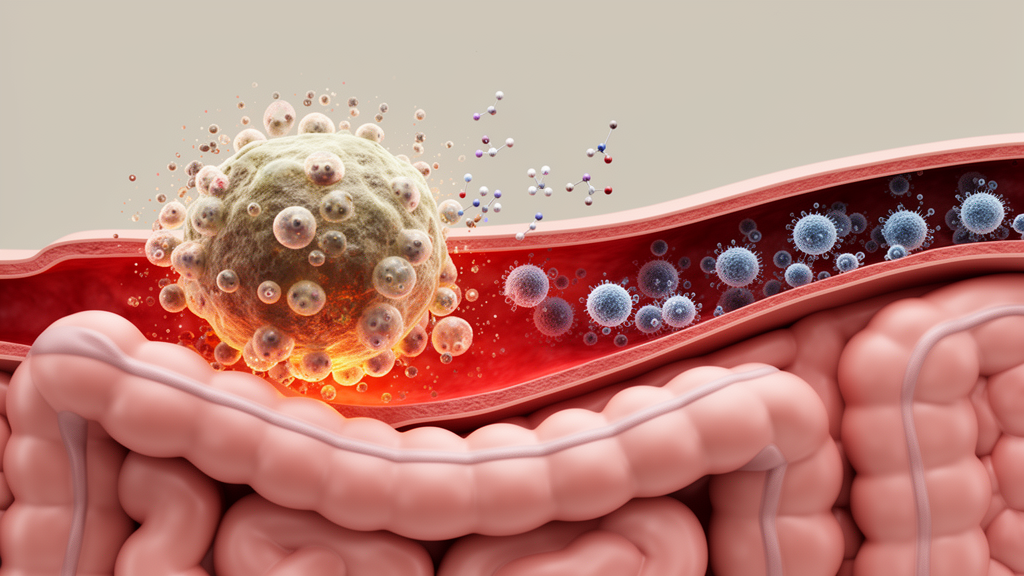
Gasdermin-driven pyroptosis is a lytic form of programmed cell death that the authors of a 2026 review identify as a central pathogenic pathway in acute and chronic inflammatory diseases, including inflammatory bowel disease. Its execution follows a sequence of molecular events: inflammasome assembly, caspase activation and gasdermin cleavage, followed by plasma-membrane pore formation. These pores lead to cell swelling, lysis and release of inflammatory cytokines, which can amplify tissue injury.

Although pyroptosis was first viewed as an innate antimicrobial defense mechanism, the review describes it as a pathway whose effects vary according to cell type and biological context. The therapeutic interest in this pathway comes from the availability of several potentially druggable steps. Interventions discussed in the review include NLRP3 inflammasome inhibitors, regulators of gasdermin post-translational modifications, natural compounds and nanotechnology-based delivery systems.

Pyroptosis also operates within an interconnected cell-death network involving apoptosis, necroptosis and ferroptosis, all of which are considered together within the emerging PANoptosis framework. The review examines these mechanisms alongside the role of pyroptosis in intestinal and systemic inflammatory diseases. In the intestine, the pathway has a notable dual role.

Gasdermin-mediated death can disrupt the epithelial barrier and intensify mucosal inflammation, while the same effectors can also support barrier integrity, epithelial repair and controlled cytokine release. This context dependence helps explain why inhibiting pyroptosis has produced robust protection in preclinical colitis models but has so far shown limited clinical efficacy. The review’s interpretation is not that gasdermin activity is uniformly harmful, but that blocking it may remove protective functions as well as disease-associated effects.

Its therapeutic assessment is therefore based on preclinical findings, mechanistic analysis and lessons from clinical trials rather than evidence that the reviewed interventions are established treatments for inflammatory bowel disease or related inflammatory disorders. For translation, the authors identify three central priorities: human disease models that better reproduce relevant disease biology, delivery restricted to affected tissues and biomarker-guided stratification of patients. The review also emphasizes the need to distinguish patients in whom pyroptotic signaling contributes to disease from those in whom inhibition could interfere with repair or other protective processes.

Its coverage of multi-indication clinical progress and recent trial failures provides the basis for those priorities, while the abstract available here does not provide detailed trial-specific outcomes or establish a proven therapeutic approach. Overall, the review presents pyroptosis as a mechanistic target whose value depends on where, in whom and under what conditions it is inhibited. By integrating inflammasome biology, gasdermin function, competing cell-death pathways and the protective roles of epithelial responses, the authors argue that translation requires selective intervention and more informative human models rather than treating pyroptosis as a uniform inflammatory mechanism.

The scope of the review is the molecular basis and therapeutic landscape of pyroptosis in intestinal and systemic inflammatory diseases, with particular attention to inflammatory bowel disease.

Subject of Research: Molecular mechanisms and therapeutic targeting of pyroptosis in intestinal and systemic inflammatory diseases

Article Title: Targeting pyroptosis in intestinal and systemic inflammatory diseases: mechanisms and therapeutic opportunities

Article References: Li, J., Chen, Y., Yu, Q., Fu, X., Sun, J., & Zhu, L. (2026). Targeting pyroptosis in intestinal and systemic inflammatory diseases: mechanisms and therapeutic opportunities. Molecular Biology Reports, 53(1), Article 1766. https://doi.org/10.1007/s11033-026-12920-6

Image Credits: AI Generated

DOI: 10.1007/s11033-026-12920-6

Keywords: pyroptosis, gasdermin pores, NLRP3 inflammasome, inflammatory bowel disease, colitis models, PANoptosis, cell death, inflammation, molecular therapeutics, biomarker-guided stratification, Targeting, intestinal

Cite Scienmag News

Drew Townsend. (October 21, 2026). Targeting pyroptosis in intestinal and systemic inflammatory diseases: mechanisms and therapeutic opportunities. Scienmag. https://scienmag.com/targeting-pyroptosis-in-intestinal-and-systemic-inflammatory-diseases-mechanisms-and-therapeutic-opportunities/


Drew Townsend. "Targeting pyroptosis in intestinal and systemic inflammatory diseases: mechanisms and therapeutic opportunities." Scienmag, 21 October 2026, https://scienmag.com/targeting-pyroptosis-in-intestinal-and-systemic-inflammatory-diseases-mechanisms-and-therapeutic-opportunities/. Accessed 21 October 2026.

Drew Townsend. "Targeting pyroptosis in intestinal and systemic inflammatory diseases: mechanisms and therapeutic opportunities." Scienmag. October 21, 2026. https://scienmag.com/targeting-pyroptosis-in-intestinal-and-systemic-inflammatory-diseases-mechanisms-and-therapeutic-opportunities/

Tags: and ferroptosisapoptosisbiomarker-guided stratificationCaspase-mediated pyroptosis mechanismscell deathcolitis modelsgasdermin poresGasdermin post-translational modificationsGasdermin-driven cell deathInflammasome assembly and activationinflammationinflammatory bowel diseaseInterconnection between pyroptosisintestinalmolecular therapeuticsNatural compounds and nanotechnology in pyroptosis modulationNecroptosisNLRP3 inflammasomePANoptosisPANoptosis framework in inflammatory diseasespyroptosisPyroptosis in inflammatory bowel diseaseRole of pyroptosis in intestinal barrierTargetingtherapeutic targeting of NLRP3 inflammasome
Share26Tweet16
Previous Post

Expert-informed model maps CSR and HRM links in generative AI workplaces

Next Post

Initiating levodopa pump therapy: a qualitative study of patient and caregiver perspectives

Related Posts

Review maps hepatitis E receptor networks and immune evasion
Biology

Review maps hepatitis E receptor networks and immune evasion

October 21, 2026
Feed supplement helps dung flies travel farther between pats
Biology

Feed supplement helps dung flies travel farther between pats

October 21, 2026
Non-invasive adjunctive diagnostic models incorporating high-frequency ultrasound and shear wave elastography for pediatric Duchenne muscular dystrophy
Biology

Non-invasive adjunctive diagnostic models incorporating high-frequency ultrasound and shear wave elastography for pediatric Duchenne muscular dystrophy

October 21, 2026
L. brevis supernatant selectively alters inflammation genes in intestinal cells
Biology

L. brevis supernatant selectively alters inflammation genes in intestinal cells

October 21, 2026
Research report: Pediatric HIV reservoir in early ART: distinct immunobiology and its implications for HIV cure
Biology

Research report: Pediatric HIV reservoir in early ART: distinct immunobiology and its implications for HIV cure

October 21, 2026
Hidden Crust Fungi of Asia Reveal Six New Species in Korean Forests
Biology

Korean survey identifies six new crust-like Sebacinaceae species

October 21, 2026
Next Post
Initiating levodopa pump therapy: a qualitative study of patient and caregiver perspectives

Initiating levodopa pump therapy: a qualitative study of patient and caregiver perspectives

  • Mothers who receive childcare support from maternal grandparents show more optimized

    Mothers who receive childcare support from maternal grandparents show more parental warmth, finds NTU Singapore study

    27656 shares
    Share 11059 Tweet 6912
  • University of Seville Breaks 120-Year-Old Mystery, Revises a Key Einstein Concept

    1061 shares
    Share 424 Tweet 265
  • Bee body mass, pathogens and local climate influence heat tolerance

    682 shares
    Share 273 Tweet 171
  • Researchers record first-ever images and data of a shark experiencing a boat strike

    546 shares
    Share 218 Tweet 137
  • Groundbreaking Clinical Trial Reveals Lubiprostone Enhances Kidney Function

    531 shares
    Share 212 Tweet 133
Science

Embark on a thrilling journey of discovery with Scienmag.com—your ultimate source for cutting-edge breakthroughs. Immerse yourself in a world where curiosity knows no limits and tomorrow’s possibilities become today’s reality!

RECENT NEWS

  • Panel study links cooperation to Pakistan’s regional positioning
  • Initiating levodopa pump therapy: a qualitative study of patient and caregiver perspectives
  • Targeting pyroptosis in intestinal and systemic inflammatory diseases: mechanisms and therapeutic opportunities
  • Expert-informed model maps CSR and HRM links in generative AI workplaces

Categories

  • Agriculture
  • Anthropology
  • Archaeology
  • Athmospheric
  • Biology
  • Biotechnology
  • Blog
  • Bussines
  • Cancer
  • Chemistry
  • Climate
  • Earth Science
  • Editorial Policy
  • Marine
  • Mathematics
  • Medicine
  • Pediatry
  • Policy
  • Psychology & Psychiatry
  • Science Education
  • Science News
  • Social Science
  • Space
  • Technology and Engineering

Subscribe to Blog via Email

Enter your email address to subscribe to this blog and receive notifications of new posts by email.

Join 5,150 other subscribers

© 2025 Scienmag - Science Magazine

Welcome Back!

Login to your account below

Forgotten Password?

Retrieve your password

Please enter your username or email address to reset your password.

Log In
No Result
View All Result
  • HOME
  • SCIENCE NEWS
  • CONTACT US

© 2025 Scienmag - Science Magazine

Discover more from Science

Subscribe now to keep reading and get access to the full archive.

Continue reading