


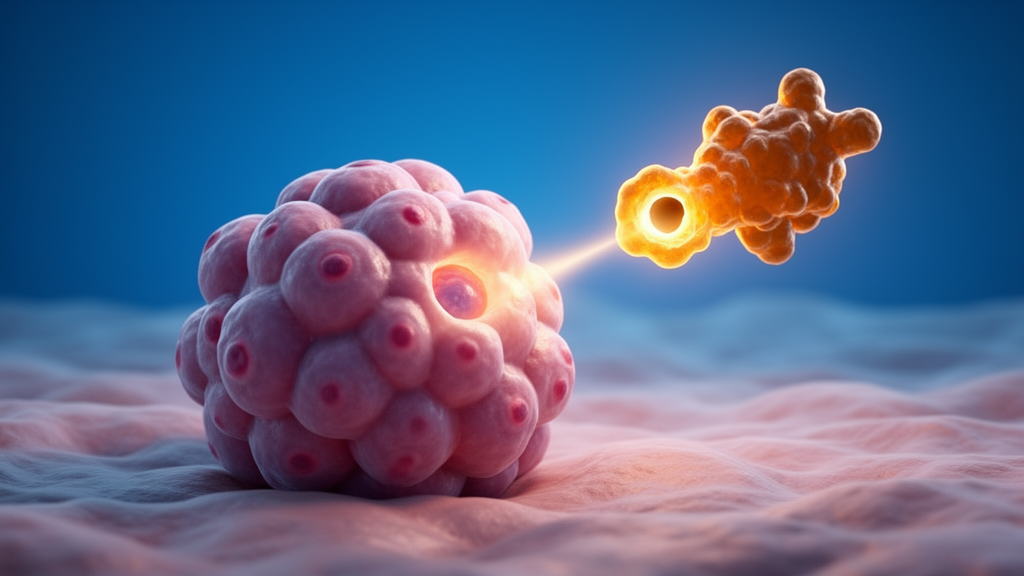
Ovarian cancer remains one of the most difficult malignancies to treat, largely because it tends to announce itself late. By the time most patients receive a diagnosis, the disease has already spread beyond the ovary to other organs, and at that stage the five-year survival rate falls below 30 percent. The therapeutic arsenal available to oncologists is also blunt: standard chemotherapies damage healthy cells almost as readily as they damage tumor cells, producing the severe toxicity that limits how much drug patients can tolerate. Against this backdrop, a new study from the University of Maryland, Baltimore County points toward a more precise strategy—one built around a single enzyme that ovarian cancer cells appear to depend on far more heavily than the normal cells around them.
The enzyme, known as USP15, is the focus of research conducted in the laboratory of Achuth Padmanabhan, assistant professor of biological sciences at UMBC, and led by Ph.D. student Ayokunnumi Ogunsanya. Published in the journal Molecular Therapy Oncology, the study reports that lowering USP15 levels in ovarian cancer cells triggers a cascade of consequences: tumor growth slows, chromosomes fail to separate cleanly during cell division, the cells lose much of their ability to migrate and invade other tissues, and they become measurably more sensitive to the chemotherapy drugs most commonly used against the disease. Experiments in both cell cultures and mouse models support the conclusion that ovarian cancer cells have an unusual reliance on this protein, making it a candidate target for drugs that could spare healthy tissue.
USP15 belongs to a family of enzymes called deubiquitinases, and understanding its normal biochemical function explains why cancer cells would lean on it so heavily. Inside cells, proteins that need to be destroyed are marked with small molecular tags called ubiquitin chains, which act as a signal for the cell’s degradation machinery. Deubiquitinases such as USP15 remove those tags, rescuing proteins that would otherwise be broken down. When USP15 is abundant, fewer marked proteins meet their demise, and proteins that promote cancer progression can linger longer than they should. This tagging-and-untagging system governs an enormous range of cellular processes, from DNA repair to the timing of cell division, which is why perturbing it can have such dramatic effects on a tumor cell’s behavior.
The path to this discovery began serendipitously during Padmanabhan’s time as a postdoctoral fellow at Baylor College of Medicine, where he was studying p53, one of the most important tumor suppressor proteins in human biology. In its normal form, p53 acts as a molecular guardian, halting cell division or triggering cell death when DNA damage is detected. Mutations in the gene encoding p53 occur in nearly every case of high-grade serous ovarian cancer, the most common and lethal form of the disease, and across a wide range of other cancers. One might assume, Padmanabhan notes, that these mutations would simply disable the tumor suppressor—like cutting the brakes on a car. But the reality is more sinister: roughly two-thirds of p53 mutations in ovarian cancer convert the protein from a brake into a stuck accelerator, actively enhancing cancer progression while also persisting in the cell far longer than the normal protein does.
Investigating why these mutant p53 proteins were so stable, Padmanabhan found that USP15 was the culprit, removing the degradation tags that would otherwise have condemned the mutant proteins to destruction. When he returned to UMBC as an assistant professor in 2019, he set out to determine what broader role USP15 might play in ovarian cancer. Ogunsanya joined the lab in 2021 and made the enzyme the centerpiece of her doctoral research. The new findings, she says, provide new insight into how USP15 contributes to ovarian cancer progression, and they emerged from a rigorous process in which early results did not always match expectations.
One such unexpected result illustrates how the team refined its understanding. A molecule that normally tracks with cell growth—a standard indicator of cancer progression—rose rather than fell when the researchers reduced USP15, which initially seemed to contradict the observation that tumor growth was slowing. Digging deeper, the team identified a different molecule associated with cell division that did decline. The combination told a coherent story: with less USP15, cancer cells were still growing in size and accumulating biomass, but they were struggling to divide successfully. The underlying defect turned out to be a failure of mitotic fidelity—the cancer cells could not properly separate their duplicated chromosomes during division. Chromosome segregation errors of this kind generate DNA damage and, ultimately, cell death, which helps explain why depleting USP15 slows tumor growth so effectively.
The study also demonstrated that reducing USP15 sensitizes ovarian cancer cells to frontline chemotherapy. The cells became more vulnerable to carboplatin and paclitaxel, the two drugs that form the backbone of standard ovarian cancer treatment, as well as to doxorubicin, a potent but highly toxic agent used against a range of malignancies. The clinical implication is significant: if a therapy could lower USP15 activity in patients, lower doses of these harsh drugs might achieve the same anti-tumor effect while producing less of the toxicity that so often forces oncologists to curtail treatment.
Several questions remain before this biology can be translated into medicine. The Padmanabhan lab now wants to map the basic functionality of USP15 in greater detail, including what controls the enzyme’s levels inside cancer cells and whether inhibiting it could also reshape the tumor microenvironment—the immediate surroundings of a tumor that influence its growth and its ability to spread. And even with a fuller mechanistic picture, the practical challenge of safely reducing USP15 in human patients will remain. Encouragingly, molecules capable of inhibiting USP15 already exist for laboratory use, giving medicinal chemists a starting point from which clinically viable drugs could be developed.
For the UMBC team, the hope is that these results will galvanize a wider effort. The idea that a tumor’s extraordinary dependence on a single deubiquitinase can be turned against it fits within a broader shift in cancer research toward therapies that exploit vulnerabilities unique to malignant cells rather than simply poisoning all dividing tissue. If pharmaceutical companies and other research groups take up the challenge of developing clinically translatable USP15 inhibitors, the enzyme identified in this study could move from a curiosity of basic cell biology toward a genuine addition to the ovarian cancer treatment repertoire—a disease where, given its late diagnosis rate and limited survival statistics, any new lever is urgently needed.
Subject of Research: The role of the deubiquitinase enzyme USP15 in ovarian cancer cell survival, division, metastasis, and chemotherapy response
Article Title: UMBC researchers identify promising new target for ovarian cancer treatment
Article References: UMBC researchers identify promising new target for ovarian cancer treatment. (n.d.). Original publication
Image Credits: AI Generated
DOI: Not provided
Keywords: ovarian cancer, USP15, deubiquitinase, p53 mutation, chemotherapy sensitivity, chromosome segregation, tumor suppressor, Molecular Therapy Oncology, drug target, tumor microenvironment, cancer cell division, metastasis
Cite Scienmag News
Nathaniel Bowman. (October 18, 2026). Ovarian Cancer Cells Depend on USP15 Enzyme, Offering a Sharper Therapeutic Target. Scienmag. https://scienmag.com/ovarian-cancer-cells-depend-on-usp15-enzyme-offering-a-sharper-therapeutic-target/
Nathaniel Bowman. "Ovarian Cancer Cells Depend on USP15 Enzyme, Offering a Sharper Therapeutic Target." Scienmag, 18 October 2026, https://scienmag.com/ovarian-cancer-cells-depend-on-usp15-enzyme-offering-a-sharper-therapeutic-target/. Accessed 18 October 2026.
Nathaniel Bowman. "Ovarian Cancer Cells Depend on USP15 Enzyme, Offering a Sharper Therapeutic Target." Scienmag. October 18, 2026. https://scienmag.com/ovarian-cancer-cells-depend-on-usp15-enzyme-offering-a-sharper-therapeutic-target/


