


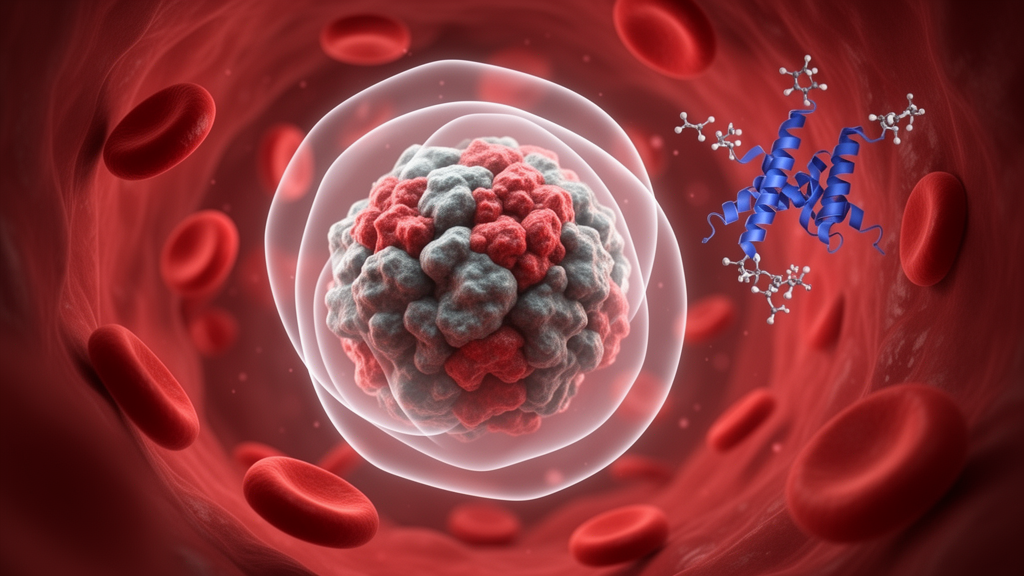
Cancer rarely kills through the original tumor. Roughly ninety percent of cancer deaths trace back to metastasis, the process by which tumor cells leave their primary site, survive a hostile journey through the bloodstream, and colonize distant organs. A new computational study published in BMC Cancer argues that one of the most dangerous weapons in this metastatic arsenal has been hiding in plain sight: circulating tumor cell (CTC) clusters that travel through the blood wrapped in platelets, neutrophils, and other blood components, forming a protective state that shields them from immune attack. The research, led by Jiayang Gong and colleagues at The Affiliated Cancer Hospital of Nanjing Medical University, proposes that an enzyme called nicotinamide N-methyltransferase (NNMT) sits at the center of a three-way protective program combining metabolic reprogramming, clot-forming platelet activity, and immune exhaustion, and that dismantling all three simultaneously may offer a route to blocking metastasis before it starts.
The starting observation is stark. When tumor cells detach and enter the circulation, most die. They face shear stress from blood flow, a form of programmed cell death called anoikis that kills cells deprived of their normal anchoring, and constant patrolling by immune cells. Only a small fraction survive. But CTCs that travel in clusters fare dramatically better. Previous work has shown that the metastatic potential of CTC clusters is twenty-three to fifty times higher than that of single CTCs, and that approximately ninety-seven percent of metastatic events are mediated by clustered cells rather than lone travelers. These clusters come in several forms: homotypic aggregates of tumor cells sticking to each other, and heterotypic aggregates in which tumor cells bind to platelets, neutrophils, myeloid-derived suppressor cells, or even unusual T cell subsets. Each configuration carries its own protective logic, and the new study argues that understanding that logic is essential before designing drugs to break it.
The platelet component is perhaps the most visually striking. In CTC-positive samples from patients with lung cancer, breast cancer, or melanoma, roughly sixty to eighty-three percent of CTCs are associated with platelet clusters. Platelets adhere to tumor cells through two main mechanisms: P-selectin on the platelet surface recognizes complementary ligands on CTCs, and activated integrin αIIbβ3 binds fibrinogen, which acts as a molecular glue bridging the two cell types. Once attached, platelets confer several advantages. They reduce mechanical injury from shear stress, secrete cytokines that suppress natural killer cell function by lowering expression of the activating receptor NKG2D, induce epithelial-mesenchymal transition through platelet-derived growth factors and TGF-β, and educate CTCs through paracrine signaling to reinforce stem-like phenotypes. Platelet surface PD-L1 can also engage PD-1 on T cells directly, suppressing T cell function and allowing the tumor cell to hide behind a borrowed immunosuppressive shield.
Neutrophils provide a second layer of protection through a different mechanism. CTC surface VCAM-1 binds VLA-4 on neutrophils, and neutrophils respond by releasing neutrophil extracellular traps, or NETs, web-like structures of DNA and antimicrobial proteins that physically capture CTCs and promote cluster formation. Neutrophils also secrete arginase 1, interleukin-10, and reactive oxygen species, which deplete arginine needed for T cell function and directly inhibit T cell and NK cell activation. Enzymes called cathepsin G and elastase released by neutrophils degrade components of the vascular basement membrane, facilitating intravascular migration of CTCs. A particularly unusual partner is the CD4-positive CD8-positive double-positive T cell, a T cell lineage that exhibits immune desensitization upon interaction with CTCs; blocking VLA-4 with neutralizing antibodies disrupts these clusters and prolongs survival in mouse models. Together, platelets and neutrophils form what the authors describe as an immune-protective niche, a mobile microenvironment that travels with the tumor cells and neutralizes the body’s primary defenses.
NNMT enters this picture as a metabolic linchpin. The enzyme catalyzes the conversion of nicotinamide to 1-methylnicotinamide, consuming the universal methyl donor S-adenosylmethionine, or SAM, in the process. This consumption depletes SAM, which alters epigenetic regulation by reducing histone methylation marks such as H3K27me3, and it disrupts NAD-dependent deacetylases like SIRT1. In multiple cancers, high NNMT expression is associated with CTC stemness, chemoresistance, and metastatic potential. In cancer-associated fibroblasts, NNMT promotes H3K27me3 hypomethylation, enhancing complement secretion and recruitment of immunosuppressive myeloid-derived suppressor cells. Pericyte-derived NNMT promotes CTC-neutrophil cluster formation through the CXCL5/CXCR2 axis, and NNMT inhibition has been shown in preclinical models to disrupt these clusters and suppress metastasis. NNMT therefore represents a central node linking metabolic reprogramming and immune evasion in the pre-metastatic niche, and the new study asks whether its activity is coordinated with the platelet and neutrophil programs rather than acting in isolation.
To answer that question, the researchers built a hypothesis-generating computational framework rather than a traditional laboratory experiment. They analyzed bulk RNA sequencing data from 9,596 primary tumor samples across 30 cancer types from the TCGA PanCancer dataset, and cross-validated their findings in eight publicly available single-cell RNA sequencing cohorts representing eight different cancer types, encompassing 483,590 individual cells. They constructed module scores for five biological programs: epithelial-mesenchymal transition and metabolism, platelet and coagulation activity, neutrophil and NET formation, immune checkpoint and exhaustion, and cytotoxic NK cell function. A composite tri-axis score, averaging the first four programs, served as a summary measure of the protective state. Across 29 of 30 TCGA cancer types, NNMT expression was positively correlated with this composite score, with all 29 correlations reaching statistical significance after false discovery rate correction. The median cross-cancer Spearman correlation coefficient for the composite score was 0.500, with the strongest coupling observed in breast cancer, colorectal cancer, melanoma, hepatocellular carcinoma, and lung cancer.
Feature-level pseudotime analysis, which orders cells along a trajectory of increasing NNMT-associated state, showed that the metabolic, platelet, neutrophil, and immune exhaustion programs converged toward a common endpoint, suggesting coordinated activation rather than independent processes. In silico perturbation experiments, in which the researchers computationally reduced NNMT expression to the tenth percentile of its cohort-specific distribution, predicted the largest reductions in the composite protection score in colorectal-cancer stromal cells and lung fibroblasts, followed by breast-cancer CAFs and endothelial cells. This points to stromal and fibroblast-like populations as candidate NNMT-dependent compartments, a finding consistent with prior experimental work showing that NNMT in cancer-associated fibroblasts remodels the tumor microenvironment. Ligand-receptor mapping further revealed an interconnected communication network: CTCs and stromal cells recruit myeloid and NET-forming cells through CXCL5-CXCR2 and VCAM1-ITGA4 signaling, platelet-coagulation bridging forms a protective coating through fibrinogen-αIIbβ3 and P-selectin-PSGL1 interactions, and the myeloid and platelet compartments transmit immunosuppressive signals to T and NK cells through LGALS9-HAVCR2, CD274-PDCD1, PVR-TIGIT, and TGFB1-TGFBR axes.
The authors also applied supervised machine learning to test whether these axis-related features could discriminate single CTCs from clustered or leukocyte-associated CTC states. In a dataset of 281 CTC-labeled cells from GSE109761, a model combining axis features with ligand-receptor features achieved a cross-validated AUROC of 0.711, suggesting that the protective state is detectable at the single-cell level. Cross-cancer generalization was tested using leave-one-cancer-out cross-validation on TCGA data with three-year overall survival as the endpoint, and while the pooled AUROC of 0.575 was modest and unsuitable for diagnosis, the signal was reproducible across cancer types, supporting the idea that the NNMT-associated tri-axis program carries real biological information rather than being an artifact of any single tumor type.
From these findings, the researchers propose a triple-intervention strategy they call disaggregation, exposure, and clearance. The first step uses αIIbβ3 inhibitors such as tirofiban or abciximab, already approved for acute coronary syndromes, to disrupt platelet-CTC adhesion and remove the platelet cloak. The second step uses NNMT inhibitors, which remain in preclinical development, to weaken the metabolic and epigenetic resilience of CTC clusters and potentially reverse epithelial-mesenchymal plasticity, making cells more recognizable to the immune system. The third step deploys PD-1/PD-L1 antibodies to restore T cell and NK cell-mediated clearance of the now-exposed tumor cells. The authors are careful to note that no experimental studies have yet demonstrated the efficacy of combining these three drug classes, and that the synergistic effect between NNMT inhibitors and αIIbβ3 inhibitors currently constitutes a theoretical hypothesis rather than a verified therapeutic regimen.
The study also confronts the risks inherent in such a combination. αIIbβ3 inhibition carries bleeding risk, particularly in cancer patients who may already have low platelet counts, and PD-1/PD-L1 blockade can in rare cases induce immune-mediated thrombocytopenia, potentially compounding the danger. NNMT inhibition is not intrinsically tumor-cell specific, and because NAD salvage and SAM-dependent methylation are also important for T cell and NK cell proliferation and function, systemic NNMT inhibition could theoretically impair the very immune cells the strategy aims to unleash. The authors propose a staged preclinical framework involving phenotypic characterization of patient-derived CTC clusters, multicellular co-culture under physiologically relevant shear flow, immune killing assays, and animal metastasis models, with sequential dosing tested as a design variable rather than assumed to be safe. They also emphasize that CTC clusters represent only one stage of the metastatic cascade, and that even complete clearance of circulating CTCs cannot prevent progression of micrometastatic lesions already established in distant organs. The most appropriate clinical application, they suggest, may be as adjuvant treatment after primary tumor resection in patients at high risk of recurrence, potentially combined with anti-angiogenic agents or stromal modulators targeting micrometastatic niches. Whether the triple strategy can move from computational hypothesis to clinical reality will depend on the experimental validation the authors themselves identify as the critical next step.
Subject of Research: Computational analysis of NNMT-associated metabolic, thromboinflammatory, and immune co-activation in heterogeneous circulating tumor cell clusters
Article Title: NNMT-associated metabolic–thromboinflammatory–immune co-activation in heterogeneous CTC clusters: a hypothesis-generating computational framework”
Article References: Gong, J., Wang, Z., Shi, Y., Ren, M., Li, T., Li, G., & Peng, R. (2026). NNMT-associated metabolic–thromboinflammatory–immune co-activation in heterogeneous CTC clusters: a hypothesis-generating computational framework”. BMC Cancer, 26(1), Article 1085. https://doi.org/10.1186/s12885-026-16692-x
Image Credits: AI Generated
DOI: 10.1186/s12885-026-16692-x
Keywords: circulating tumor cells, CTC clusters, NNMT, metastasis, platelets, neutrophil extracellular traps, immune checkpoint blockade, cancer metabolism, epithelial-mesenchymal transition, single-cell RNA sequencing, TCGA pan-cancer, triple therapy
Cite Scienmag News
Nathaniel Bowman. (October 18, 2026). Computational Study Links Metabolic Enzyme NNMT to a Triple Shield That Lets Cancer Cell Clusters Survive in the Bloodstream. Scienmag. https://scienmag.com/computational-study-links-metabolic-enzyme-nnmt-to-a-triple-shield-that-lets-cancer-cell-clusters-survive-in-the-bloodstream/
Nathaniel Bowman. "Computational Study Links Metabolic Enzyme NNMT to a Triple Shield That Lets Cancer Cell Clusters Survive in the Bloodstream." Scienmag, 18 October 2026, https://scienmag.com/computational-study-links-metabolic-enzyme-nnmt-to-a-triple-shield-that-lets-cancer-cell-clusters-survive-in-the-bloodstream/. Accessed 18 October 2026.
Nathaniel Bowman. "Computational Study Links Metabolic Enzyme NNMT to a Triple Shield That Lets Cancer Cell Clusters Survive in the Bloodstream." Scienmag. October 18, 2026. https://scienmag.com/computational-study-links-metabolic-enzyme-nnmt-to-a-triple-shield-that-lets-cancer-cell-clusters-survive-in-the-bloodstream/


