


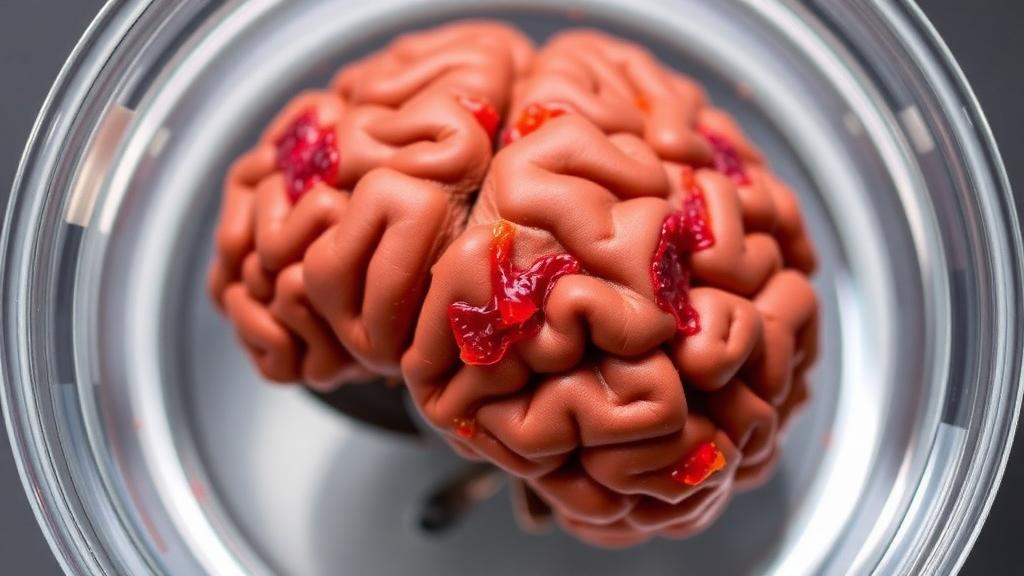
Brain tumors have long been among the most stubborn opponents in oncology, and the newest wave of cancer immunotherapies has largely failed to change that. Drugs that revolutionized the treatment of melanoma and lung cancer have produced only modest, inconsistent benefits in patients with glioblastoma and other tumors of the central nervous system. A new review published in the Journal of Translational Medicine argues that the reason lies less in the drugs themselves than in the environment the tumors create, and it points to a fast-evolving laboratory technology, the organoid, as the tool that could finally let researchers study that environment realistically and design therapies that work within it.
The review, led by Qingcheng Meng and Ran Li of Jining Medical University together with colleagues at institutions in Shandong and Guangxi, China, focuses on the tumor immune microenvironment, the dense ecosystem of malignant cells, immune cells, signaling molecules and structural tissue that surrounds a growing tumor. In brain tumors, this ecosystem is profoundly immunosuppressive. Tumor-associated macrophages, myeloid-derived suppressor cells and regulatory T cells accumulate around the malignancy and actively dampen the immune response. Checkpoint molecules such as PD-L1, B7-H3 and TIGIT blunt the activity of T cells that would otherwise attack the tumor. Metabolic factors, including the consumption of adenosine triphosphate and the generation of reactive oxygen species, further exhaust immune cells. The result is a tumor that is not merely invisible to the immune system but actively defended by it.
Compounding the problem is the blood-brain barrier, the specialized lining of blood vessels in the central nervous system that tightly restricts which molecules and cells can enter brain tissue. The barrier complicates drug delivery and shapes the composition of immune populations in the brain, which differ from those in the rest of the body. Conventional preclinical models struggle to capture any of this. Two-dimensional cell cultures grown in plastic dishes contain tumor cells alone, stripped of the immune and stromal context that defines real disease. Animal models, particularly immunocompetent mice bearing rodent gliomas, differ substantially from human brain tumors in their genetics, immune composition and barrier physiology. The mismatch helps explain why therapies that look promising in the laboratory so often disappoint in clinical trials.
Organoids offer a different approach. These are three-dimensional structures grown from stem cells or tumor tissue that self-organize into miniature versions of organs or tumors, retaining key features of their architecture and cellular diversity. Patient-derived organoids, sometimes called PDOs, are grown directly from a patient’s own tumor, preserving the individual genetic and cellular characteristics of the disease. Glioblastoma organoids, abbreviated GBOs, have been developed from surgical specimens and can reproduce features of the original tumor, including its cellular heterogeneity and aspects of its immune landscape. The review surveys how researchers have refined these platforms to include immune components, transforming them from static models of tumor growth into dynamic arenas where immune-tumor interactions can be observed and manipulated.
Several technical strategies are highlighted. One approach involves co-culturing tumor organoids with peripheral blood mononuclear cells or with specific immune cell populations, allowing researchers to study how T cells, natural killer cells and other effectors infiltrate tumor tissue and how the tumor responds. Air-liquid interface culture methods, which expose the organoid to air on one side, have been used to extend the lifespan and structural fidelity of the models, permitting longer-term experiments. More elaborate systems incorporate multiple cell types simultaneously to reconstruct the interplay between tumor cells, macrophages, T cells and suppressive myeloid populations. Induced pluripotent stem cell technology adds another dimension, enabling the generation of brain-like tissue and immune cells from a patient’s own cells, which can then be combined in customized models.
With these platforms in hand, researchers can perform functional analyses that were previously impossible. The review describes how organoid models enable the study of immune infiltration, measuring which immune cells enter the tumor and where they localize; the assessment of local effector activity, testing whether cytotoxic cells actually kill tumor cells within the model; and the dissection of immunosuppressive regulation, identifying which molecular pathways the tumor uses to neutralize immune attack. Because the models are human and three-dimensional, the interactions observed within them are thought to reflect patient biology more faithfully than flat cultures or cross-species models can. This makes them particularly valuable for studying resistance mechanisms, the specific adaptations that allow brain tumors to evade checkpoint inhibitors, engineered T cells and other immunotherapies.
The translational applications are where the technology becomes most consequential for patients. The review outlines how organoid platforms are being used to evaluate treatment responses before therapies are given, potentially allowing clinicians to test a patient’s own tumor against candidate immunotherapies in the laboratory. Individualized patient tumor organoids could serve as avatars, predicting whether a particular checkpoint inhibitor or cell therapy is likely to work for a specific person. The models are also being used for preclinical testing of novel strategies, including chimeric antigen receptor T cells engineered to recognize targets such as GD2, B7-H3 and CD155, as well as T-cell receptor-engineered T cells and chimeric antigen receptor gamma-delta T cells. Approaches designed to reprogram the immune environment itself, such as interventions targeting TREM2 on macrophages or activating the STING pathway to boost interferon signaling, can be evaluated in a human context before advancing to trials.
Among the more inventive concepts discussed is immune-human organoid tumor transplantation, an approach that combines human tumor organoids with immune components in a single experimental system, and the use of granulocyte-macrophage colony-stimulating factor and other cytokines to modulate immune activity within the models. Major histocompatibility complex class II transactivator strategies, which aim to increase antigen presentation by tumor cells, represent another direction that organoid platforms can help evaluate. By providing a controlled yet realistic setting, these systems allow researchers to identify major resistance patterns, the recurring strategies by which brain tumors defeat immune attack, and to prioritize the therapeutic combinations most likely to overcome them before expensive clinical trials are launched.
The authors are careful to note that the technology is not yet mature. Organoid models still fall short of capturing the full complexity of a human brain tumor, particularly the contributions of the vasculature, the blood-brain barrier and the systemic immune system. Model complexity, standardization and clinical relevance all require further improvement before organoid findings can reliably guide patient care. Differences in how laboratories establish and culture organoids can make results difficult to compare, and the absence of physiological blood flow limits certain kinds of immune trafficking studies. The review frames these as solvable challenges, arguing that continued refinement will determine whether organoids fulfill their promise of bridging mechanistic insight and translational application.
Even with those caveats, the trajectory is striking. Immunotherapy has transformed the treatment of many cancers, but brain tumors have remained largely outside that revolution, protected by their immunosuppressive microenvironment, the blood-brain barrier and the inadequacy of the models used to study them. Organoid platforms, by reconstructing the tumor immune microenvironment in human tissue that can be grown, observed and tested, offer researchers their most realistic laboratory window yet into why brain tumors resist immune attack and how that resistance might be broken. If the improvements in model fidelity and standardization the authors call for are achieved, the miniature tumors growing in laboratory dishes could become an essential step between discovery and treatment, shortening the path from biological insight to therapies that finally move the needle against glioblastoma and other devastating malignancies of the brain.
Subject of Research: Organoid models of the brain tumor immune microenvironment for immunotherapy development
Article Title: Reconstructing the immune microenvironment in brain tumors: the role of organoid platforms in immunotherapy development
Article References: Meng, Q., Li, R., Shi, H., Yu, L., Meng, Z., Hao, Y., Dong, G., & Han, X. (2026). Reconstructing the immune microenvironment in brain tumors: the role of organoid platforms in immunotherapy development. Journal of Translational Medicine. https://doi.org/10.1186/s12967-026-08936-y
Image Credits: AI Generated
DOI: 10.1186/s12967-026-08936-y
Keywords: brain tumors, glioblastoma, organoids, tumor immune microenvironment, immunotherapy, patient-derived organoids, immune checkpoint inhibitors, CAR-T cells, tumor-associated macrophages, blood-brain barrier, translational models, tumor immunology
Cite Scienmag News
Nathaniel Bowman. (October 3, 2026). Miniature Brain Tumors in a Dish Offer New Hope for Beating Immunotherapy Resistance. Scienmag. https://scienmag.com/miniature-brain-tumors-in-a-dish-offer-new-hope-for-beating-immunotherapy-resistance/
Nathaniel Bowman. "Miniature Brain Tumors in a Dish Offer New Hope for Beating Immunotherapy Resistance." Scienmag, 3 October 2026, https://scienmag.com/miniature-brain-tumors-in-a-dish-offer-new-hope-for-beating-immunotherapy-resistance/. Accessed 4 October 2026.
Nathaniel Bowman. "Miniature Brain Tumors in a Dish Offer New Hope for Beating Immunotherapy Resistance." Scienmag. October 3, 2026. https://scienmag.com/miniature-brain-tumors-in-a-dish-offer-new-hope-for-beating-immunotherapy-resistance/


