


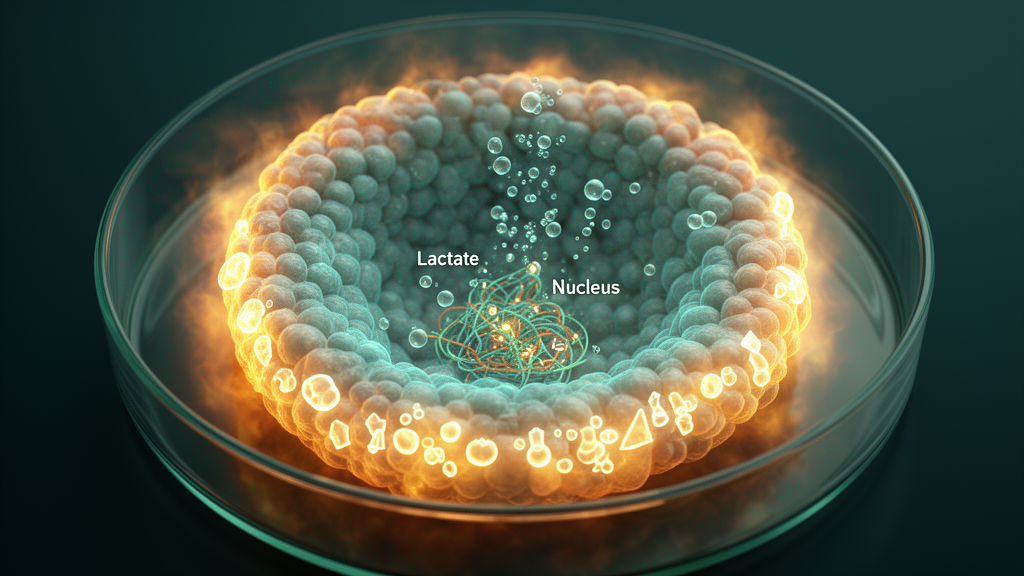
Gastric cancer remains one of the most metabolically adaptable malignancies, and a new study published in Journal of Translational Medicine points to an unexpected player in that adaptability. Researchers report that glutathione S-transferase kappa 1, or GSTK1, appears to coordinate inflammatory signaling, glycolysis-related proteins, and global lysine lactylation in gastric cancer cells, positioning the enzyme as a candidate prognostic biomarker that now requires further validation. The team assembled an unusually broad evidence base.
They integrated bulk, single-cell, and spatial transcriptomic datasets from TCGA and GEO to map heterogeneity within gastric tumors. A suite of computational tools, including InferCNV, CytoTRACE, CellChat, RCTD, and MISTy, allowed them to quantify genomic instability, stemness, intercellular communication, and spatial signaling patterns across tumor regions. That analysis flagged a putative malignant epithelial subset, labeled Epi_2, characterized by high genomic instability and stemness along with inferred communication with NK cells.
This subset also displayed activated energy-metabolism and lactylation-associated transcriptional signatures, suggesting a niche where metabolic reprogramming and protein modification converge. Multi-cohort survival analysis then identified metabolism-related prognostic hub genes, and GSTK1 stood out: elevated expression correlated with favorable gastric cancer prognosis across cohorts. Spatial transcriptomics reinforced the association, revealing spot-level positive correlations between GSTK1 and both energy metabolism and lactylation signatures within tumor tissue.
To test whether these correlations reflected biological function, the researchers turned to gastric cancer cell lines in vitro. Altering GSTK1 was linked to changes in malignant behaviors including proliferation, migration, invasion, and epithelial-mesenchymal transition, the process by which cancer cells gain migratory and invasive properties. The mechanistic thread runs through the IL-6/JAK2/STAT3 axis, a well-known inflammatory signaling pathway.
In the cell-line assays, GSTK1 alterations were tied to this signaling cascade, to the abundance of glycolysis-related proteins, and to global lactylation levels. The significance lies in the linkage. Glycolytic reprogramming and lysine lactylation have each been implicated in tumor progression, but their synergistic regulatory networks in gastric cancer were poorly defined.
The study proposes that GSTK1 sits upstream of both, connecting inflammatory signaling to metabolic protein abundance and to the lactylation-associated molecular events that accompany it. The authors are careful about scope. The functional claims rest on in vitro assays in cell lines, and the transcriptomic findings are associative, derived from patient datasets rather than intervention experiments.
GSTK1 is described as a candidate prognostic biomarker requiring further validation, not an established clinical tool, and the IL-6/JAK2/STAT3 connection is presented as a mechanistic insight rather than a proven therapeutic pathway. Even with those caveats, the work offers a concrete starting point. Because GSTK1 participates in redox and energy homeostasis and has been linked to metabolic activity, inflammatory responses, and lactylation across multiple diseases, it provides a testable node for future studies aimed at disrupting the metabolic flexibility that helps gastric tumors metastasize and resist therapy.
Whether modulating GSTK1 or its downstream axis yields clinical benefit remains an open question for subsequent research.
Subject of Research: GSTK1 regulation of glycolysis-related proteins and lactylation-associated molecular events via the IL-6/JAK2/STAT3 axis in gastric cancer
Article Title: GSTK1 regulates glycolysis‑related proteins and lactylation‑associated molecular events via the IL‑6/JAK2/STAT3 axis in gastric cancer: insights from integrated transcriptomic and in vitro functional assays
Article References: Liu, W.-D., Hou, Y.-L., Wang, Y.-F., Wang, S.-T., Duan, J.-J., Li, Y., & Hou, S.-Z. (2026). GSTK1 regulates glycolysis‑related proteins and lactylation‑associated molecular events via the IL‑6/JAK2/STAT3 axis in gastric cancer: insights from integrated transcriptomic and in vitro functional assays. Journal of Translational Medicine. https://doi.org/10.1186/s12967-026-09152-4
Image Credits: AI Generated
DOI: 10.1186/s12967-026-09152-4
Keywords: gastric cancer, GSTK1, glycolysis, lysine lactylation, IL-6/JAK2/STAT3, spatial transcriptomics, single-cell RNA sequencing, tumor metabolism, prognostic biomarker, epithelial-mesenchymal transition, regulates, related
Cite Scienmag News
Nathaniel Bowman. (October 26, 2026). GSTK1 Ties Inflammation, Glycolysis, and Lactylation in Gastric Cancer. Scienmag. https://scienmag.com/gstk1-ties-inflammation-glycolysis-and-lactylation-in-gastric-cancer/
Nathaniel Bowman. "GSTK1 Ties Inflammation, Glycolysis, and Lactylation in Gastric Cancer." Scienmag, 26 October 2026, https://scienmag.com/gstk1-ties-inflammation-glycolysis-and-lactylation-in-gastric-cancer/. Accessed 26 October 2026.
Nathaniel Bowman. "GSTK1 Ties Inflammation, Glycolysis, and Lactylation in Gastric Cancer." Scienmag. October 26, 2026. https://scienmag.com/gstk1-ties-inflammation-glycolysis-and-lactylation-in-gastric-cancer/


