


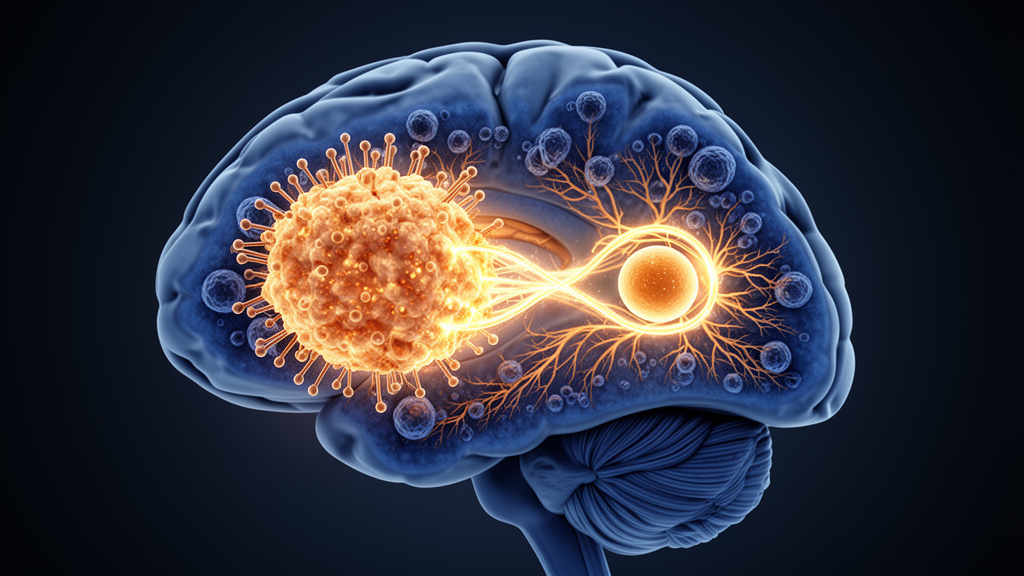
Glioblastoma, the most aggressive primary brain tumor in adults, has long defied the promise of precision oncology. Despite decades of effort, patients diagnosed with this disease still face a prognosis measured in months rather than years, and the standard-of-care regimen of surgery, radiotherapy, and temozolomide chemotherapy has barely moved the survival needle since its introduction. One of the most tantalizing targets in glioblastoma has always been the epidermal growth factor receptor, or EGFR, a cell-surface signaling molecule that is amplified or mutated in a large fraction of these tumors. Yet when EGFR inhibitors have been tested in clinical trials of glioblastoma patients, the results have been consistently and disappointingly negative. A new review published in the journal Medical Oncology by Nisar Ahmad and Arfan Ullah argues that the reason for these failures lies not in the choice of target, but in the tumor’s remarkable capacity to rewire its own signaling circuitry when that target is blocked.
The central thesis of the review is that the EGFR–STAT3 axis should not be understood as a simple linear pathway in which a signal travels from receptor to nucleus. Instead, the authors propose that it functions as an adaptive resistance hub, a dynamic network node that integrates inputs from growth factor signaling, inflammatory cytokines, hypoxic stress, tumor-associated macrophages, and the pharmacological pressure exerted by therapy itself. When EGFR is pharmacologically inhibited, the signal transducer and activator of transcription 3, or STAT3, can remain persistently active through alternative routes, sustaining the oncogenic transcriptional programs that EGFR blockade was supposed to shut down. This compensatory activation, the review argues, is the mechanistic heart of adaptive resistance in glioblastoma, and it explains why single-agent EGFR therapies have repeatedly come up short.
To appreciate the significance of this argument, it helps to understand the molecular mechanics involved. Under normal conditions, EGFR activation at the cell membrane triggers a cascade that includes the JAK kinases, which phosphorylate STAT3, allowing it to dimerize, translocate to the nucleus, and switch on genes that promote proliferation, survival, and invasion. In many cancers, this canonical route is the dominant driver of STAT3 activity. But glioblastoma is not an ordinary cancer. The tumor microenvironment of the brain is saturated with alternative activators of STAT3 that operate entirely independently of EGFR. Interleukin-6 and other inflammatory cytokines released by tumor-associated macrophages and microglia can activate the JAK/STAT3 pathway directly. Hypoxia, a hallmark of the glioblastoma microenvironment, has been shown to drive STAT3-mediated self-renewal of glioma stem-like cells through secretion-mediated signaling. The result is a tumor in which STAT3 remains lit even when the receptor at the top of the pathway has been chemically silenced.
This non-canonical, microenvironment-driven STAT3 activation has profound consequences for every pillar of current glioblastoma therapy. The review systematically lays out how persistent STAT3 signaling promotes glioma stemness, the maintenance of a self-renewing population of tumor-initiating cells that are notoriously resistant to both chemotherapy and radiotherapy. It also describes how STAT3 drives metabolic reprogramming, allowing tumor cells to adapt their energy metabolism to the nutrient-poor, oxygen-starved conditions of the tumor core. Perhaps most strikingly, STAT3 activity shapes the immune landscape of the tumor, fostering immune suppression and immune evasion that undermine both endogenous antitumor immunity and emerging immunotherapeutic approaches. In other words, STAT3 is not merely a backup signal; it is a master regulator of the resistant state that glioblastoma adopts under therapeutic pressure.
The clinical record bears out this mechanistic picture. The review recounts a series of high-profile failures in EGFR-directed therapy for glioblastoma, including trials of tyrosine kinase inhibitors such as erlotinib and osimertinib, the EGFR-targeted antibody-drug conjugate depatuxizumab mafodotin in EGFR-amplified newly diagnosed disease, and the EGFRvIII vaccine rindopepimut in relapsed tumors expressing that mutation. In each case, the molecular rationale was sound, and in each case the tumor found a way around the blockade. Recent work cited in the review has shown that resistance to EGFR antibody-drug conjugates is driven by transcriptional reprogramming and TEK-induced EGFR suppression, further illustrating that the tumor’s escape routes extend beyond simple pathway reactivation. What unites these observations is the emerging consensus that compensatory signaling, with STAT3 as a critical node, allows glioblastoma to survive targeted attack.
Importantly, the review does not treat this as a purely glioblastoma-specific problem. The authors draw on evidence from other cancers, including lung and colorectal tumors, where feedback activation of STAT3 has been documented as a general drug-resistance mechanism following EGFR inhibition. Clinical trials in EGFR-mutant lung cancer have tested combinations of EGFR inhibitors with JAK inhibitors such as ruxolitinib and momelotinib, providing proof of concept that dual blockade of the axis is feasible in patients. This cross-cancer perspective strengthens the argument that the EGFR–STAT3 crosstalk is a fundamental property of oncogene-addicted tumors rather than an idiosyncrasy of brain cancer, and it suggests that lessons learned in other tumor types could be translated to glioblastoma, provided the unique challenges of the blood–brain barrier are addressed.
That barrier is one of the practical obstacles the review confronts head-on. Delivering signaling inhibitors to the brain remains notoriously difficult, and the authors discuss drug-delivery innovations designed to overcome it, including sustained-release hydrogel systems engineered to deliver the JAK inhibitor ruxolitinib directly to glioma tissue. Preclinical studies have shown that ruxolitinib can enhance the cytotoxic and apoptotic effects of temozolomide on glioblastoma cells, and that EGFR blockade in glioblastoma brain tumor stem cells synergizes with JAK2/STAT3 pathway inhibition to abrogate the compensatory mechanisms that otherwise allow the stem-cell compartment to survive. These findings point toward a therapeutic logic of vertical and horizontal pathway suppression: hitting EGFR and STAT3 simultaneously, rather than sequentially, so that the tumor has no intact escape route left to exploit.
The review also surveys a broader arsenal of strategies aimed at the axis. Dual-target inhibitors that engage both EGFR and JAK3 have been developed and shown to overcome resistance driven by KRAS mutations in colorectal cancer, offering a template for similar agents in glioblastoma. Natural-product-derived compounds, including resveratrol, have been reported to enhance temozolomide efficacy by downregulating MGMT and inactivating STAT3 through its negative regulators, and to ameliorate the inflammatory tumor response by suppressing NLRP3 inflammasome activation via the JAK2/STAT3 pathway. Pyrimidine compounds such as BY4003 and BY4008 have been shown to inhibit glioblastoma cell growth by modulating JAK3/STAT3 signaling. Exosome-based approaches, including circPRKD3-loaded extracellular vesicles that inhibit STAT3 signaling while simultaneously remodeling the tumor microenvironment, represent a nanoscale delivery strategy that targets both the tumor cells and their supporting stroma. Each of these approaches attacks a different face of the same adaptive hub.
The immunological dimension of STAT3 inhibition deserves particular emphasis, because it may determine whether the next generation of glioblastoma therapy succeeds where checkpoint blockade has failed. STAT3 is a central regulator of the immunosuppressive glioblastoma microenvironment, shaping the behavior of tumor-associated macrophages, microglia, and regulatory T cells. Preclinical work has shown that combining radiation with STAT3 blockade triggers dendritic cell–T cell interactions in the glioma microenvironment and improves therapeutic efficacy, suggesting that STAT3 inhibition could convert a immunologically cold tumor into one that responds to immunotherapy. Given the disappointing results of anti-PD-1 and anti-PD-L1 agents as monotherapy in glioblastoma, the prospect of using axis-targeted therapy to prime the immune system represents one of the most compelling rationales for pursuing this strategy in the clinic.
What emerges from this comprehensive synthesis is a reframing of the glioblastoma problem. The tumor is not simply an EGFR-driven cancer that has eluded EGFR drugs; it is an adaptively resistant ecosystem in which the EGFR–STAT3 axis functions as the integrating hub of survival under stress. The authors’ systematic dissection of the molecular mechanisms underlying EGFR–STAT3 crosstalk, their attention to non-canonical and microenvironment-driven STAT3 activation, and their honest accounting of past therapeutic failures together build a case that future trials must be designed around combination strategies that close the escape routes before they open. No clinical data yet confirm that dual EGFR–STAT3 blockade will improve outcomes for glioblastoma patients, and the review is careful to frame its conclusions as a proposal grounded in accumulating evidence rather than a proven treatment paradigm. But the logic is clear and the preclinical foundation is strengthening: to break adaptive oncogenic resistance in one of medicine’s most lethal cancers, the field may need to stop attacking single nodes and start disabling the entire rewired network at once.
Subject of Research: Adaptive resistance mechanisms mediated by the EGFR–STAT3 signaling axis in glioblastoma
Article Title: Breaking adaptive oncogenic resistance in glioblastoma via targeting the EGFR–STAT3 axis
Article References: Ahmad, N., & Ullah, A. (2026). Breaking adaptive oncogenic resistance in glioblastoma via targeting the EGFR–STAT3 axis. Medical Oncology, 43(11), Article 327. https://doi.org/10.1007/s12032-026-03459-4
Image Credits: AI Generated
DOI: 10.1007/s12032-026-03459-4
Keywords: glioblastoma, EGFR, STAT3, JAK/STAT pathway, adaptive resistance, targeted therapy, tumor microenvironment, glioma stem cells, immunosuppression, temozolomide, drug resistance, brain tumor
Cite Scienmag News
Nathaniel Bowman. (October 9, 2026). Why EGFR Drugs Fail in Glioblastoma: A STAT3 Escape Route Takes Center Stage. Scienmag. https://scienmag.com/why-egfr-drugs-fail-in-glioblastoma-a-stat3-escape-route-takes-center-stage/
Nathaniel Bowman. "Why EGFR Drugs Fail in Glioblastoma: A STAT3 Escape Route Takes Center Stage." Scienmag, 9 October 2026, https://scienmag.com/why-egfr-drugs-fail-in-glioblastoma-a-stat3-escape-route-takes-center-stage/. Accessed 9 October 2026.
Nathaniel Bowman. "Why EGFR Drugs Fail in Glioblastoma: A STAT3 Escape Route Takes Center Stage." Scienmag. October 9, 2026. https://scienmag.com/why-egfr-drugs-fail-in-glioblastoma-a-stat3-escape-route-takes-center-stage/


