


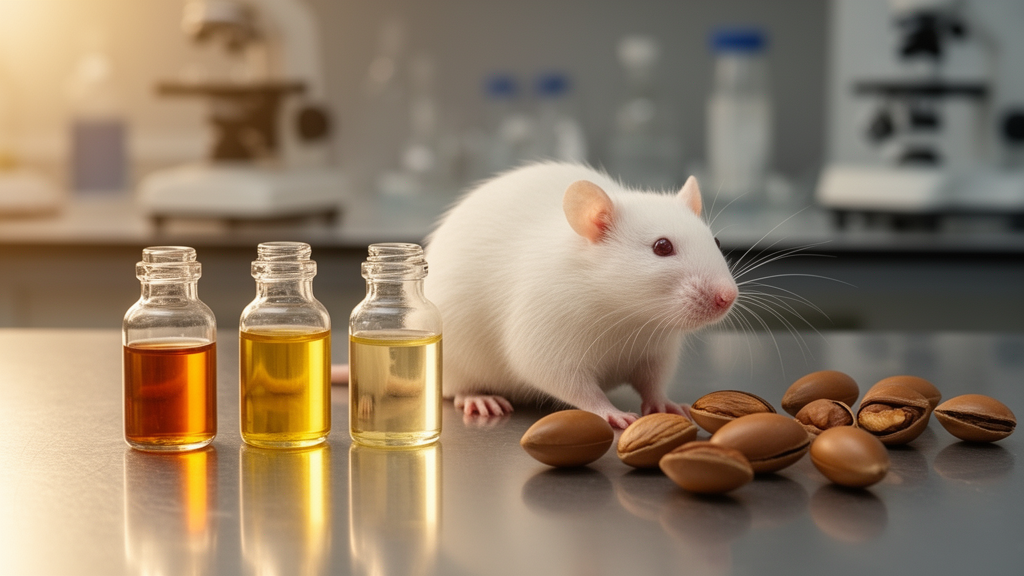
Morocco’s famed argan oil, long prized by chefs and cosmeticians alike, may be doing far more than adding a nutty flavor to couscous. A new study published in Food Science & Nutrition suggests that the golden oil pressed from the kernels of the endemic argan tree, Argania spinosa, can protect the hearts and livers of diabetic rats from some of the most damaging consequences of chronic high blood sugar. Remarkably, the researchers found that roasting the seeds before pressing, a traditional step that gives culinary argan oil its distinctive taste, did not diminish these protective effects, a finding with real implications for how the oil is produced and consumed.
The research team, led by Nour Elhouda Daoudi of Mohammed First University in Oujda, Morocco, together with collaborators at King Saud University and elsewhere, set out to answer a question that has lingered around this celebrated oil: does the heat of roasting destroy the very molecules that make argan oil medicinally interesting? Roasting is known to alter the chemical composition of vegetable oils, particularly their phenolic compounds, tocopherols, and antioxidant capacity. If heat-sensitive bioactives were the key to argan oil’s benefits, traditionally roasted oil might be nutritionally inferior to oil pressed from raw kernels. The new results suggest otherwise.
To test the question rigorously, the researchers harvested argan fruits from the Agadir region of Morocco in February 2019 and split the seeds into two batches. One batch was pressed raw to yield unroasted argan oil, with an extraction yield of 12.50 percent. The other was roasted at 100 degrees Celsius for roughly 20 minutes with continuous mixing to prevent localized overheating, then pressed to yield roasted oil at a much higher yield of 28.49 percent. Both oils were extracted mechanically, without solvents, using a cold-press expeller, then filtered and stored in opaque glass bottles at 4 degrees Celsius until use. Gas chromatography coupled with mass spectrometry, drawing on previously published characterization work, confirmed that both oils were dominated by unsaturated fatty acids, chiefly oleic and linoleic acids, alongside palmitic and stearic acids, with the unroasted oil showing a slightly higher ratio of unsaturated to saturated fats. One compound, the hydrocarbon heptadecane 2,6-dimethyl, appeared only in the roasted oil.
The biological test bed was a classic one: adult Wistar rats in which diabetes was induced by streptozotocin, a DNA-alkylating toxin originally isolated from the bacterium Streptomyces achromogenes that selectively destroys insulin-producing pancreatic beta cells. Thirty rats were divided into five groups of six: healthy controls, untreated diabetic controls, diabetic rats given the frontline drug metformin at 250 milligrams per kilogram of body weight per day, and two diabetic groups receiving either roasted or unroasted argan oil by daily oral gavage at 2 milliliters per kilogram of body weight. After six weeks of treatment, the researchers collected blood, liver, and heart tissue for a battery of biochemical assays and histopathological examination.
The metabolic results were striking. Untreated diabetic rats had blood glucose levels above 5 grams per liter, more than five times the normal value of roughly 0.94 grams per liter. Six weeks of treatment with either version of the oil drove glucose down to about 1.07 to 1.09 grams per liter, statistically indistinguishable from the metformin group and approaching normal. The oils also reversed the swelling of the liver that accompanies diabetic injury, restoring relative liver weight to near-normal values. In the lipid arena, both oils significantly lowered the elevated triglycerides, total cholesterol, LDL cholesterol, and VLDL cholesterol that streptozotocin had driven upward, while raising the depressed HDL cholesterol back toward healthy levels. Total cholesterol and HDL values in the treated animals were statistically comparable to those of the normal controls.
The liver, an organ that bears a heavy burden in diabetes, showed clear signs of recovery. Streptozotocin poisoning had sent the liver enzymes ALT, AST, and LDH surging into the bloodstream, a hallmark of hepatocyte damage, and had elevated both direct and total bilirubin, signaling impaired bile excretion. Treatment with either roasted or unroasted oil brought ALT and LDH back to normal and significantly reduced bilirubin, although AST remained somewhat elevated. Notably, metformin, for all its metabolic benefits, failed to significantly improve these liver markers in this model, and the authors caution that this may reflect the specific experimental conditions rather than an absence of hepatoprotective potential. The oils also restored hepatic glycogen, the stored form of glucose that insulin depletion drains from the liver, from a diabetic low of 0.64 milligrams per gram of tissue back to the normal value of about 1.01 milligrams per gram, likely by supporting the reactivation of glycogen synthesis.
Oxidative stress, the destructive accumulation of reactive oxygen species that underlies much diabetic tissue damage, was substantially tamed. Malondialdehyde, or MDA, the standard marker of lipid peroxidation, was sharply elevated in the livers and hearts of diabetic rats. Both oils cut MDA levels dramatically, and in the heart the values returned fully to normal, while in the liver they fell significantly though not completely. The antioxidant defenses themselves were replenished: reduced glutathione, depleted by diabetes, rebounded in both organs, and catalase, the enzyme that converts hydrogen peroxide into water and oxygen, recovered in the liver and improved in the heart. In a telling contrast, metformin did not significantly restore glutathione in this experiment, whereas both argan oils did.
Under the microscope, the protective story became vivid. Hematoxylin-eosin staining revealed that untreated diabetic livers were riddled with lipid droplets and patches of hepatocyte necrosis, while hearts showed disordered cardiac fibers and damaged cardiomyocyte nuclei. Masson’s trichrome staining, which dyes collagen blue, exposed extensive fibrosis, the scarring that stiffens organs and, in the heart, raises the risk of arrhythmias and heart failure. Treatment with either oil prevented the lipid droplets, limited collagen deposition in the portal triads of the liver and the myocardium of the heart, and preserved tissue architecture far better than untreated diabetes allowed. Metformin reduced collagen but did not fully normalize it. Quantification of collagen area confirmed that both oils significantly blunted fibrosis in both organs.
What explains this pharmacological breadth? The authors point to argan oil’s rich cargo of phytosterols, which compete with cholesterol for incorporation into intestinal micelles and thereby limit cholesterol absorption, and to its abundance of unsaturated fatty acids, which modulate hepatic lipid metabolism and oxidation. Its tocopherols and phenolics neutralize the free radicals that streptozotocin unleashes, easing the oxidative burden on liver and heart alike. Crucially, the comparison between roasted and unroasted oils showed no significant differences in glycemia, lipid profile, liver enzymes, bilirubin, glycogen, oxidative stress markers, or collagen deposition. The heat of traditional roasting, the study concludes, does not strip the oil of the molecules responsible for these effects, meaning that the aromatic, culinary-grade oil retains its medicinal character.
The findings come with caveats that the authors acknowledge candidly. Six animals per group is a small sample, the streptozotocin rat model cannot fully recapitulate human diabetes, and a single dose over six weeks says nothing about long-term outcomes or dose-response relationships. Clinical trials in humans remain the necessary next step, along with molecular studies to pin down the precise pathways involved. Still, with the International Diabetes Federation projecting 784 million people living with diabetes by 2040, and diabetic cardiomyopathy and liver disease among the most feared complications, the idea that a traditional food oil, roasted or not, could complement existing therapies is an appealing one. For the women of Morocco’s argan cooperatives who have roasted kernels by hand for centuries, science has now offered a measure of vindication: the heat that creates the flavor does not destroy the medicine.
Subject of Research: Hepatoprotective and cardioprotective effects of roasted versus unroasted argan oil in streptozotocin-induced diabetic rats
Article Title: Effects of Roasting on the Antioxidant and Lipid‐Modulating Activities of Argania spinosa Oil Under Diabetic Conditions
Article References: Daoudi, N. E., Aziz, M., Choukri, M., Younous, Y. A., Bouallegue, A., Elossaily, G. M., Gaafar, A.-R. Z., Said, M. A., Ali, H., & Bnouham, M. (2026). Effects of Roasting on the Antioxidant and Lipid‐Modulating Activities of Argania spinosa Oil Under Diabetic Conditions. Food Science & Nutrition, 14(10), Article e72441. https://doi.org/10.1002/fsn3.72441
Image Credits: AI Generated
DOI: 10.1002/fsn3.72441
Keywords: argan oil, Argania spinosa, diabetes, oxidative stress, hepatoprotection, cardioprotection, roasting, lipid profile, streptozotocin, antioxidants, fibrosis, Morocco
Cite Scienmag News
Alan Morgan. (October 9, 2026). Roasted or Raw, Argan Oil Shields Diabetic Hearts and Livers in Rat Study. Scienmag. https://scienmag.com/roasted-or-raw-argan-oil-shields-diabetic-hearts-and-livers-in-rat-study/
Alan Morgan. "Roasted or Raw, Argan Oil Shields Diabetic Hearts and Livers in Rat Study." Scienmag, 9 October 2026, https://scienmag.com/roasted-or-raw-argan-oil-shields-diabetic-hearts-and-livers-in-rat-study/. Accessed 9 October 2026.
Alan Morgan. "Roasted or Raw, Argan Oil Shields Diabetic Hearts and Livers in Rat Study." Scienmag. October 9, 2026. https://scienmag.com/roasted-or-raw-argan-oil-shields-diabetic-hearts-and-livers-in-rat-study/


