


Immune checkpoint blockade has transformed the treatment landscape for many cancers, turning once-fatal diagnoses into manageable conditions for a growing number of patients. Yet the sobering reality is that durable responses remain the exception rather than the rule. A substantial fraction of patients either fail to respond from the outset or relapse after an initial period of control. While much attention has focused on genetic alterations within tumor cells themselves, a new review published in Molecular Cancer argues that some of the most consequential players in immunotherapy resistance are far smaller than any cell — and travel between them as messengers of immune suppression.
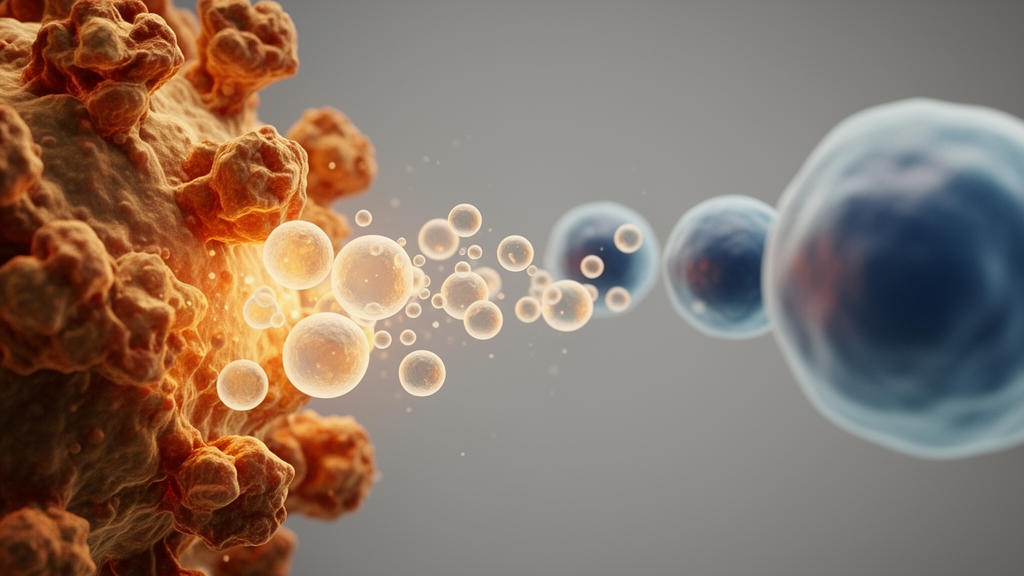
Those players are exosomes: nanoscale vesicles, typically measuring between 30 and 150 nanometers, that are released by virtually all cell types, including tumor cells and stromal cells within the tumor microenvironment. Far from being cellular debris, exosomes are carefully constructed packages. They carry a cargo of proteins, lipids, and nucleic acids — including noncoding RNAs — that reflect the physiological state of the cell that produced them. When these vesicles fuse with recipient cells, they deliver their payload and can reprogram the target cell’s behavior. The review, led by Xingyao Li and Qiang Zhang of Tianjin University of Traditional Chinese Medicine together with colleagues at the National University of Singapore and Chengdu University of Traditional Chinese Medicine, synthesizes mechanistic evidence that positions exosomes as mobile signaling hubs capable of propagating immune suppression throughout tumor–immune networks.
The first and perhaps best-characterized resistance mechanism involves exosomal PD-L1, the same checkpoint molecule targeted by blockbuster immunotherapy drugs. Tumor cells shed exosomes bearing PD-L1 on their surface, and these vesicles act as molecular decoys. Therapeutic antibodies designed to block PD-L1 on tumor cells can be sequestered by exosomal copies of the protein, effectively diluting the drug and bypassing the checkpoint blockade altogether. At the same time, exosomal PD-L1 can directly engage PD-1 receptors on T cells, delivering inhibitory signals that blunt antitumor immune activity even in the presence of treatment. This dual function — decoy and suppressor — means that exosomal PD-L1 can undermine immunotherapy through two distinct routes simultaneously.
Beyond checkpoint interference, the review catalogs several additional circuits through which exosomes erode immunotherapy efficacy. One involves the induction of effector T-cell exhaustion and apoptosis. Exosome cargo, including specific microRNAs and other noncoding RNAs, can push cytotoxic T cells toward a dysfunctional, exhausted state characterized by impaired killing capacity, or can trigger programmed cell death in the very immune cells that immunotherapy is meant to activate. Another mechanism targets antigen presentation: exosomes can interfere with the machinery by which tumor cells display fragments of abnormal proteins on their surface, the molecular flags that T cells use to recognize cancer. When antigen presentation is suppressed, even a robustly activated T cell population has nothing to find and attack.
The fourth major circuit described in the review involves the amplification of immunosuppressive niches within the tumor microenvironment. Exosomes released under conditions of cellular stress can recruit and activate regulatory T cells, myeloid-derived suppressor cells, and tumor-associated macrophages — cell populations that collectively enforce an immune-permissive, tumor-friendly environment. Through diverse signaling pathways, these vesicles help convert the tumor microenvironment from a battlefield into a sanctuary, insulating cancer cells from immune attack and rendering checkpoint inhibitors far less effective than they would otherwise be.
Perhaps the most conceptually provocative idea in the review is that cellular stress can reprogram exosome biogenesis and cargo selection. Tumor cells exposed to hypoxia, nutrient deprivation, chemotherapy, or immunotherapy pressure itself do not simply produce more exosomes; they change what those exosomes contain. This adaptive repackaging enables the horizontal transfer of resistance phenotypes between cells — a resistant tumor cell can, in effect, share its survival strategies with neighboring cells that have not yet acquired them. The authors frame this as a driver of evolution toward immune escape, suggesting that exosome-mediated communication functions as a systems-level resistance platform that bridges tumor-intrinsic genetic alterations and microenvironmental adaptation.
This framing has significant implications for how resistance should be understood and measured. If resistance is not solely a property of individual tumor cells but an emergent property of a communicating network, then single-cell genetic sequencing of tumor biopsies may capture only part of the story. Exosomes circulating in a patient’s blood could, in principle, serve as liquid biopsy markers of emerging resistance, offering a real-time window into the evolving immunosuppressive state of the tumor microenvironment without repeated invasive procedures. The review’s synthesis suggests that monitoring exosomal cargo — particularly exosomal PD-L1 and resistance-associated noncoding RNAs — could complement existing biomarkers used to predict and track immunotherapy response.
Crucially, the review does not stop at diagnosis; it argues that exosomes are therapeutically targetable. Three intervention points emerge from the mechanistic analysis. The first is to inhibit exosome production or release itself, reducing the overall flux of immunosuppressive vesicles shed by tumor and stromal cells. The second is to neutralize specific cargo functions — for example, by blocking the interaction between exosomal PD-L1 and T-cell PD-1, or by depleting exosomes carrying resistance-conferring RNAs from circulation. The third is to disrupt vesicle-mediated signaling more broadly, preventing exosomes from fusing with and reprogramming recipient immune cells. Each strategy aims at the same goal: restoring the responsiveness of tumors to checkpoint blockade by dismantling the vesicle-based communication network that sustains resistance.
The therapeutic angle is especially timely because it opens the possibility of rational combination regimens. If exosome-driven mechanisms contribute to both primary and acquired resistance, then pairing checkpoint inhibitors with exosome-targeting agents could prevent resistance from emerging in the first place or reverse it once established. The review’s authors, whose work was supported by China’s National Key Research and Development Program and Singapore’s National Medical Research Council, position exosome targeting not as a replacement for immunotherapy but as a complementary strategy that addresses a resistance axis conventional approaches have largely ignored.
There remain substantial hurdles between mechanistic insight and clinical practice. Exosomes are heterogeneous, their cargo varies by tumor type and stage, and selectively targeting pathological vesicles without disturbing the physiological exosome traffic that normal cells depend on is a formidable challenge. Standardized methods for isolating and characterizing exosomes are still evolving, complicating both biomarker development and drug development. Nevertheless, the review’s central message is clear and consequential: exosome-mediated communication may constitute a systems-level platform through which tumors orchestrate immune escape, and understanding this platform — its circuits, its adaptive reprogramming under stress, and its vulnerabilities — may prove essential to converting immunotherapy’s partial successes into durable cures for the many patients in whom current treatments still fail.
Subject of Research: Exosome-mediated mechanisms of resistance to cancer immunotherapy
Article Title: Exosomes and cancer immunotherapy resistance: mechanistic circuits, adaptive reprogramming, and therapeutic targetability
Article References: Li, X., Zhang, Q., Wang, J., Zhao, J., Cao, S., Qiu, F., Zhou, J., Dong, X., Wong, A. L.-A., Wang, L., Shen, C., Kang, N., & Goh, B.-C. (2026). Exosomes and cancer immunotherapy resistance: mechanistic circuits, adaptive reprogramming, and therapeutic targetability. Molecular Cancer. https://doi.org/10.1186/s12943-026-02791-7
Image Credits: AI Generated
DOI: 10.1186/s12943-026-02791-7
Keywords: exosomes, cancer immunotherapy, immune checkpoint blockade, PD-L1, tumor microenvironment, immunotherapy resistance, noncoding RNAs, T-cell exhaustion, antigen presentation, liquid biopsy, cancer biology, therapeutic targets
Cite Scienmag News
Nathaniel Bowman. (October 8, 2026). Tiny Vesicles, Big Problem: How Exosomes Drive Cancer Immunotherapy Resistance. Scienmag. https://scienmag.com/tiny-vesicles-big-problem-how-exosomes-drive-cancer-immunotherapy-resistance/
Nathaniel Bowman. "Tiny Vesicles, Big Problem: How Exosomes Drive Cancer Immunotherapy Resistance." Scienmag, 8 October 2026, https://scienmag.com/tiny-vesicles-big-problem-how-exosomes-drive-cancer-immunotherapy-resistance/. Accessed 8 October 2026.
Nathaniel Bowman. "Tiny Vesicles, Big Problem: How Exosomes Drive Cancer Immunotherapy Resistance." Scienmag. October 8, 2026. https://scienmag.com/tiny-vesicles-big-problem-how-exosomes-drive-cancer-immunotherapy-resistance/


