


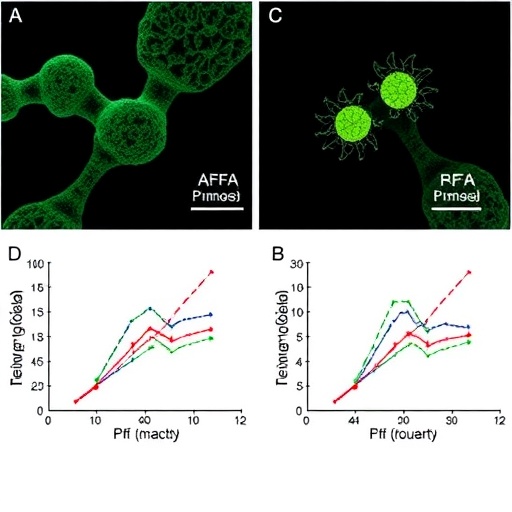
Parkinson’s disease research has taken a significant step toward a strategy that attacks one of the disorder’s most persistent biological problems: the accumulation of misfolded alpha-synuclein inside vulnerable brain cells. In a study published in npj Parkinson’s Disease, Carton, Gelders, Sathe and colleagues report that selectively degrading alpha-synuclein can prevent the protein from forming the pathological aggregates triggered by preformed fibrils, or PFFs. The findings offer experimental support for a disease-modifying approach aimed not merely at easing symptoms, but at interrupting a molecular process widely associated with neuronal damage in Parkinson’s disease.
Alpha-synuclein is a naturally occurring protein found at high levels in nerve terminals, where it is thought to participate in the regulation of synaptic vesicles—the small membrane-bound packages that carry neurotransmitters between neurons. Under healthy conditions, the protein is generally soluble and dynamically shaped. But under certain circumstances, alpha-synuclein can misfold and assemble into increasingly ordered structures. These assemblies can develop into fibrils and larger deposits known as Lewy bodies, a defining pathological feature of Parkinson’s disease and related neurodegenerative disorders. The loss of dopamine-producing neurons in the substantia nigra, a region involved in movement control, ultimately contributes to tremor, rigidity, slowness of movement and other symptoms.
The new work focuses on a particularly influential experimental model of alpha-synuclein pathology. Preformed fibrils are laboratory-generated fragments of misfolded alpha-synuclein that can be introduced into neuronal systems to initiate aggregation. Once inside cells, PFFs can act as seeds, recruiting the cell’s own soluble alpha-synuclein and encouraging it to adopt abnormal conformations. This seeded aggregation model has become an important tool for studying how pathology may begin and spread through neural circuits. It does not reproduce every feature of human Parkinson’s disease, but it allows researchers to observe the conversion of soluble protein into disease-associated assemblies under controlled conditions.
Rather than trying to block the initial formation of fibrils alone, the researchers examined whether targeted degradation of alpha-synuclein could reduce the supply of protein available for seeding. Targeted degradation is a molecular strategy in which a cellular disposal system is directed toward a selected protein. In principle, such an approach can lower the concentration of a harmful or excess protein by marking it for destruction through the cell’s own quality-control machinery. The concept is different from conventional drugs that simply occupy a protein’s active site or alter its activity. A degrader is designed to promote the physical removal of the protein, potentially producing a more sustained reduction even when only a fraction of the molecule is engaged at any one time.
According to the study’s reported conclusion, targeted removal of alpha-synuclein impeded aggregation induced by PFFs. This result is important because seeded aggregation depends on a continuing supply of soluble alpha-synuclein. When that pool is reduced, there may be fewer molecules available to attach to pathological seeds, extend fibrils or generate new aggregation-competent structures. The finding therefore supports a mechanistic link between protein abundance and the ability of PFF-triggered pathology to amplify. It also suggests that reducing alpha-synuclein may influence the process at a stage when misfolded seeds are already present, rather than only preventing the protein from misfolding in the first place.
The strategy, however, involves a delicate biological balancing act. Alpha-synuclein is not simply an unwanted waste product; it is a normal neuronal protein with proposed roles in synaptic communication and membrane dynamics. Removing too much of it, or removing it for too long, could potentially interfere with normal nerve-cell function. That makes selectivity, dose, timing and distribution central questions for future development. A useful therapeutic approach would need to reduce the pathological pool or the aggregation-prone forms of alpha-synuclein while preserving enough functional protein for healthy neuronal activity. The new findings do not by themselves resolve that challenge, but they strengthen the case for investigating degradation as a controllable way to influence the protein’s lifecycle.
The study also highlights why alpha-synuclein research has increasingly moved beyond the idea of a single, static deposit. Pathology may involve a shifting population of soluble oligomers, fibrils, membrane-associated species and larger inclusions, each with different biological properties. Some forms may be more toxic than others, while aggregates can also affect cellular transport, mitochondrial function, lysosomal clearance and immune signaling. By lowering the amount of alpha-synuclein available to participate in these transitions, targeted degradation could potentially affect several stages of the pathological cascade at once. Yet the precise molecular species most responsible for neuronal injury remain an active area of investigation, and future experiments will be needed to determine which forms are removed most efficiently.
For patients, the most important implication is that the work points toward a possible disease-modifying framework rather than an immediate treatment. Parkinson’s therapies currently focus largely on restoring dopamine signaling or managing symptoms, approaches that can improve movement but do not directly eliminate the underlying alpha-synuclein pathology. A degradation-based therapy would face formidable hurdles, including delivery into the brain, penetration of the blood-brain barrier, activity in the relevant neurons and long-term safety. Researchers will also need to establish whether blocking PFF-induced aggregation in experimental systems translates into protection of neurons, preservation of movement and slowing of disease progression in living organisms. Even so, the report provides a clear experimental signal: when the cellular supply of alpha-synuclein is deliberately reduced, a major laboratory trigger of pathological aggregation loses much of its ability to drive the process. That result places targeted protein degradation among the strategies now being pursued to confront Parkinson’s disease at its molecular source.
Cite Scienmag News
Diana Fleming. (August 21, 2026). Targeted Alpha-Synuclein Degradation Blocks PFF-Induced Aggregation. Scienmag. https://scienmag.com/targeted-alpha-synuclein-degradation-blocks-pff-induced-aggregation/
Diana Fleming. "Targeted Alpha-Synuclein Degradation Blocks PFF-Induced Aggregation." Scienmag, 21 August 2026, https://scienmag.com/targeted-alpha-synuclein-degradation-blocks-pff-induced-aggregation/. Accessed 3 September 2026.
Diana Fleming. "Targeted Alpha-Synuclein Degradation Blocks PFF-Induced Aggregation." Scienmag. August 21, 2026. https://scienmag.com/targeted-alpha-synuclein-degradation-blocks-pff-induced-aggregation/


