


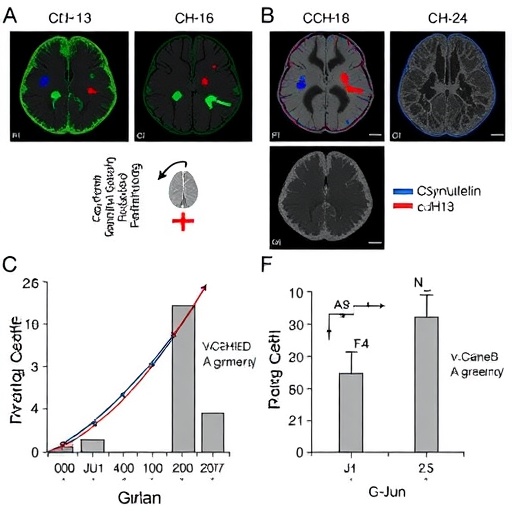
In a finding that could reshape how scientists think about one of medicine’s most stubborn brain cancers, researchers in China have discovered that α-synuclein—the protein most famous for its role in Parkinson’s disease—acts as a powerful suppressor of glioma progression, holding back tumor growth and invasion through a previously unrecognized molecular pathway. The study, published in the Journal of Neuro-Oncology, links a neurodegenerative disease protein to cancer biology in a way that few anticipated, and it offers promising new biomarkers and therapeutic targets for a disease that remains among the deadliest of human malignancies.
Gliomas are highly invasive primary brain tumors that infiltrate surrounding healthy tissue, making complete surgical removal nearly impossible and contributing to the poor survival rates that characterize these cancers. Despite decades of research, clinicians still lack sufficient biomarkers to accurately stratify patients by prognosis, and the mechanisms driving tumor invasion remain incompletely understood. The new research, led by Zhenwei Yu, Guoshi Huang, Gengxuan Yang, and Qing Chang of the Beijing Neurosurgical Institute at Capital Medical University, together with Jing Zhang of Zhejiang University School of Medicine, addresses both of these gaps by examining the role of α-synuclein, encoded by the SNCA gene, in glioma biology.
α-Synuclein has long been a central figure in neurodegeneration research. It was first identified in 1997 when mutations in its gene were found in families with Parkinson’s disease, and it has since been established as the principal component of the protein aggregates that define Parkinson’s pathology. The protein also accumulates in the glial cytoplasmic inclusions characteristic of multiple system atrophy, another devastating neurological disorder. Yet its function in brain tumors has remained murky. Epidemiological evidence has long suggested an inverse relationship between cancer and neurodegenerative disease—patients with one appear less likely to develop the other—hinting that proteins central to neurodegeneration might play protective roles in cancer, or vice versa. The new study provides some of the most direct functional evidence yet for this idea in the context of glioma.
To investigate, the team analyzed SNCA and α-synuclein expression in glioma specimens collected at Beijing Tiantan Hospital and cross-referenced their findings with two large public genomic databases: the Chinese Glioma Genome Atlas (CGGA) and The Cancer Genome Atlas (TCGA). The pattern that emerged was striking. α-Synuclein expression was significantly lower in high-grade gliomas—the most aggressive and lethal forms of the disease—compared with lower-grade tumors. Moreover, higher levels of the protein correlated with favorable molecular features and, critically, with prolonged overall survival across patient cohorts. In other words, the more α-synuclein a patient’s tumor expressed, the better their outlook tended to be.
These correlational findings prompted the researchers to ask a deeper question: was α-synuclein merely a passive marker of less aggressive disease, or was it actively suppressing tumor behavior? To answer this, they performed gain- and loss-of-function experiments in U87 glioma cells and in patient-derived glioma stem-like cells (GSLCs)—a population of cells thought to drive tumor initiation, recurrence, and resistance to therapy. When the researchers forced glioma cells to overexpress α-synuclein, the cells became markedly less able to proliferate, migrate, and invade through surrounding matrix. Conversely, when they knocked down α-synuclein expression in glioma stem-like cells using RNA interference techniques, the cells proliferated faster and invaded more aggressively. The effect was bidirectional and reproducible, strongly suggesting a causal role rather than a mere association.
The mechanistic heart of the study lies in the identification of the pathway through which α-synuclein exerts its suppressive effects. Using a combination of molecular assays, the researchers found that α-synuclein increases the expression of CDH13, the gene encoding Cadherin 13, also known as T-cadherin—a calcium-independent cell adhesion molecule that has previously been implicated as a tumor suppressor in cancers including lung, bladder, breast, pancreatic, and renal cell carcinoma. Elevated CDH13, in turn, activates the JNK/c-Jun signaling cascade, a mitogen-activated protein kinase pathway involved in cellular stress responses, proliferation, and differentiation. Downstream of this activation, the researchers observed a significant reduction in the expression of two matrix metalloproteinases, MMP3 and MMP9. These enzymes are well-known facilitators of tumor invasion; they degrade the extracellular matrix and basement membranes that physically constrain tumor cells, clearing the way for malignant cells to migrate through brain tissue.
The team then confirmed the pathway’s importance through rescue experiments. When they knocked down CDH13 in α-synuclein-overexpressing cells, or when they inhibited JNK signaling with pharmacological blockers, the suppressive effects of α-synuclein were largely abolished. Migration and invasion of glioma cells returned to near-baseline levels, demonstrating that the CDH13–JNK/c-Jun axis is not merely one of several downstream effects but is, at least in part, the critical conduit through which α-synuclein restrains tumor progression.
To translate these findings from the culture dish to the living brain, the researchers employed an orthotopic xenograft model, in which human glioma cells are implanted directly into the brains of experimental animals. The results were compelling: tumors engineered to overexpress α-synuclein grew more slowly than control tumors, and the animals carrying these tumors survived significantly longer. This in vivo confirmation is a crucial step, as it demonstrates that α-synuclein’s anti-tumor effects operate within the complex microenvironment of the brain, not just under simplified laboratory conditions.
The implications of this work are potentially far-reaching. First, SNCA expression could serve as a prognostic biomarker, helping clinicians stratify glioma patients more accurately and tailor treatment intensity accordingly. Patients whose tumors retain high α-synuclein expression might be counseled differently than those whose tumors have silenced the gene. Second, and perhaps more excitingly, the CDH13–JNK/c-Jun pathway offers a potential therapeutic target. If ways can be found to restore or mimic α-synuclein’s tumor-suppressive function—whether through gene therapy, small molecules that activate CDH13 expression, or drugs that modulate JNK signaling—it may be possible to restrain the invasive behavior that makes gliomas so difficult to treat. It is worth noting that α-synuclein itself presents a therapeutic paradox: the same protein that suppresses glioma progression is also the driver of neurodegeneration in Parkinson’s disease, meaning that any therapeutic strategy would need to be exquisitely targeted to avoid harmful cross-effects.
The study also builds on earlier work hinting at α-synuclein’s role in glioblastoma. Previous research published in 2025 showed that α-synuclein expression in glioblastoma could restore tumor suppressor function and rescue temozolomide drug resistance, the standard chemotherapy for these tumors. Other studies have documented that α-synuclein binds to cytoplasmic vesicles in U251 glioblastoma cells and that its overexpression in U373 cells sensitizes them to tumor necrosis factor-alpha-induced cell death. The new findings extend this growing body of evidence by delineating a specific signaling axis—CDH13 to JNK to c-Jun to reduced MMP3 and MMP9—that mechanistically explains how the protein restrains invasion, the hallmark behavior that makes gliomas lethal.
There remain important caveats. The study’s functional work was performed primarily in U87 cells and patient-derived glioma stem-like cells, and while the orthotopic xenograft model provides in vivo validation, the broader applicability across the full molecular diversity of glioma subtypes—defined by markers such as IDH mutation status, EGFR amplification, and MGMT methylation—will require further study. Clinical translation, whether of α-synuclein as a biomarker or of the CDH13–JNK/c-Jun axis as a drug target, will also demand rigorous prospective validation in independent patient cohorts.
Nevertheless, the research represents a notable conceptual advance. It bridges two of the most challenging fields in neuroscience—neurodegeneration and neuro-oncology—through a single molecule, and it provides both a plausible biological explanation for the epidemiological inverse relationship between Parkinson’s disease and cancer and a concrete molecular pathway worthy of therapeutic exploration. For patients facing glioma, a disease whose invasive nature has defeated surgeons and oncologists for generations, the discovery that a protein long associated with neurodegeneration can actively suppress tumor invasion opens a genuinely new line of investigation. As the field moves forward, the CDH13–JNK/c-Jun axis identified by the Beijing and Hangzhou team may well become a focal point for the next generation of anti-invasive therapies in brain cancer.
Cite Scienmag News
Nathaniel Bowman. (September 3, 2026). α-Synuclein curbs glioma growth via CDH13–JNK/c-Jun signaling pathway. Scienmag. https://scienmag.com/%ce%b1-synuclein-curbs-glioma-growth-via-cdh13-jnk-c-jun-signaling-pathway/
Nathaniel Bowman. "α-Synuclein curbs glioma growth via CDH13–JNK/c-Jun signaling pathway." Scienmag, 3 September 2026, https://scienmag.com/%ce%b1-synuclein-curbs-glioma-growth-via-cdh13-jnk-c-jun-signaling-pathway/. Accessed 3 September 2026.
Nathaniel Bowman. "α-Synuclein curbs glioma growth via CDH13–JNK/c-Jun signaling pathway." Scienmag. September 3, 2026. https://scienmag.com/%ce%b1-synuclein-curbs-glioma-growth-via-cdh13-jnk-c-jun-signaling-pathway/


