


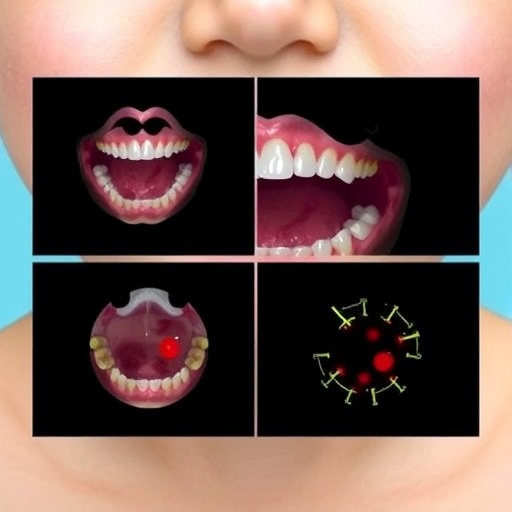
A 12-year-old boy from Jordan whose months of painful monthly mouth ulcers, recurring scrotal sores, and troublesome skin lesions were finally traced to an early form of Behçet’s disease is now doing well on a simple first-line treatment, according to a case report published in the open-access journal Clinical Case Reports. The case offers a vivid illustration of how pediatric Behçet’s disease typically announces itself gradually, one manifestation at a time, and why clinicians who recognize the pattern early may be able to spare children years of misdirected care and preventable suffering.
Behçet’s disease is a chronic, relapsing inflammatory condition classified as a variable-vessel vasculitis, meaning it can inflame blood vessels of virtually any size throughout the body. Its hallmark is recurrent oral aphthous ulceration, but many patients also develop genital ulcers, acne-like papulopustular skin lesions, tender nodules known as erythema nodosum, eye inflammation, and joint pain. A subset of patients goes on to develop gastrointestinal, neurologic, or vascular involvement, which accounts for much of the disease’s serious long-term morbidity. Although pediatric-onset Behçet’s disease is well recognized, diagnosis in children is notoriously delayed because the manifestations rarely appear all at once. In the prospective PEDBD cohort, one of the largest studies of childhood Behçet’s disease, oral aphthosis was the presenting feature in most children, and the average delay before a second manifestation appeared was nearly three years. That stepwise evolution is precisely what makes cases like the Jordanian boy’s so instructive: he arrived with a coherent constellation of findings that allowed the diagnosis to be made before any major organ was threatened.
The boy’s story began more than a year before his diagnostic assessment, when he started experiencing recurrent painful mouth ulcers roughly every month. Over the same period, he developed episodic painful scrotal ulceration, intermittent aching in his hands, feet, and knees that was more pronounced on the right side, fatigue, tender lymph nodes in his neck, and intermittent abdominal discomfort accompanied by nausea and occasional diarrhea. He denied any loss of vision but reported intermittent itching of his eyes. His past medical history included a pulmonary hydatid cyst, a parasitic infection, that had been successfully treated two years earlier; the treating team considered this entirely incidental to his later inflammatory presentation. There was no family history of Behçet’s disease, recurrent ulceration, or inflammatory bowel disease. Because genital ulceration in a child raises both infectious and safeguarding concerns, clinicians carefully reviewed those possibilities; no history suggestive of sexual exposure or abuse was found, and the overall pattern pointed instead toward a non-infectious inflammatory disorder.
On examination, the boy had two classic aphthous ulcers inside his mouth, one on the inner upper lip and a larger one on the posterior buccal mucosa near the upper molars. His groin showed clustered papulopustular lesions on a background of post-inflammatory hyperpigmentation, and scattered red papules dotted his buttocks. Both knees were tender to palpation but without swelling, deformity, or restricted movement. He also had mild tenderness in the right upper quadrant of his abdomen and bilaterally tender cervical lymph nodes. The remainder of the systemic examination was unremarkable. Taken together, the recurrent oral and genital ulceration, the papulopustular skin lesions, and the arthralgia raised suspicion of Behçet’s disease, prompting a battery of investigations designed both to support that diagnosis and to rule out the long list of mimics that can present similarly in children.
One of the most diagnostically useful findings was a positive pathergy test, a bedside procedure in which the skin is pricked with a sterile needle and observed for 24 to 48 hours. In this patient, a well-demarcated red papule with a central punctate lesion developed at the needle-prick site on his forearm, reflecting the exaggerated inflammatory response to minor trauma that characterizes Behçet’s disease. Laboratory results reinforced the picture of active systemic inflammation: his erythrocyte sedimentation rate was elevated at 43 millimeters per hour, his white cell count mildly raised at 13.87 × 10³ per microliter, and his platelets elevated at 415 × 10³ per microliter. Hemoglobin was normal at 13.7 grams per deciliter, although the mean corpuscular volume was low at 74.4 femtoliters, an isolated borderline microcytosis that the authors acknowledge could reflect concurrent iron deficiency or a thalassemia trait, since ferritin, iron studies, and hemoglobinopathy screening were not available in the records reviewed. Kidney and liver function, including bilirubin and electrolytes, were normal. Critically, genetic and autoimmune testing provided no alternative explanation: HLA-B*51, the best-known genetic susceptibility marker for Behçet’s disease, was negative, as were antinuclear antibody and extractable nuclear antigen panels, and celiac screening with tissue transglutaminase IgA was not supportive of celiac disease.
The negative HLA-B51 result deserves particular emphasis because it highlights a common misconception. Although HLA-B51 is a recognized susceptibility marker for Behçet’s disease, it is neither necessary nor sufficient for diagnosis, and a negative result by no means excludes the condition. In daily pediatric practice, the clinical phenotype and supportive bedside findings such as the pathergy reaction are often far more informative than genetic testing. In this case, mapping the boy’s features onto established classification frameworks showed how well they fit. Under the International Criteria for Behçet’s Disease, recurrent oral aphthosis, genital aphthosis, skin lesions, and a positive pathergy test together comfortably exceed the classification threshold. The pediatric-specific PEDBD criteria are also satisfied, since the oral, genital, and skin domains provide the minimum number of distinct categories that framework requires. Because no single laboratory or histopathologic test is diagnostic of Behçet’s disease, this kind of structured clinical mapping remains the backbone of diagnosis, especially in children whose early disease is often incomplete.
The differential diagnosis in a child with recurrent oral and genital ulceration is long and includes infections, inflammatory bowel disease, celiac disease, nutritional deficiencies, cyclic neutropenia, erythema multiforme, connective tissue diseases, reactive arthritis, and autoinflammatory syndromes. In adolescents, venereal infection must also be considered when clinically relevant. In this patient, the combined mucocutaneous pattern, the systemic inflammatory markers, and the positive pathergy reaction made isolated recurrent aphthous stomatitis unlikely, while the negative autoimmune serology and non-supportive celiac screening weakened several alternative explanations. Reassuringly, ophthalmologic assessment with slit-lamp and dilated fundus examination found no uveitis, and a gastroenterology review arranged because of his abdominal symptoms was unremarkable. The absence of ocular involvement was particularly welcome, since eye disease in Behçet’s can threaten vision over time and is of special concern in male patients.
Treatment followed current recommendations for mild, mucocutaneous-predominant disease. The boy received topical corticosteroids for his ulcers, specifically triamcinolone acetonide 0.1 percent oral paste for mouth lesions and clobetasol propionate 0.05 percent ointment for genital lesions, along with supportive measures including a chlorhexidine mouth rinse and nonsteroidal anti-inflammatory drugs as needed. He was then started on colchicine at 0.5 milligrams twice daily, a first-line systemic option for recurrent mucocutaneous disease that he tolerated well. The response was rapid and sustained. By about three weeks, he had experienced no recurrence of genital ulceration, no full oral ulcer flare, clear improvement in his papulopustular lesions, and marked reduction in arthralgia with minimal need for analgesics. His gastrointestinal symptoms partially improved, and no alarm features emerged. At four weeks, repeat safety monitoring of his complete blood count, renal function, hepatic parameters, bilirubin, and electrolytes remained entirely normal. That early response is biologically plausible: Behçet’s mucocutaneous activity is thought to be driven substantially by neutrophil-mediated inflammation, a process that colchicine is well positioned to dampen.
By his most recent follow-up in April 2026, the boy remained clinically well, with sustained improvement of his mucocutaneous disease, no evidence of ocular involvement, an unremarkable gastroenterology evaluation, and normal safety labs throughout. His genital ulcers had never returned, no major oral flare had occurred, his skin had continued to clear, and his joint pain had markedly subsided. The authors are careful to note, however, that this good trajectory does not close the case. Pediatric Behçet’s disease can evolve over years, and ocular, gastrointestinal, neurologic, or vascular involvement may emerge later even in children who begin with apparently limited mucocutaneous disease. Structured surveillance therefore remains essential, and the report recommends pragmatic strategies for settings where subspecialty access is limited: baseline ophthalmologic assessment when feasible, symptom-based review at primary-care visits, family counseling on red-flag symptoms, and targeted referral as new features develop.
The broader lesson of this case is twofold. First, early recognition of pediatric Behçet’s disease is achievable when clinicians assemble the pieces, oral ulcers, genital ulcers, compatible skin lesions, arthralgia, and a pathergy test, into a coherent whole rather than dismissing each symptom in isolation, and phenotype-based first-line treatment can deliver meaningful relief within weeks. Second, an apparently mild initial phenotype demands lifelong vigilance rather than complacency, because the severe outcomes of Behçet’s disease are largely tied to central nervous system and major-vessel involvement that may declare itself only later. The report’s authors also candidly acknowledge limitations, including incomplete characterization of the boy’s borderline microcytosis and the need for longitudinal observation to assess relapse pattern and later organ involvement. For families and clinicians alike, the message is that monthly mouth ulcers in a child are never just mouth ulcers; they can be the first visible tremor of a systemic vasculitis, and the window for gentle, effective intervention opens earliest for those who look closely.
Cite Scienmag News
Ophelia Keating. (September 3, 2026). Pediatric Behçet’s Disease Marked by Recurring Oral and Genital Ulcers. Scienmag. https://scienmag.com/pediatric-behcets-disease-marked-by-recurring-oral-and-genital-ulcers/
Ophelia Keating. "Pediatric Behçet’s Disease Marked by Recurring Oral and Genital Ulcers." Scienmag, 3 September 2026, https://scienmag.com/pediatric-behcets-disease-marked-by-recurring-oral-and-genital-ulcers/. Accessed 3 September 2026.
Ophelia Keating. "Pediatric Behçet’s Disease Marked by Recurring Oral and Genital Ulcers." Scienmag. September 3, 2026. https://scienmag.com/pediatric-behcets-disease-marked-by-recurring-oral-and-genital-ulcers/


