


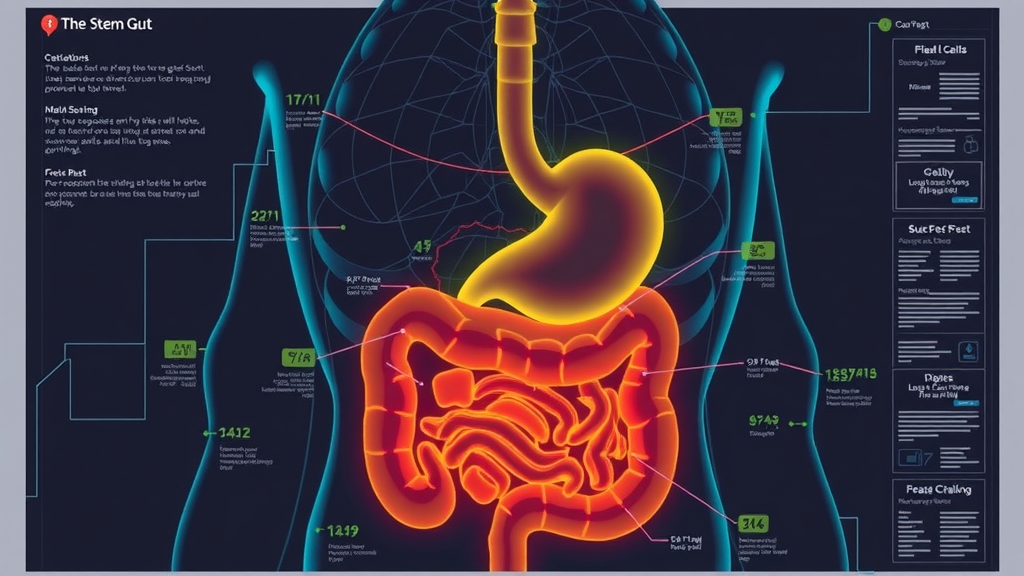
The human intestine performs some of the most demanding construction work in the body. Its lining turns over roughly every five days, shedding billions of cells and replacing them from a small pool of intestinal stem cells tucked into pockets called crypts. When this assembly line falters, the consequences cascade across an astonishing range of diseases, from inflammatory bowel disease and radiation injury to infections and cancer. Now, a landmark Roadmap published in Nature Reviews Gastroenterology & Hepatology by members of the Intestinal Stem Cell Consortium (ISCC), a multi-institution collaboration sponsored by the National Institute of Diabetes and Digestive and Kidney Diseases from 2009 to 2024, lays out the state of the art in intestinal stem cell biology and charts the path toward harnessing these cells for clinical translation, both to accelerate repair of the gut lining in living patients and eventually to generate functioning intestinal tissue outside the body.
The consortium’s central message is that the intestinal stem cell is not a fixed identity but a flexible state dictated by its surroundings. Historically, researchers divided intestinal stem cells into two camps: actively self-renewing cells marked by the gene Lgr5, which continuously fuel the everyday turnover of the epithelium, and a facultative or ‘reserve’ population, sometimes called revival stem cells, that normally rests but springs into action after catastrophic injury. Landmark studies identified Bmi1, Hopx, and other markers for these reserve cells, and work by Tian and colleagues showed that a reserve population could render Lgr5-positive cells dispensable under certain conditions. The new Roadmap argues that neither population is intrinsically determined; rather, homeostatic and regenerative properties emerge from signals emanating from a specialized local niche, the microenvironment that cradles the stem cells and instructs their behavior.
That niche has turned out to be far more complex than early models suggested. In the small intestine, Paneth cells interdigitated among the stem cells at the crypt base supply Wnt ligands, antimicrobial peptides, and metabolic support, although studies by Kim, Escudero, and Shivdasani demonstrated that Lgr5 stem cells can function even without Paneth cells, pointing to redundant support systems. Surrounding the crypts lies a constellation of mesenchymal cell types, each with distinct jobs. PDGFRα-positive pericryptal stromal cells and GLI1-expressing cells serve as critical sources of Wnts and the Wnt-amplifying protein RSPO3, while FOXL1-positive telocytes, CD34-positive mesenchymal cells, and distinct smooth muscle layers contribute additional Wnt ligands, bone morphogenetic protein gradients, and structural organization. Graded BMP signaling within the crypt architecture, as shown by Kraiczy and colleagues, even directs the self-organization of the Wnt-secreting niche itself, revealing an intricate feedback loop between epithelium and stroma.
Beyond fibroblasts, the consortium highlights an expanding cast of niche regulators. Lymphatic vessels act as signaling hubs, with lymphangiocrine signals required for proper repair after cytotoxic injury. Enteric glial cells, macrophages, and type 3 innate lymphoid cells all modulate stem cell activity, the latter through the cytokine interleukin-22, which promotes stem-cell-mediated epithelial regeneration and protects stem cells from immune-mediated damage. Even nerves participate: adrenergic nerves regulate intestinal regeneration through IL-22 signaling from innate lymphoid cells, and nociceptive neurons have been implicated in tumor progression via a CGRP-RAMP1 axis. Mechanosensing adds another dimension, with PIEZO-dependent mechanical signals proving essential for stem cell fate decisions. The picture that emerges is of a layered, multi-tissue ecosystem in which epithelial, mesenchymal, immune, vascular, lymphatic, and neural components jointly govern when stem cells divide, differentiate, or revert to a fetal-like regenerative program.
Cellular plasticity sits at the heart of this regenerative capacity. When Lgr5-positive stem cells are ablated, a remarkable variety of differentiated and progenitor cells can dedifferentiate and rebuild the stem cell compartment. Dll1-positive secretory progenitors, enterocyte-lineage daughters, Paneth cells responding to Notch activation, enteroendocrine lineage cells, and even tuft cells, which Huang and colleagues showed act as regenerative stem cells in the human intestine, have all been documented to revert. Single-cell transcriptomics revealed a revival stem cell state marked by fetal programs, and parasitic helminths were found to induce fetal-like reversion in the niche as part of the immune response. Chromatin studies explain how this is possible: the intestinal epithelium maintains broadly permissive chromatin that allows rapid switching between lineages, while factors such as Ascl2, ATOH1 phosphorylation, and Frizzled5-controlled chromatin accessibility orchestrate the dedifferentiation process. In disease, this plasticity is a double-edged sword, since the same reserve and revival programs that heal wounds can seed radioresistant, cancer-initiating populations.
Translating this biology into therapies has been propelled by organoid technology, one of the field’s transformative breakthroughs. In 2009, Sato and colleagues showed that single Lgr5 stem cells could build crypt-villus structures in vitro without a mesenchymal niche, and Ootani’s team sustained intestinal epithelium in a Wnt-dependent stem cell culture system the same year. Human colon, adenoma, and Barrett’s epithelium organoids followed in 2011, as did the directed differentiation of human pluripotent stem cells into intestinal tissue by Spence and colleagues. The technology has since matured dramatically: scaffold-guided morphogenesis produces homeostatic mini-intestines, organoid-derived tissues have repaired damaged bowel in vivo, patient-derived jejunal mucosal grafts have been engineered from children with intestinal failure, and organ-repurposing approaches have treated short bowel syndrome in preclinical models. Human intestinal organoids transplanted into humanized mice develop immune tissue, and coordinated differentiation protocols now generate organoids with functional enteric neurons and vasculature, bringing engineered gut tissue closer to clinical reality.
The consortium also emphasizes how organoids and microfluidic gut-on-a-chip systems have become indispensable for studying host-pathogen interactions. Complex human gut microbiomes have been cultured in anaerobic intestine-on-a-chip devices, and human colon models have revealed uncoupled apical and basal cytotoxicity during early Clostridioides difficile toxin exposure. These platforms allow researchers to interrogate how pathogens reshape the stem cell compartment and how microbial metabolites, such as microbiota-derived lactate, accelerate stem-cell-mediated epithelial development. Innate immune receptors on the stem cells themselves, including Toll-like receptor 4 and NOD2, which protects LGR5-positive cells from reactive oxygen species through mitophagy, directly link microbial sensing to regenerative capacity, suggesting that microbiome manipulation could become a therapeutic lever for mucosal healing.
Pharmacological strategies form the second pillar of the therapeutic roadmap. R-spondin ligands, potent amplifiers of Wnt signaling, have been shown to induce intestinal stem cells, augment chemoradioprotection, promote colonic regeneration, and ameliorate experimental colitis, while surrogate Wnt agonists that phenocopy canonical signaling support organoid growth and show promise for FZD-specific activation of repair pathways. Glucagon-like peptide-2 agonists, already approved for short bowel syndrome, stimulate S-phase entry of Lgr5-positive stem cells and support stem cell and Paneth cell repair during graft-versus-host disease, with newer agents such as glepaglutide showing anti-inflammatory and mucosal regenerative effects. Structure-based design has even decoupled the tissue-protective functions of interleukin-22 from its pro-inflammatory actions, opening the door to safer regenerative cytokine therapies. The consortium cautions, however, that stimulating proliferation carries oncogenic risk, and that niche dysregulation is predicted to underlie compromised regeneration in conditions such as inflammatory bowel disease, where stem cells retain epigenetic memories of inflammation.
The Roadmap closes with a candid inventory of remaining knowledge gaps. Human intestinal stem cells differ from their mouse counterparts in ways that matter for therapy, and spatial atlases of the adult human intestine, single-cell maps of human development, and spatial transcriptomic surveys of regeneration are only now filling the void. Bioengineered colon organoids with in vivo-like complexity, bioprinted tissues recapitulating macro-scale self-organization, and instant collagen assembly for tissue engineering are pushing manufacturing capabilities forward, while lessons from the first pluripotent stem cell therapies entering the clinic, including stem-cell-derived islets for diabetes and retinal cells for macular degeneration, offer a template for regulatory and safety pathways. What the ISCC’s fifteen-year arc demonstrates is that the intestine, once considered too dynamic and complex to rebuild, has yielded its construction secrets to systematic, collaborative biology. The remaining challenge is engineering: assembling niche cells, immune compartments, vasculature, and nerves into transplantable tissue that can survive, integrate, and function in patients whose own guts can no longer keep pace. If the consortium’s roadmap holds, the era of stem-cell-built intestines may be closer than anyone dared predict when the effort began.
Subject of Research: Intestinal stem cell biology and stem cell-based strategies for intestinal regeneration and tissue engineering
Article Title: Building and regenerating intestines by manipulating intestinal stem cells
Article References: Kuo, C. J., Blutt, S., Donowitz, M., Estes, M. K., Guha, C., Klein, O. D., Li, L., Niland, J. C., Santos, A. J. M., Shivdasani, R. A., Spence, J. R., Swanson, C. J., Wang, T. C., Yan, K. S., Zachos, N. C., & Helmrath, M. A. (2026). Building and regenerating intestines by manipulating intestinal stem cells. Nature Reviews Gastroenterology & Hepatology. https://doi.org/10.1038/s41575-026-01242-4
Image Credits: AI Generated
DOI: 10.1038/s41575-026-01242-4
Keywords: intestinal stem cells, stem cell niche, organoids, epithelial regeneration, Wnt signaling, R-spondin, interleukin-22, cellular plasticity, short bowel syndrome, inflammatory bowel disease, tissue engineering, Intestinal Stem Cell Consortium
Cite Scienmag News
Drew Townsend. (September 12, 2026). Scientists Map the Master Plan for Rebuilding the Human Gut with Stem Cells. Scienmag. https://scienmag.com/scientists-map-the-master-plan-for-rebuilding-the-human-gut-with-stem-cells/
Drew Townsend. "Scientists Map the Master Plan for Rebuilding the Human Gut with Stem Cells." Scienmag, 12 September 2026, https://scienmag.com/scientists-map-the-master-plan-for-rebuilding-the-human-gut-with-stem-cells/. Accessed 17 October 2026.
Drew Townsend. "Scientists Map the Master Plan for Rebuilding the Human Gut with Stem Cells." Scienmag. September 12, 2026. https://scienmag.com/scientists-map-the-master-plan-for-rebuilding-the-human-gut-with-stem-cells/


