


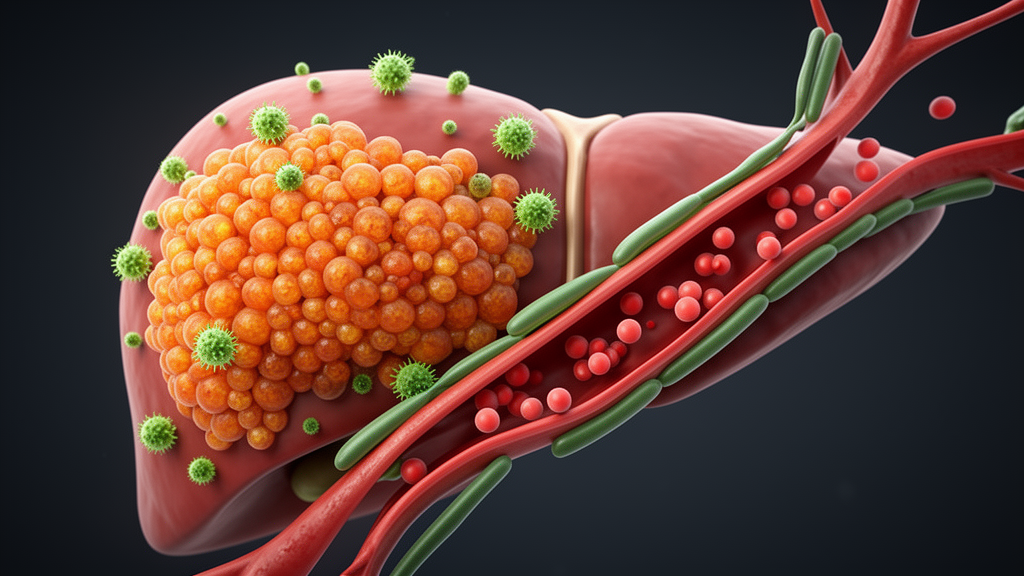
Liver cancer remains one of the deadliest malignancies worldwide, and one of its most treacherous features is a phenomenon known as microvascular invasion, or MVI. This is the moment when tumor cells slip into tiny blood vessels at the edge of the tumor, seeding the ground for recurrence even after a seemingly successful surgery. Now, a team of researchers in China has taken a single-cell look at what actually happens inside tumors that have begun this vascular escape, and their findings reveal a strikingly coordinated ecosystem of immune cells, blood vessels, and cancer cells that appears to underlie the process. The study, published in BMC Cancer, offers both a new molecular signature for identifying dangerous tumors and a shortlist of candidate drugs that might one day disrupt the invasion program.
The research team, led by Jincheng Lai and Jianchen Zheng of Hangzhou Medical College and Taizhou Hospital of Zhejiang Province, together with corresponding authors Minghui Cai and Wenbin Ji, set out to answer a question that has long frustrated hepatologists and surgeons. Microvascular invasion is a well-established predictor of poor outcomes in hepatocellular carcinoma, the most common form of liver cancer, but pathologists can only detect it by examining resected tissue under a microscope after surgery. The intercellular interactions and molecular features that drive MVI have remained incompletely understood, leaving clinicians without reliable tools to predict which tumors will invade before they are cut out, and without clear therapeutic targets to block the process once it begins.
To dissect the biology, the investigators performed single-cell RNA sequencing on tumor samples from eight patients with hepatocellular carcinoma: four whose tumors showed microvascular invasion on pathological examination and four whose tumors did not. Single-cell RNA sequencing is a technique that reads out the gene activity of thousands of individual cells within a tissue, allowing researchers to identify distinct cell types and states that would be invisible in bulk measurements of the whole tumor. By comparing the cellular composition and gene expression profiles of MVI-positive and MVI-negative tumors at this resolution, the team could ask precisely which cells change their behavior when invasion is underway.
The comparison revealed two major alterations in the MVI-positive tumor microenvironment. First, the composition of macrophages, the tissue-resident immune cells that populate tumors, was shifted, with a subset of macrophages carrying the marker MRC1 becoming enriched in invasive tumors. Second, the endothelial cells that line the tumor’s blood vessels showed signs of capillarization, a change in their molecular state that reflects remodeling toward small-vessel characteristics. These two features, an abundance of MRC1-positive macrophages and a remodeled vascular lining, appeared to go hand in hand with the invasive phenotype, suggesting that the tumor ecosystem as a whole reorganizes to support vascular spread rather than a single cell type acting alone.
Perhaps the most intriguing molecular finding centered on a gene called PTPRM, which encodes a receptor protein tyrosine phosphatase that sits on the cell surface. Using two computational tools for inferring communication between cells, CellChat and NicheNet, the researchers found that PTPRM-PTPRM homophilic signaling, in which the same receptor on two different cells binds to itself across the gap between them, was strengthened in MVI-positive tumors. Crucially, this signaling axis connected three compartments at once: MRC1-positive macrophages, endothelial cells, and tumor cells. In other words, the immune cells, the vessel lining, and the cancer cells appeared to be talking to each other through this single receptor-receptor interaction, forming a communication axis that may coordinate the invasion process.
Because a discovery in eight patients could always be a fluke of small numbers, the team took several steps to validate their findings. They examined an independent single-cell cohort of hepatocellular carcinoma patients and found that both the altered macrophage composition and the endothelial capillarization were reproduced in the external dataset. They then turned to spatial transcriptomics, a technology that maps gene expression onto intact tissue sections using publicly available Visium spatial data. This analysis localized PTPRM expression to endothelial-enriched regions that sat adjacent to macrophage-rich areas specifically in MVI-positive tumors, providing physical confirmation that the signaling partners identified computationally are indeed neighbors in the tumor architecture.
The researchers went further, asking whether the molecular signature they had uncovered could predict patient survival. They constructed a direction-weighted compartment programme score from candidate genes drawn from the MRC1-positive macrophage, endothelial, and tumor compartments, and evaluated this score in three large public cohorts: TCGA-LIHC, GSE14520, and the ICGC LIRI-JP cohort. The score was significantly associated with overall survival across all three cohorts, with log-rank p-values of 1.44 times ten to the minus six, 1.82 times ten to the minus four, and 8.57 times ten to the minus five respectively. Even after adjusting for available clinicopathological variables, the score remained an independent prognostic factor in the TCGA-LIHC and ICGC LIRI-JP cohorts, meaning it carried predictive information beyond what standard clinical measures could provide.
Beyond prognosis, the study also generated therapeutic hypotheses. The team used Connectivity Map analysis, a computational method that matches disease-associated gene expression patterns against a database of drug-induced expression profiles, to nominate compounds predicted to reverse the MVI-associated expression pattern. Topping the ranked list was geldanamycin, a natural-product antibiotic that inhibits the molecular chaperone Hsp90 and has been studied extensively as an anticancer agent. The authors are careful to frame this as hypothesis-generating rather than a treatment recommendation, but the approach illustrates how single-cell dissection of a tumor ecosystem can be translated directly into a prioritized list of candidate drugs for experimental testing.
The study was approved by the Research Ethics Committee of Taizhou Hospital and used surgically resected hepatocellular carcinoma tissues collected as surplus frozen specimens after routine pathological examination, fully anonymized with no identifying information involved. The work was funded by the Zhejiang Province Basic Public Welfare Research Program and the Zhejiang Provincial Medical and Health Science and Technology Plan, both of which support projects aimed at using multimodal magnetic resonance imaging and deep learning to assess liver cancer features and predict postoperative outcomes. That imaging-oriented funding context hints at a broader ambition: if the cellular and molecular features of microvascular invasion can be mirrored in radiological signatures, the findings could eventually feed into noninvasive tools for stratifying patients before surgery.
For a disease in which the difference between a curative resection and early recurrence often hinges on invisible vascular invasion, the value of a cellular and molecular framework for MVI is hard to overstate. By identifying MRC1-positive macrophage enrichment, endothelial capillarization, and strengthened PTPRM-PTPRM homophilic signaling as defining features of the invasion-associated tumor ecosystem, and by validating these features across independent single-cell, spatial, and bulk cohorts, the researchers have provided a foundation on which predictive imaging biomarkers, targeted therapies, and refined pathological stratification could each be built. The road from a single-cell atlas to the clinic is long, and the drug predictions await experimental confirmation, but the study demonstrates how resolving tumors cell by cell can turn a pathological observation into a mechanistic map of one of liver cancer’s most dangerous behaviors.
Subject of Research: Single-cell characterization of the microvascular invasion-associated tumor ecosystem in hepatocellular carcinoma
Article Title: MRC1⁺ macrophages and endothelial PTPRM signalling characterize a microvascular invasion–associated tumor ecosystem in hepatocellular carcinoma
Article References: Lai, J., Zheng, J., Feng, Y., Zhu, L., Chen, Y., Lou, S., Xu, J., Cai, M., & Ji, W. (2026). MRC1⁺ macrophages and endothelial PTPRM signalling characterize a microvascular invasion–associated tumor ecosystem in hepatocellular carcinoma. BMC Cancer. https://doi.org/10.1186/s12885-026-16918-y
Image Credits: AI Generated
DOI: 10.1186/s12885-026-16918-y
Keywords: hepatocellular carcinoma, microvascular invasion, single-cell RNA sequencing, MRC1-positive macrophages, PTPRM signalling, endothelial capillarization, tumor microenvironment, spatial transcriptomics, Connectivity Map, geldanamycin, prognostic signature, cell-cell communication
Cite Scienmag News
Nathaniel Bowman. (October 16, 2026). Scientists Map the Cellular Ecosystem That Drives Liver Cancer Spread Through Blood Vessels. Scienmag. https://scienmag.com/scientists-map-the-cellular-ecosystem-that-drives-liver-cancer-spread-through-blood-vessels/
Nathaniel Bowman. "Scientists Map the Cellular Ecosystem That Drives Liver Cancer Spread Through Blood Vessels." Scienmag, 16 October 2026, https://scienmag.com/scientists-map-the-cellular-ecosystem-that-drives-liver-cancer-spread-through-blood-vessels/. Accessed 16 October 2026.
Nathaniel Bowman. "Scientists Map the Cellular Ecosystem That Drives Liver Cancer Spread Through Blood Vessels." Scienmag. October 16, 2026. https://scienmag.com/scientists-map-the-cellular-ecosystem-that-drives-liver-cancer-spread-through-blood-vessels/


