


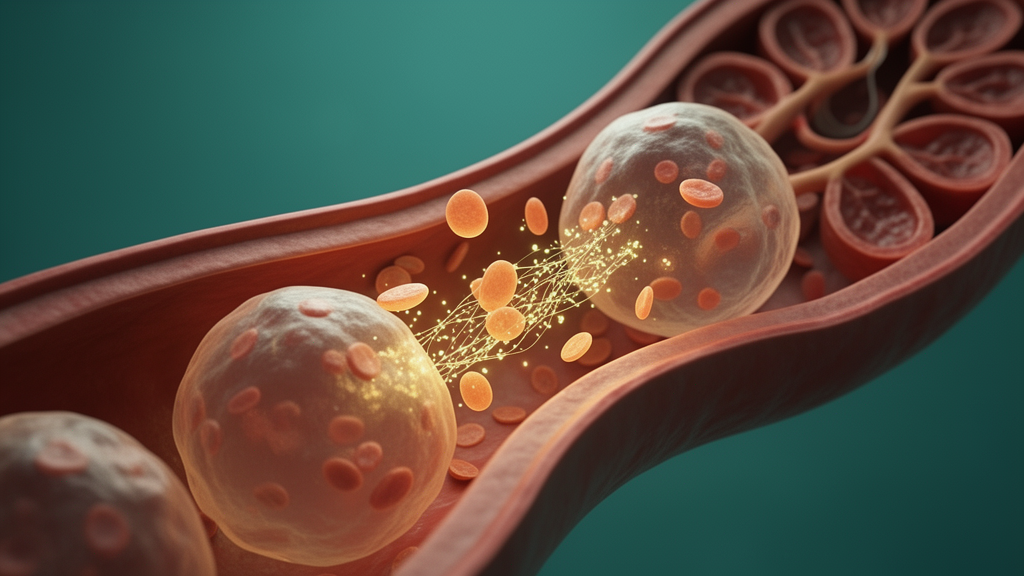
Chronic kidney disease silently undermines the immune system, leaving patients dangerously vulnerable to infections that healthy bodies shrug off with ease. Now, researchers in China have traced this immune failure to an unexpected saboteur: platelets, the tiny blood fragments better known for clotting wounds, are shipping a destructive molecular cargo to the very cells that should be fighting disease. The finding, published in Experimental & Molecular Medicine, reveals that platelet-derived microparticles from patients with chronic kidney disease carry a specific microRNA that forces CD8+ T cells into a state of premature senescence, effectively aging the immune system decades ahead of schedule.
The research team, led by Yuewen Sun and Qigang Lan at Xinqiao Hospital of Army Medical University in Chongqing, began by examining peripheral blood mononuclear cells from patients with end-stage renal disease using single-cell RNA sequencing data. What they found was striking: markers of T cell exhaustion, such as PD-1 and CTLA-4, showed only mild differences between healthy controls and kidney disease patients. But cellular senescence scores were dramatically upregulated, particularly in CD8+ T effector cells. When the researchers validated these findings in clinical samples from 75 non-dialysed patients with chronic kidney disease stages 3 to 5, they confirmed that CD57, a recognized marker of terminally differentiated senescent T cells, was significantly elevated within the CD8+ T cell compartment but not within CD4+ T cells. The proportion of CD28-negative CD57-positive cells, a key hallmark of immunosenescence, was also markedly increased in CD8+ T cells as kidney disease progressed.
Senescence is not merely a passive slowing of cell division. It is an active, irreversible state characterized by persistent DNA damage, cell-cycle arrest, and telomere shortening. The researchers detected elevated levels of γ-H2A.X, a marker of DNA double-strand breaks, and p21, a cyclin-dependent kinase inhibitor that enforces cell-cycle arrest, in CD8+ T cells from chronic kidney disease patients. Senescence-associated β-galactosidase activity was increased, and the cells produced elevated levels of proinflammatory cytokines including tumour necrosis factor and interferon gamma. Telomere length analysis revealed progressive shortening in CD8+ T cells from patients compared with age-matched healthy controls, indicating that the immune cells were aging faster than the patients themselves.
Crucially, the senescent phenotype was accompanied by severe mitochondrial dysfunction. The researchers measured oxygen consumption rates using Seahorse extracellular flux analysis and found decreased basal respiration, reduced maximal respiratory capacity, and diminished ATP production in CD8+ T cells from patients. Mitochondrial membrane potential, assessed using tetramethylrhodamine methyl ester staining, was significantly reduced. Reactive oxygen species, measured using dichlorodihydrofluorescein diacetate, were overproduced. These mitochondrial defects are not incidental; they are considered an essential component of the senescent phenotype, and their presence in chronic kidney disease CD8+ T cells suggested that the organelles themselves might be the trigger for premature aging.
To determine whether platelets were responsible, the team established a co-culture system in which platelets from healthy donors or chronic kidney disease patients were incubated with CD8+ T cells from healthy individuals at a ratio of 450 platelets per T cell. After seven days, CD8+ T cells co-cultured with platelets from chronic kidney disease patients showed dramatic acceleration of senescence, with upregulation of γ-H2A.X, p21, senescence-associated β-galactosidase, and CD57. Proinflammatory cytokines were elevated, and telomeres were shortened. Remarkably, mitochondrial membrane potential decreased and impaired respiratory function appeared by day three, preceding the visible senescence markers by two days. Pretreatment with N-acetylcysteine, an antioxidant, effectively prevented both the mitochondrial dysfunction and the cellular senescence, confirming that oxidative stress was the critical mediator.
The researchers then turned their attention to platelet-derived microparticles, submicron vesicles released by activated platelets that are the most abundant microparticles in blood. They confirmed that patients with chronic kidney disease showed enhanced platelet activation, with increased P-selectin and activated GPIIb/IIIa expression, and correspondingly increased microparticle release. Levels of these microparticles in peripheral blood correlated positively with senescence biomarkers and reactive oxygen species in CD8+ T cells, and negatively with mitochondrial membrane potential. When the team labelled microparticles with DiO fluorescent dye, they observed successful internalization by CD8+ T cells both in vitro and after tail-vein injection in mice. Microparticles from chronic kidney disease patients induced mitochondrial dysfunction and senescence in CD8+ T cells, effects that were again relieved by N-acetylcysteine. Notably, the microparticles did not significantly affect proliferation or aggravate senescence in already-senescent CD57-positive cells but mainly promoted the transition of CD57-negative cells toward the senescent phenotype.
Because platelets possess fully functional microRNA machinery, the researchers performed microRNA expression profiling on microparticles from five patients and five healthy controls. They identified 109 upregulated and 57 downregulated microRNAs in chronic kidney disease-derived microparticles. Among the top five upregulated candidates, miR-550a-5p was the most remarkably elevated. When CD8+ T cells were transfected with corresponding microRNA mimics, only miR-550a-5p significantly increased senescence-associated β-galactosidase positivity, γ-H2A.X expression, and p21 expression. The microRNA content in CD8+ T cells was much lower than in microparticles, but levels in patient CD8+ T cells were higher than in healthy controls, suggesting that the microRNA was being transferred from microparticles to T cells. In megakaryocytic MEG-01 cells, only serum from chronic kidney disease patients, not peripheral blood mononuclear cells, elevated miR-550a-5p expression, implying that soluble factors in the uraemic milieu drive its upregulation in platelets.
To identify the molecular target, the team used bioinformatic analysis with TargetScan, miRDB, and MitoCarta 3.0 databases, predicting 19 potential mitochondrial target genes. Gene ontology enrichment showed significant enrichment in mitochondrial protein transport. Among these, PMPCB, the catalytic subunit of mitochondrial processing peptidase, emerged as the leading candidate. This enzyme recognizes and cleaves mitochondrial targeting signals necessary for proper protein import and maturation. The researchers found that PMPCB expression was significantly decreased at both mRNA and protein levels in CD8+ T cells from patients, and that miR-550a-5p mimic transfection selectively reduced PMPCB levels. Dual-luciferase reporter assays confirmed that miR-550a-5p directly binds to the 3-prime untranslated region of human PMPCB, decreasing luciferase activity of the wild-type but not a mutant construct. Knockdown of PMPCB in CD8+ T cells induced decreased mitochondrial membrane potential, impaired respiratory function, increased reactive oxygen species, and upregulated senescence biomarkers, while PMPCB overexpression alleviated miR-550a-5p-induced mitochondrial dysfunction and cellular senescence.
The downstream mechanism involves NDUFS8, a nuclear-encoded core subunit of mitochondrial complex I that is cleaved by mitochondrial processing peptidase. The researchers detected both precursor and mature forms of NDUFS8 in CD8+ T cells from patients, whereas only the mature form existed in healthy controls. Co-culture with patient platelets or miR-550a-5p treatment induced cleavage failure of NDUFS8, and co-immunoprecipitation confirmed a physical interaction between PMPCB and NDUFS8. This cleavage failure impairs electron transfer from NADH to ubiquinone, decreasing the NAD-prime to NADH ratio, a reduction intimately linked to aging. Patients with chronic kidney disease exhibited decreased NAD-prime levels and NAD-prime to NADH ratios in CD8+ T cells. When the team treated cells with nicotinamide mononucleotide, an intermediate in NAD-prime biosynthesis, mitochondrial dysfunction was effectively attenuated and platelet-induced cellular senescence was prevented. Intraperitoneal injection of nicotinamide mononucleotide at 500 milligrams per kilogram in mice treated with miR-550a-5p agomir similarly alleviated mitochondrial dysfunction and senescence in CD8+ T cells.
These findings collectively demonstrate that platelet-derived miR-550a-5p drives CD8+ T cell senescence through the PMPCB-NDUFS8 axis in chronic kidney disease. The study identifies a novel platelet-T cell interaction that contributes to the immunosuppressed state of patients and opens two promising therapeutic avenues: inhibiting miR-550a-5p function or replenishing NAD-prime through nicotinamide mononucleotide supplementation. Because immunosenescence contributes not only to infections but also to cancers, autoimmune diseases, cardiovascular disorders, and neurodegenerative conditions, the implications extend well beyond nephrology. The researchers suggest that antiplatelet agents, which already exhibit anti-aging properties through antioxidant and immunometabolic mechanisms, may serve as an additional strategy for alleviating CD8+ T cell senescence. While direct in vivo evidence that microparticles induce senescence still warrants further investigation, and the specific uraemic toxins responsible for driving miR-550a-5p upregulation remain unknown, this work provides a compelling molecular framework for understanding why patients with chronic kidney disease age their immune systems prematurely and offers tangible targets for intervention.
Subject of Research: Platelet-derived microparticles drive CD8+ T cell senescence in chronic kidney disease by transferring microRNA-550a-5p
Article Title: Platelet-derived microparticles induce CD8+ T cell senescence in chronic kidney disease via the transfer of microRNA-550a-5p
Article References: Sun, Y., Lan, Q., Wang, Y., Xie, M., Wu, X., Lv, L., Xin, Q., Chen, J., Zhong, X., Yao, M., Gong, S., Zhou, S., Wang, J., & Zhao, J. (2026). Platelet-derived microparticles induce CD8+ T cell senescence in chronic kidney disease via the transfer of microRNA-550a-5p. Experimental & Molecular Medicine. https://doi.org/10.1038/s12276-026-01876-z
Image Credits: AI Generated
DOI: 10.1038/s12276-026-01876-z
Keywords: chronic kidney disease, CD8+ T cells, platelet-derived microparticles, microRNA-550a-5p, immunosenescence, mitochondrial dysfunction, PMPCB, NDUFS8, nicotinamide mononucleotide, Experimental & Molecular Medicine, Platelet-derived, microparticles
Cite Scienmag News
Jerry Hayes. (October 16, 2026). Platelet particles sabotage immune cells in kidney disease through a single microRNA. Scienmag. https://scienmag.com/platelet-particles-sabotage-immune-cells-in-kidney-disease-through-a-single-microrna/
Jerry Hayes. "Platelet particles sabotage immune cells in kidney disease through a single microRNA." Scienmag, 16 October 2026, https://scienmag.com/platelet-particles-sabotage-immune-cells-in-kidney-disease-through-a-single-microrna/. Accessed 16 October 2026.
Jerry Hayes. "Platelet particles sabotage immune cells in kidney disease through a single microRNA." Scienmag. October 16, 2026. https://scienmag.com/platelet-particles-sabotage-immune-cells-in-kidney-disease-through-a-single-microrna/


