


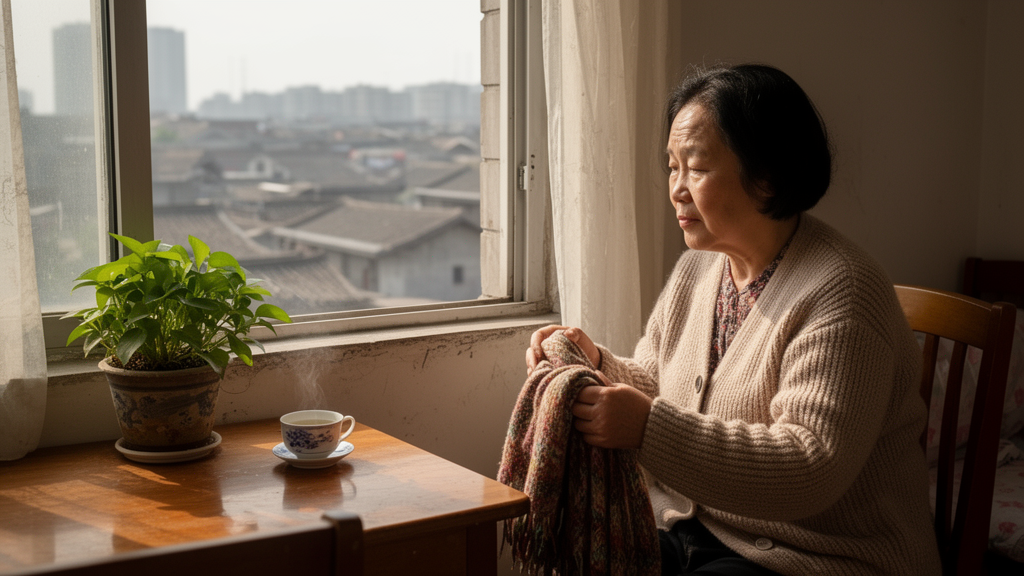
When a woman finishes breast cancer treatment, the surgery scars fade and the chemotherapy sessions end, but for many survivors the hardest part of the journey is just beginning. A new study from China reveals that nearly one in three working-age breast cancer survivors struggles with anxiety, depression, or the haunting fear that their cancer will return, and that where a survivor lives and what kind of job she held before diagnosis can dramatically shape her psychological recovery.
The research, conducted at a major cancer hospital in Beijing, surveyed 443 postoperative breast cancer survivors between the ages of 18 and 60, all of whom had been diagnosed at least two years earlier and were employed at the time of their diagnosis. Using validated clinical screening tools, the team found that 27.1 percent of participants experienced anxiety symptoms, 29.3 percent showed signs of depression, and 31.8 percent reported fear of cancer recurrence, a persistent worry that shadows many survivors long after their last treatment.
What makes the findings particularly striking is the role of geography. Survivors who actually lived in Beijing were significantly less likely to report fear of cancer recurrence compared to those who traveled from other cities for treatment and follow-up care. The researchers suggest that Beijing residents may benefit from closer proximity to specialized oncology hospitals, stronger social networks, and better access to psychosocial support services, advantages that survivors in non-central cities simply do not enjoy.
Occupation before diagnosis also emerged as a key factor. Survivors who had held professional positions, such as managers or skilled specialists, showed a trend toward higher rates of depressive symptoms compared to those in non-professional jobs. The researchers speculate that leaving the workforce after treatment may actually reduce work-related stress for non-professional workers, contributing to their lower depression rates, though they caution this explanation remains speculative and requires confirmation in larger studies.
Interestingly, the study found that simply returning to work, defined as resuming the same position with the same working hours, was not significantly associated with better mental health outcomes. This contradicts previous international research suggesting that working survivors generally experience lower levels of depression, anxiety, and fear of recurrence. The researchers note that some participants reported remaining employed in government agencies or state-owned enterprises with substantially reduced responsibilities, arrangements that may carry different psychological demands than a full return to their original roles.
The prevalence figures in this study were notably higher than those reported in earlier Chinese research. A 2014 Hong Kong study found 18.4 percent of breast cancer survivors experienced anxiety one year after treatment, while a 2012 Shanghai study identified major depressive disorder in 20.6 percent of survivors. The higher rates in the current study could reflect the narrower focus on survivors who were employed at diagnosis and of working age at survey time, differences in assessment scales, or the lingering psychological toll of the COVID-19 pandemic, which the study was conducted shortly after.
On the other hand, the fear of cancer recurrence prevalence was actually lower than that reported in a previous Hong Kong-based study using the same assessment tool, which found 45.7 percent of breast cancer patients experiencing FCR symptoms. The researchers explain that the Hong Kong study assessed participants just eight weeks after surgery, while their participants were at least two years from diagnosis, likely giving them greater confidence in their physical condition as they progressed further into recovery.
Perhaps most surprisingly, clinical factors such as cancer stage, time since diagnosis, treatment modalities, and recurrence status showed no significant association with mental health outcomes in this study. This stands in contrast to previous international research where chemotherapy exposure and longer treatment duration were significant predictors of psychological distress. The researchers suggest that the low recurrence rate in their sample, just 4.5 percent, may have reduced statistical power to detect such associations, and that differences in measurement instruments and assessment timing may account for the discrepancies.
The study has important implications for how supportive care is delivered to breast cancer survivors in China and beyond. The researchers recommend digital health interventions that provide standardized screening for fear of cancer recurrence and psychoeducation, particularly for survivors in non-central cities where access to specialized psychological support is limited. They also urge clinicians to pay special attention to the mental health needs of survivors from professional backgrounds and to consider integrating vocational rehabilitation with psychological support services.
As breast cancer incidence continues to rise in China, especially among younger women, the number of long-term survivors of working age will only grow. This study makes clear that surviving cancer is not simply about surviving the disease itself, but about navigating the complex interplay of geography, occupation, and healthcare access that determines whether a survivor truly thrives in the years after treatment ends.
Subject of Research: Mental health status and associated factors among Chinese postoperative breast cancer survivors of working age: a cross-sectional study
Article Title: Mental health status and associated factors among Chinese postoperative breast cancer survivors of working age: a cross-sectional study
Article References: Su, Z., Wang, Y., Yan, Y., Naito, T., He, Y., Yokokawa, H., & Tang, L. (2026). Mental health status and associated factors among Chinese postoperative breast cancer survivors of working age: a cross-sectional study. Supportive Care in Cancer, 34(11), Article 1109. https://doi.org/10.1007/s00520-026-11334-1
Image Credits: AI Generated
DOI: 10.1007/s00520-026-11334-1
Keywords: breast cancer, mental health, anxiety, depression, fear of cancer recurrence, return to work, China, survivorship, Mental, health, status, associated
Cite Scienmag News
Nathaniel Bowman. (October 16, 2026). Geography and job type shape mental health in Chinese breast cancer survivors. Scienmag. https://scienmag.com/geography-and-job-type-shape-mental-health-in-chinese-breast-cancer-survivors/
Nathaniel Bowman. "Geography and job type shape mental health in Chinese breast cancer survivors." Scienmag, 16 October 2026, https://scienmag.com/geography-and-job-type-shape-mental-health-in-chinese-breast-cancer-survivors/. Accessed 16 October 2026.
Nathaniel Bowman. "Geography and job type shape mental health in Chinese breast cancer survivors." Scienmag. October 16, 2026. https://scienmag.com/geography-and-job-type-shape-mental-health-in-chinese-breast-cancer-survivors/


