Resistance to BRAF inhibitors remains one of the major obstacles in treating melanoma, and a new open-access study published in the Journal of Experimental & Clinical Cancer Research points to an unexpected accomplice: the tumour’s own immune microenvironment. The research, released online on 22 October 2026 as a peer-reviewed accepted manuscript, reports that melanoma cells with acquired resistance to BRAF inhibitors do not simply fend off the drug on their own. Instead, they actively remodel the immune landscape around the tumour, creating a shield of immunosuppressive cells that helps the cancer survive therapy.
The study focused on BRAF-mutant melanoma cell lines that had developed resistance to BRAF inhibitors. Using cytokine profiling, gene expression sequencing and functional assays, the researchers found that resistant cells reactivate actomyosin contractility, a mechanical program of cellular tension, and simultaneously adopt an altered secretory phenotype. Among the soluble factors they release, one stood out: macrophage colony-stimulating factor, or M-CSF, produced at increased levels alongside a broader set of secreted mediators.
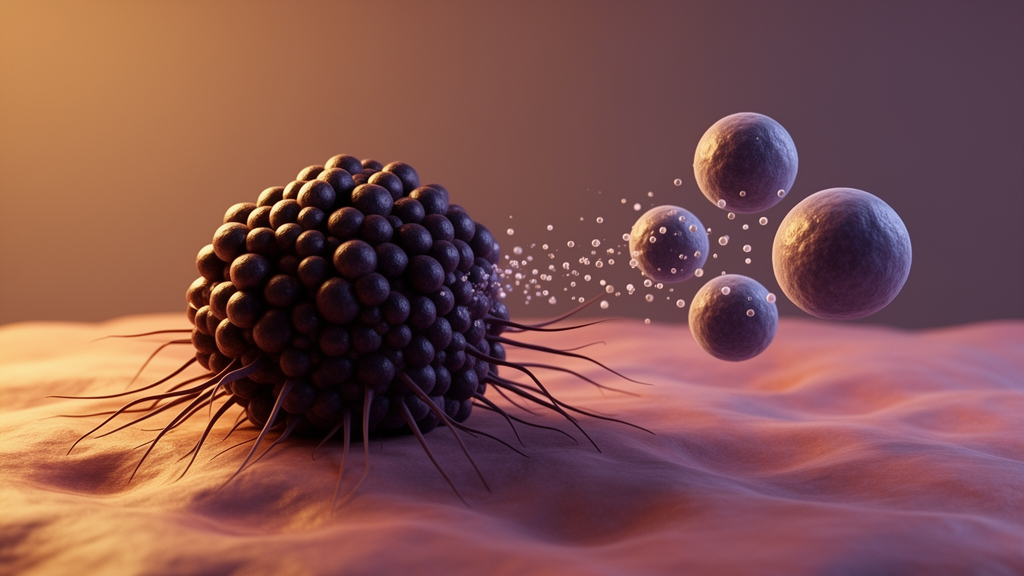
To test what this remodelled secretome does to immune cells, the team differentiated human monocytes into macrophages using conditioned media from the melanoma cells. The result was a shift toward immunosuppressive tumour-associated macrophages, with M-CSF acting as a contributor to this reprogramming. In other words, the resistant tumour cells appear to instruct incoming immune cells to adopt a profile that suppresses anti-tumour activity rather than supporting it.
The consequences of this reprogramming were visible in the tumour microenvironment itself. The therapy-refractory setting that emerged was enriched in CD206-positive macrophages, regulatory T cells and checkpoint molecules, a combination typically associated with immune evasion. In syngeneic mouse models, the researchers evaluated tumour growth, metastasis and immune infiltration, providing in vivo evidence that these changes accompany resistance to BRAF inhibition.
Clinical relevance came from two directions. In a patient tumour cohort, higher infiltration by CD206-positive macrophages was associated with poorer survival. The authors present this as an association rather than proof of causation, but it aligns with the experimental finding that these macrophages accumulate in therapy-resistant settings.
Public cohort analyses added a temporal dimension. When the researchers examined samples from patients progressing on BRAF inhibition, they observed a shift toward M2-type, immunosuppressive macrophage enrichment at progression. Notably, macrophage measures did not distinguish responders from non-responders to anti-PD-1 immunotherapy, suggesting that this mechanism is specific to targeted BRAF inhibitor resistance rather than a general feature of treatment failure.
The mechanistic core of the study lies in what happens when M-CSF is removed from the equation. In the mouse models, blocking M-CSF reprogrammed the immune landscape, reduced the infiltration of immunosuppressive macrophages and enhanced the efficacy of BRAF inhibitors. This positions the M-CSF/CSF1R signalling axis as a rational target for combination strategies aimed at preventing or overcoming resistance in BRAF-mutant melanoma.
Methodologically, the work combined cell-line models, human monocyte differentiation assays, in vivo syngeneic mouse experiments, patient tumour samples and public datasets. The statistical toolkit included normality testing, one-way and two-way analysis of variance with post-hoc corrections, non-parametric tests, correlation analyses and Kaplan–Meier survival analysis with log-rank testing, providing a layered body of evidence across model systems and human data.
The authors conclude that M-CSF-driven immune remodelling constitutes a hallmark of therapeutic resistance in this setting. Because the article is being shared early as a citable accepted manuscript with a permanent DOI, and remains subject to further edits before the final version of record, the findings should be read in that context. Even so, the study offers a concrete biological account of how resistant melanoma cells co-opt their surroundings, and a testable strategy for dismantling that protection in the clinic.
Subject of Research: How BRAF inhibitor-resistant melanoma cells remodel the immune microenvironment through M-CSF signalling
Article Title: M-CSF–driven TAM remodelling and actomyosin reactivation underlie BRAFi resistance in melanoma
Article References: Sisó, P., Maiques, O., Gracia-Bolívar, J., Ríos, C., Megino-Luque, C., Albertí-Valls, M., Soria, X., C. Sallan, M., Xalane, S., Sánchez-Moral, L., Morant, Y., Sarrias, M. R., Verdaguer, J., Penin, R., Piulats, J. M., Eritja, N., Puig, S., Sanz-Moreno, V., Matias-Guiu, X., … Macià, A. (2026). M-CSF–driven TAM remodelling and actomyosin reactivation underlie BRAFi resistance in melanoma. Journal of Experimental & Clinical Cancer Research. https://doi.org/10.1186/s13046-026-03830-3
Image Credits: AI Generated
DOI: 10.1186/s13046-026-03830-3
Keywords: melanoma, BRAF inhibitors, drug resistance, M-CSF, tumour-associated macrophages, tumour microenvironment, immunosuppression, CSF1R, CD206 macrophages, actomyosin contractility, immune evasion, targeted therapy
Cite Scienmag News
Nathaniel Bowman. (October 28, 2026). Resistant Melanoma Cells Recruit Immune Cells to Thwart Targeted Therapy. Scienmag. https://scienmag.com/resistant-melanoma-cells-recruit-immune-cells-to-thwart-targeted-therapy/
Nathaniel Bowman. "Resistant Melanoma Cells Recruit Immune Cells to Thwart Targeted Therapy." Scienmag, 28 October 2026, https://scienmag.com/resistant-melanoma-cells-recruit-immune-cells-to-thwart-targeted-therapy/. Accessed 29 October 2026.
Nathaniel Bowman. "Resistant Melanoma Cells Recruit Immune Cells to Thwart Targeted Therapy." Scienmag. October 28, 2026. https://scienmag.com/resistant-melanoma-cells-recruit-immune-cells-to-thwart-targeted-therapy/