


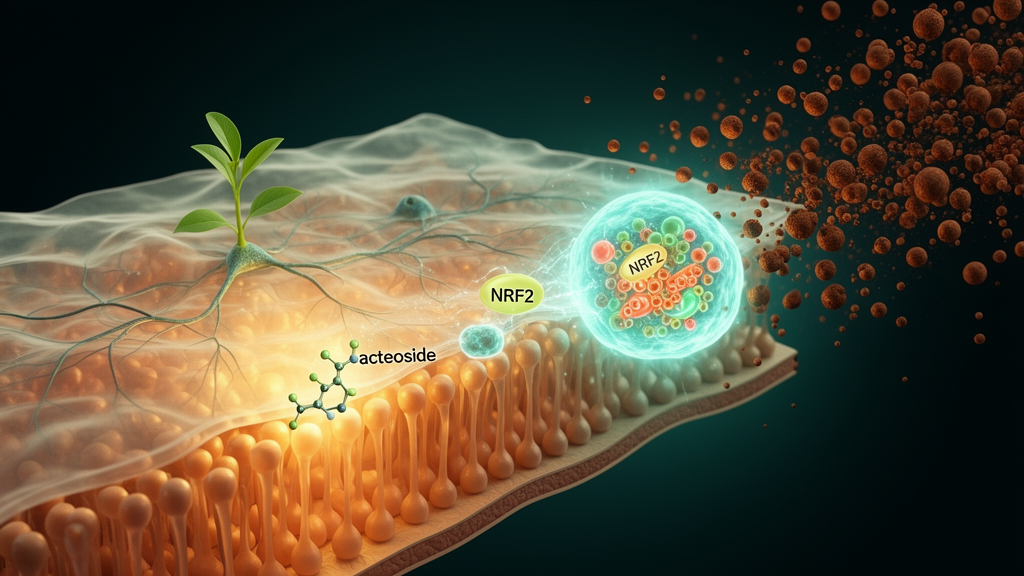
A natural plant compound best known from traditional herbal medicine may offer a new line of defense against one of the leading causes of blindness worldwide. In a study published in Molecular Biology Reports, researchers at the First Affiliated Hospital of Kunming Medical University report that acteoside, a phenylethanoid glycoside found in plants such as those used in Chinese herbal formulations, protects retinal pigment epithelial cells from the destructive cascade of oxidative damage and ferroptotic cell death triggered by high glucose. The work, led by co-first authors Shuhong Shen and Qianbo Chen under the supervision of Xiaoting Xi, combines a cell culture model of diabetic stress with a diabetic mouse model, and it points to a specific molecular switch—the NRF2 signaling pathway—as the mechanism behind the compound’s protective effect.
Diabetic retinopathy is a devastating complication of diabetes and a major cause of vision loss in working-age adults. Epidemiological projections cited in the study’s background literature estimate that hundreds of millions of people will be living with the condition by mid-century as global diabetes rates climb. At the tissue level, the disease damages the retina’s delicate vasculature, but growing evidence indicates that the retinal pigment epithelium, a monolayer of support cells that nourishes and maintains the light-sensitive photoreceptors, is an early and critical casualty. When these cells falter, the entire retina suffers. Current treatments, ranging from laser therapy to injections of anti-VEGF drugs, manage symptoms and slow progression but do not halt the underlying cellular degeneration, leaving an urgent need for therapies that act on root causes.
In recent years, one root cause has attracted intense attention: ferroptosis. This form of regulated cell death, formally described only in 2012, differs fundamentally from apoptosis. Rather than quietly dismantling itself, a ferroptotic cell succumbs to an iron-dependent assault on its own membranes. Free iron catalyzes the peroxidation of polyunsaturated lipids in the cell membrane, and once lipid peroxides accumulate beyond a survivable threshold, the membrane ruptures and the cell dies in an inflammatory fashion. Because the retina is rich in both iron and polyunsaturated fatty acids and operates under high oxygen tension, it is uniquely vulnerable to this mode of death. Prior studies, including work by some of the same Kunming group, have linked oxidative stress-induced ferroptosis in retinal pigment epithelial cells to diabetic retinal damage, making the ferroptosis pathway a compelling therapeutic target.
To model diabetic conditions in the laboratory, the team exposed ARPE-19 cells, a widely used human retinal pigment epithelial cell line, to an elevated glucose concentration of 33 millimoles per liter. The consequences were exactly what the ferroptosis hypothesis predicts. Cell viability, measured with a CCK-8 assay, dropped significantly compared with cells grown in normal glucose. Inside the stressed cells, the researchers detected rising levels of ferrous iron and lipid peroxidation, visualized with the fluorescent probe BODIPY-C11, while the cellular reservoir of the antioxidant molecule glutathione, or GSH, shrank. Western blot analysis revealed that two key guardians of the antiferroptotic defense, the proteins GPX4 and SLC7A11, were downregulated. GPX4 is the only mammalian enzyme capable of reducing lipid hydroperoxides directly within membranes, and SLC7A11 is the transporter subunit that imports cystine, the raw material cells need to synthesize glutathione. Suppress both, and the cell loses its main protection against membrane oxidation.
Crucially, the researchers confirmed that ferroptosis was genuinely the mode of death at work. When they treated the high-glucose cells with ferrostatin-1, a classical ferroptosis inhibitor, or with deferoxamine, an iron chelator that starves the Fenton chemistry driving lipid peroxidation, cell viability recovered and lipid peroxidation receded. That pharmacological validation mattered, because it established that rescuing cells from iron-dependent lipid damage was sufficient to counter the glucose insult. Only then did the team introduce acteoside to see whether the natural product could reproduce that protection on its own.
It could. Acteoside intervention markedly reversed the high glucose-induced promotion of ferroptosis, restoring viability and damping the biochemical hallmarks of lipid peroxidation. The compound’s influence extended to the master regulatory layer of cellular antioxidant defense: NRF2. Under normal conditions, NRF2 is held in the cytoplasm by its inhibitor Keap1, but oxidative stress or pharmacological activation liberates it, allowing the transcription factor to migrate into the nucleus and switch on hundreds of cytoprotective genes, including those governing glutathione synthesis and GPX4 expression. Using immunofluorescence microscopy, the team observed that acteoside significantly promoted NRF2 nuclear translocation in the stressed cells—direct visual evidence that the compound was turning the pathway on.
The most decisive experiment came next. When the researchers silenced NRF2, acteoside’s protective grip loosened: the compound’s ability to inhibit ferroptosis was significantly weakened in cells lacking functional NRF2. That loss-of-function result elevates the findings from correlation to mechanistic argument. Acteoside does not merely mop up free radicals as a generic antioxidant; it appears to work substantially by engaging the NRF2 signaling axis, which in turn sustains the GPX4 and SLC7A11-dependent firewall against lipid peroxidation. This mode of action distinguishes pathway activators from simple radical scavengers and aligns with a broader therapeutic strategy, since NRF2 agonism is being pursued for a range of diseases involving oxidative damage and inflammation.
Importantly, the story did not end in the culture dish. The team also established a diabetic retinopathy model in C57BL/6 mice using streptozotocin, a chemical that destroys insulin-producing beta cells and induces diabetes, and treated the animals with different doses of acteoside. The results mirrored the in vitro findings with a clear dose-dependent trend. Mice receiving acteoside showed significantly alleviated retinal tissue damage on hematoxylin and eosin staining, along with reduced levels of ferrous iron in the tissue and diminished abundance of 4-HNE and MDA, two well-established byproducts of lipid peroxidation that serve as molecular fingerprints of ferroptotic stress. Glutathione content rose, and Western blots of retinal tissue showed upregulated expression of NRF2, GPX4, and SLC7A11. In short, the same protective circuitry identified in single cells operated in intact, diabetic retinae.
The study adds to a rapidly growing dossier on acteoside, a molecule also known as verbascoside that has drawn attention for antimicrobial, anti-inflammatory, and immunomodulatory properties. The Kunming group itself had previously shown that acteoside protects retinal ganglion cells in experimental glaucoma through the PI3K/AKT pathway and that it relieves diabetic retinopathy by regulating Müller cell reactivity via TXNIP and Kir4.1 channels. Other laboratories have reported that acteoside inhibits ferroptosis in contexts as diverse as hepatic ischemia-reperfusion injury, doxorubicin-induced cardiotoxicity, and neurodegeneration in a Parkinson’s disease model, in the latter case through Nrf2-mediated mitophagy. The new work extends this pattern to the retinal pigment epithelium in diabetes, and it lands alongside a parallel literature in which other natural NRF2 activators, such as corilagin, resveratrol, and ghrelin, have been shown to suppress ferroptosis in diabetic retinal cells.
For the millions of people at risk of diabetic vision loss, the research offers a genuinely encouraging proof of concept, though the usual caveats apply. The findings come from one human cell line and a chemically induced mouse model, and translating a plant-derived compound into a clinically validated therapy will require pharmacokinetic studies, dosing optimization, safety evaluation, and eventually controlled human trials—steps that often stall at the gap between mouse and patient. Still, the study’s central contribution is clear and technically meaningful: it identifies ferroptosis as a driver of high glucose-induced retinal pigment epithelial injury and demonstrates, with both gain- and loss-of-function evidence, that acteoside counteracts that cell death by activating NRF2 signaling and its downstream glutathione-GPX4 antioxidant machinery. If subsequent work confirms the effect in clinical settings, a humble compound long buried in herbal leaves could become a foundation for protecting the sight of a diabetic generation.
Subject of Research: Acteoside-mediated NRF2 activation protecting retinal pigment epithelial cells from high glucose-induced ferroptosis in diabetic retinopathy
Article Title: Acteoside alleviates high glucose-induced ROS accumulation and ferroptosis in ARPE-19 cells by activating the NRF2 signaling pathway
Article References: Acteoside alleviates high glucose-induced ROS accumulation and ferroptosis in ARPE-19 cells by activating the NRF2 signaling pathway. (n.d.). https://doi.org/10.1007/s11033-026-12608-x
Image Credits: AI Generated
DOI: 10.1007/s11033-026-12608-x
Keywords: diabetic retinopathy, acteoside, ferroptosis, NRF2, retinal pigment epithelium, lipid peroxidation, GPX4, SLC7A11, oxidative stress, ARPE-19 cells, glutathione, natural products
Cite Scienmag News
Drew Townsend. (October 15, 2026). Plant Compound Acteoside Shields Retinal Cells From Sugar-Driven Ferroptosis by Switching On NRF2. Scienmag. https://scienmag.com/plant-compound-acteoside-shields-retinal-cells-from-sugar-driven-ferroptosis-by-switching-on-nrf2/
Drew Townsend. "Plant Compound Acteoside Shields Retinal Cells From Sugar-Driven Ferroptosis by Switching On NRF2." Scienmag, 15 October 2026, https://scienmag.com/plant-compound-acteoside-shields-retinal-cells-from-sugar-driven-ferroptosis-by-switching-on-nrf2/. Accessed 15 October 2026.
Drew Townsend. "Plant Compound Acteoside Shields Retinal Cells From Sugar-Driven Ferroptosis by Switching On NRF2." Scienmag. October 15, 2026. https://scienmag.com/plant-compound-acteoside-shields-retinal-cells-from-sugar-driven-ferroptosis-by-switching-on-nrf2/


