Chemists in India have synthesized a series of five new piperidin-1-yl-phenyl-acetamide derivatives and reported that the best-performing member of the series, a compound designated AS-5, showed the strongest acetylcholinesterase inhibition, the highest antioxidant activity in DPPH and FRAP assays, and the greatest cognitive improvement in scopolamine-treated rats among the compounds tested. The work, published in the journal Discover Molecules, was led by Arun Kumar Mishra and Amit Anand with colleagues at several Indian institutions, and it positions AS-5 as a preliminary lead structure for further optimization rather than a validated drug candidate.
The research team built the molecules through a three-step synthetic route. Piperidine was first reacted with 4-chloroaniline in acetonitrile under reflux with anhydrous potassium carbonate to give the intermediate 4-(piperidin-1-yl) aniline. That intermediate was then acylated with chloroacetyl chloride to form 2-chloro-N-(4-(piperidin-1-yl) phenyl) acetamide, which was finally coupled with five different substituted phenols: phenol, 2-chlorophenol, 2-nitrophenol, 4-nitrophenol and 2,5-dimethylphenol, yielding compounds AS-1 through AS-5 respectively. Each reaction was monitored by thin layer chromatography, and the final products were recrystallized from ethanol. The highest percentage yield in the series was 56.28 percent, achieved for AS-4, and the highest molecular weight among the products was 355.39 Da, shared by AS-3 and AS-4.
Structural confirmation relied on a standard analytical toolkit. Infrared spectra recorded with a Shimadzu FTIR spectrophotometer showed carbonyl stretching and C-O-C stretching bands in the range of 1054 to 1091 cm-1 across the series. Proton and carbon-13 NMR spectra, acquired on a Bruker Avance Neo 500 MHz instrument, placed the methylene singlet between 4.01 and 4.72 ppm and aromatic multiplets between 7.02 and 8.05 ppm. Mass spectrometry on a Hewlett-Packard electron impact instrument provided molecular ion confirmation, with observed values such as m/z 339.18 for the protonated molecule of AS-5 against a calculated value of 338.45. The authors state that full spectra for all compounds are provided in supplementary files.
With the structures in hand, the team turned to computational modeling. Using AutoDock Vina, they docked all five compounds into the active-site gorge of acetylcholinesterase, the enzyme targeted by existing Alzheimer’s drugs such as donepezil, using the protein structure with PDB ID 1EVE. The docking results indicated that AS-5 and AS-2 showed the highest binding affinity among the new compounds, while AS-1 and AS-3 showed the lowest. The analysis described interactions with both the peripheral anionic site near the gorge entrance and the catalytic active site deeper within the enzyme, including pi-pi stacking, pi-alkyl contacts, hydrogen bonding and, for AS-3, an attractive charge interaction. The authors caution that docking alone cannot establish definitive inhibition of the catalytic triad or prove simultaneous occupation of both sites, and they treat the computational findings as supportive rather than conclusive.
In silico drug-likeness and ADMET profiling added a second computational layer. All five compounds satisfied Lipinski’s rule of five according to SwissADME and pkCSM predictions. Predicted intestinal absorption ranged from 91.536 to 94.308 percent, and all compounds were predicted to be P-glycoprotein substrates. None were predicted to inhibit CYP2D6, although all showed predicted interaction with CYP3A4. Blood-brain barrier permeability predictions varied considerably: AS-1 and AS-2 received the highest positive values at 0.213, AS-5 was moderately positive at 0.175, while AS-3 and AS-4 received negative values, suggesting relatively poor predicted central nervous system penetration for those two. Three compounds, AS-1, AS-3 and AS-4, were predicted to be AMES positive, a flag for potential mutagenicity, while AS-2 and AS-5 were predicted AMES negative. These are computational estimates, not experimental measurements.
Experimental antioxidant testing followed. In the DPPH radical scavenging assay, run at concentrations from 50 to 250 micrograms per milliliter with ascorbic acid as the positive control, AS-5 showed the highest radical scavenging activity and AS-3 the lowest. The FRAP assay, which measures ferric reducing power by monitoring absorbance at 700 nm, produced the same ranking, with AS-5 again the most active and AS-3 the least. The authors attribute the stronger performance of AS-5 to the electron-donating and hydrophobic character of its two methyl groups on the terminal phenoxy ring, an interpretation they develop in a structure-activity discussion that also notes the para-nitro compound AS-4 outperformed its ortho-nitro counterpart AS-3.
Enzyme inhibition was then measured experimentally using a modified Ellman’s assay with acetylcholinesterase from Electrophorus electricus. AS-5 produced the maximum percentage inhibition in the series, ranging from 36.51 to 77.30 percent across the tested concentrations, while AS-3 showed the minimum, ranging from 27.99 to 63.77 percent. The measurements were performed in triplicate with IC50 values expressed as mean plus or minus the standard error of the mean. Importantly, the authors state that AS-5’s performance remained lower than that of donepezil, the standard drug, and they note that detailed enzyme kinetic studies were not performed, so the precise mode of inhibition, whether competitive, non-competitive or mixed, remains undetermined.
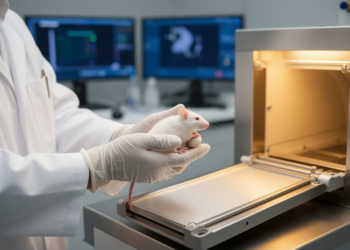
The in vivo evaluation used Wistar rats in which amnesia was induced with scopolamine at 0.5 mg/kg intraperitoneally. Eight groups were arranged, including a control group, a scopolamine group, a donepezil group at 5 mg/kg orally, and five groups each treated with one of the synthesized compounds at 100 mg/kg. Behavioral testing used the Y-maze and T-maze paradigms, in which spontaneous alteration percentages served as measures of short-term and spatial working memory. AS-5 showed the highest anti-Alzheimer’s activity among the test compounds while AS-1 showed the lowest, and the authors report that AS-5’s cognitive enhancement was comparable to donepezil in the abstract while the discussion and conclusion describe it as less potent than the standard drug. Acute oral toxicity screening followed OECD guideline 423 with graded doses up to 1000 mg/kg, and the protocols were approved by the institutional animal ethics committee under CPCSEA registration.
The authors are explicit about the preliminary nature of the work. In a dedicated limitations section, they acknowledge that the findings provide preliminary evidence of anti-Alzheimer’s potential but do not establish the precise molecular mechanism. They call for enzyme-ligand binding studies, kinetic analysis and biophysical validation of the docking predictions, cellular studies in neuronal and microglial models to probe effects on reactive oxygen species and mitochondrial function, selectivity testing against other serine hydrolases, and long-term preclinical studies covering repeated-dose toxicity, metabolic stability and blood-brain barrier permeability. They also note that the observed relationships between antioxidant activity and behavioral improvement are considered associative rather than definitive evidence of a causal mechanism.
Within those constraints, the study’s main contribution is structural rather than pharmacological: the identification of the 2,5-dimethyl substitution pattern on the terminal phenoxy ring as the feature associated with the strongest combined performance across docking, antioxidant, enzyme inhibition and behavioral assays in this series. The authors conclude that the piperidin-1-yl-phenyl-acetamide scaffold, particularly with methyl substituents at the 2 and 5 positions, merits further exploration through structural derivatization, molecular dynamics simulations and experimental validation, as the compounds progress from preliminary lead structures toward, potentially, clinically relevant anti-Alzheimer’s candidates.
Subject of Research: Synthesis and biological evaluation of piperidin-1-yl-phenyl-acetamide derivatives as potential anti-Alzheimer's agents
Article Title: Synthesis, characterization, and biological evaluation of some new molecules containing piperidin-1-yl-phenyl-acetamide moiety
Article References: Mishra, A. K., Singh, A., Kumar, A., Singh, H., Paliwal, S. K., Khan, G., Sharma, K., Chopra, H., & Anand, A. (2026). Synthesis, characterization, and biological evaluation of some new molecules containing piperidin-1-yl-phenyl-acetamide moiety. Discover Molecules, 3(1), Article 36. https://doi.org/10.1007/s44345-026-00078-4
Image Credits: AI Generated
DOI: 10.1007/s44345-026-00078-4
Keywords: Alzheimer's disease, acetylcholinesterase inhibition, piperidine derivatives, drug synthesis, molecular docking, antioxidant activity, DPPH assay, FRAP assay, scopolamine-induced amnesia, drug-likeness, ADMET, structure-activity relationship
Cite Scienmag News
Diana Fleming. (October 28, 2026). New Piperidine Acetamide Compounds Show Early Anti-Alzheimer’s Potential. Scienmag. https://scienmag.com/new-piperidine-acetamide-compounds-show-early-anti-alzheimers-potential/
Diana Fleming. "New Piperidine Acetamide Compounds Show Early Anti-Alzheimer’s Potential." Scienmag, 28 October 2026, https://scienmag.com/new-piperidine-acetamide-compounds-show-early-anti-alzheimers-potential/. Accessed 29 October 2026.
Diana Fleming. "New Piperidine Acetamide Compounds Show Early Anti-Alzheimer’s Potential." Scienmag. October 28, 2026. https://scienmag.com/new-piperidine-acetamide-compounds-show-early-anti-alzheimers-potential/