Thursday, October 29, 2026
Science
No Result
View All Result
  • Login
  • HOME
  • SCIENCE NEWS
  • CONTACT US
  • HOME
  • SCIENCE NEWS
  • CONTACT US
No Result
View All Result
Scienmag
No Result
View All Result
Home Science News Chemistry

Review Maps the State of Post-Combustion CO2 Capture Technologies

October 29, 2026
in Chemistry, Technology and Engineering
Denise Maddox
By Denise Maddox Scienmag Editorial Profile - Mechanical Engineering
Reading Time: 3 mins read
0
Review Maps the State of Post-Combustion CO2 Capture Technologies

Review Maps the State of Post-Combustion CO2 Capture Technologies

65
SHARES
587
VIEWS
Share on FacebookShare on Twitter
ADVERTISEMENT

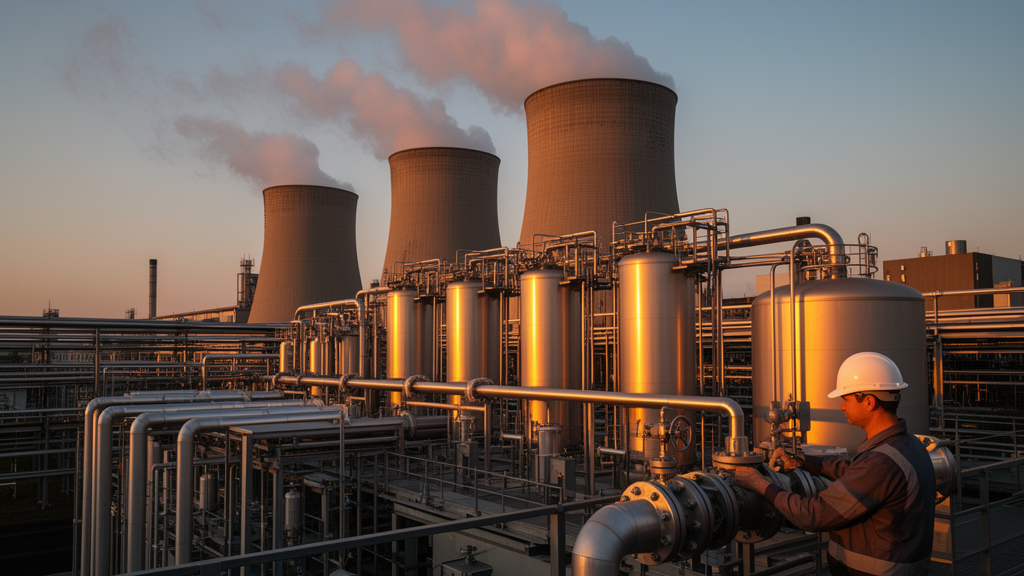
A new open-access review in Discover Chemical Engineering examines the current state of post-combustion CO2 capture technology, comparing four main approaches—absorption, adsorption, membrane separation, and supergravity separation—for removing carbon dioxide from flue gas. The paper, published on 12 September 2026, is framed against global energy conservation and emission reduction efforts and China’s dual-carbon strategy of carbon peaking and carbon neutrality.

The authors, led by Hongtao Mu, position targeted research on capture technologies suited to different working conditions as an increasingly important research direction. Rather than reporting new experimental results, the review synthesizes recent developments in the field to clarify the technical characteristics, advantages, disadvantages, and application trends of the major post-combustion capture routes.

For absorption methods, the review identifies the selection of absorbents as the core issue, with the optimization of reactors and operating conditions as the main focus of current work. Absorption remains one of the most widely researched and applied families of CO2 capture technologies, but the authors note that many problems persist in specific applications.

For adsorption-based capture, the key to large-scale industrial application lies in developing adsorbents that combine high selectivity, high adsorption capacity, strong desorption ability, and low cost.

Membrane separation is characterized as offering simple and flexible operation, but the authors emphasize that improving membrane performance still requires continuous research.

The fourth technology assessed, supergravity separation, is included in the comparative analysis of post-combustion flue gas capture alongside the three more established routes. The review uses this comparison to summarize where each approach fits and how its application may trend as the field develops.

Looking across the technologies, the authors conclude that although many CO2 absorption and separation technologies have been widely researched and applied, significant problems remain in specific applications. Research on new materials and solvents for CO2 absorption and separation, they write, remains a frontier and hot topic in the field of carbon capture.

On future direction, the review predicts that the development of carbon capture technology is likely to move toward combining two or more technologies, in order to meet decarbonization needs under a wider range of working conditions. This hybrid outlook is presented as the paper’s overall assessment of where the field is heading, rather than as a result demonstrated by new experiments.

The article is published as open access and is being shared early to provide faster access to peer-reviewed, accepted research; the version is citable and carries a permanent DOI but remains subject to further edits before the final Version of Record. As a review, it offers a consolidated snapshot of the technical characteristics, application potential, and research directions of the main post-combustion CO2 capture technologies rather than new experimental data.

Subject of Research: Post-combustion CO2 capture technologies including absorption, adsorption, membrane separation, and supergravity methods

Article Title: Research status and development trends of post-combustion CO2 capture technology

Article References: Mu, H., Li, S., Hou, Y., Luo, Z., Fang, L., & Luo, J. (2026). Research status and development trends of post-combustion CO2 capture technology. Discover Chemical Engineering. https://doi.org/10.1007/s43938-026-00146-8

Image Credits: AI Generated

DOI: 10.1007/s43938-026-00146-8

Keywords: CO2 capture, post-combustion capture, absorption, adsorption, membrane separation, supergravity, carbon capture, flue gas, carbon neutrality, review, absorbents, decarbonization

Cite Scienmag News

Denise Maddox. (October 29, 2026). Review Maps the State of Post-Combustion CO2 Capture Technologies. Scienmag. https://scienmag.com/review-maps-the-state-of-post-combustion-co2-capture-technologies/

Denise Maddox. "Review Maps the State of Post-Combustion CO2 Capture Technologies." Scienmag, 29 October 2026, https://scienmag.com/review-maps-the-state-of-post-combustion-co2-capture-technologies/. Accessed 29 October 2026.

Denise Maddox. "Review Maps the State of Post-Combustion CO2 Capture Technologies." Scienmag. October 29, 2026. https://scienmag.com/review-maps-the-state-of-post-combustion-co2-capture-technologies/


Tags: absorbentsabsorptionabsorption and solvent selectionadsorptionadsorption material developmentadvantages and disadvantages of capture approachesapplication trends in carbon capturecarbon capturecarbon neutralitychallenges in large-scale implementationChina's dual-carbon strategyCO₂ captureDecarbonizationenergy-efficient emission reduction strategiesflue gasmembrane separationmembrane separation techniquespost-combustion capturePost-combustion CO2 capture technologiesrecent developments in chemical engineering for CO2 removalreviewsupergravitysupergravity separation methodstechnical characteristics of CO2 capture
Share26Tweet16
Previous Post

Reanalysis of Public Electron Microscopy Data Reveals Umbelliferone’s Effects on Synaptic Structure

Next Post

Construction’s Value and Quality Management Split Mapped in 102-Study Review

Related Posts

Ancient Watermill Network in Southern Spain Revealed as Living Heritage Infrastructure
Archaeology

Ancient Watermill Network in Southern Spain Revealed as Living Heritage Infrastructure

October 29, 2026
Community energy projects on Mayotte ripple beyond electricity into jobs, learning and equity
Climate

Community energy projects on Mayotte ripple beyond electricity into jobs, learning and equity

October 29, 2026
3D-Printed Vertebrae Replicate Weak Bone Mechanics for Surgical Practice
Biotechnology

3D-Printed Vertebrae Replicate Weak Bone Mechanics for Surgical Practice

October 29, 2026
Himalayan Forests Split Carbon Duties by Altitude, Study Finds
Chemistry

Himalayan Forests Split Carbon Duties by Altitude, Study Finds

October 29, 2026
PET Scans Guide Computer-Generated Coronary Networks for Heart Blood Flow Simulation
Medicine

PET Scans Guide Computer-Generated Coronary Networks for Heart Blood Flow Simulation

October 29, 2026
Handheld ultrasound wins trust of pregnant women and providers in Karachi
Medicine

Handheld ultrasound wins trust of pregnant women and providers in Karachi

October 29, 2026
Next Post
Construction’s Value and Quality Management Split Mapped in 102-Study Review

Construction's Value and Quality Management Split Mapped in 102-Study Review

  • Mothers who receive childcare support from maternal grandparents show more optimized

    Mothers who receive childcare support from maternal grandparents show more parental warmth, finds NTU Singapore study

    27656 shares
    Share 11059 Tweet 6912
  • University of Seville Breaks 120-Year-Old Mystery, Revises a Key Einstein Concept

    1061 shares
    Share 424 Tweet 265
  • Bee body mass, pathogens and local climate influence heat tolerance

    682 shares
    Share 273 Tweet 171
  • Researchers record first-ever images and data of a shark experiencing a boat strike

    546 shares
    Share 218 Tweet 137
  • Groundbreaking Clinical Trial Reveals Lubiprostone Enhances Kidney Function

    531 shares
    Share 212 Tweet 133
Science

Embark on a thrilling journey of discovery with Scienmag.com—your ultimate source for cutting-edge breakthroughs. Immerse yourself in a world where curiosity knows no limits and tomorrow’s possibilities become today’s reality!

RECENT NEWS

  • Nurse-led home care eases depression and isolation in Beirut refugee camps
  • Brown Seaweed Supplement Shields Diabetic Rats’ Testes from Damage
  • GJB2 variants found in 7% of African non-syndromic hearing loss cases in pooled review
  • CISD2 knockdown suppresses gastric cancer and triggers ferroptosis

Categories

  • Agriculture
  • Anthropology
  • Archaeology
  • Athmospheric
  • Biology
  • Biotechnology
  • Blog
  • Bussines
  • Cancer
  • Chemistry
  • Climate
  • Earth Science
  • Editorial Policy
  • Marine
  • Mathematics
  • Medicine
  • Pediatry
  • Policy
  • Psychology & Psychiatry
  • Science Education
  • Science News
  • Social Science
  • Space
  • Technology and Engineering

Subscribe to Blog via Email

Enter your email address to subscribe to this blog and receive notifications of new posts by email.

Join 5,150 other subscribers

© 2025 Scienmag - Science Magazine

Welcome Back!

Login to your account below

Forgotten Password?

Retrieve your password

Please enter your username or email address to reset your password.

Log In
No Result
View All Result
  • HOME
  • SCIENCE NEWS
  • CONTACT US

© 2025 Scienmag - Science Magazine

Discover more from Science

Subscribe now to keep reading and get access to the full archive.

Continue reading