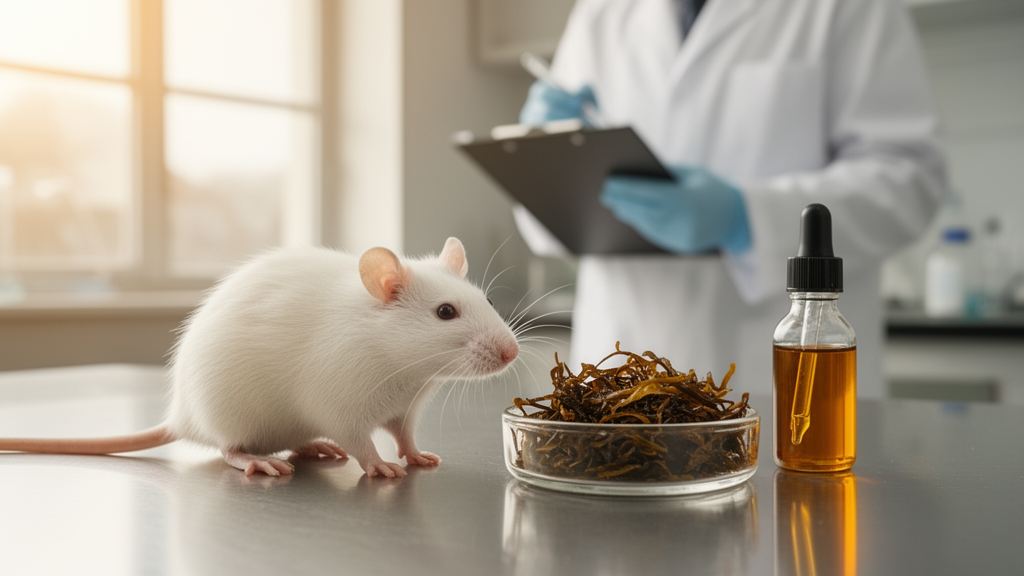
A diet enriched with the brown alga Cystoseira myrica substantially protected the testes of diabetic laboratory rats, according to a new open-access study published on 7 September 2026 in the Beni-Suef University Journal of Basic and Applied Sciences. The work, led by Doaa A. Ali, reports that animals given a 2% Cystoseira-supplemented diet alongside a diabetes-inducing drug retained far more of their normal testicular structure, hormone levels, and sperm-producing capacity than diabetic animals fed a standard diet. The researchers describe their findings as the first evidence that this particular Red Sea seaweed can counter diabetes-related testicular injury in an animal model.
Diabetes mellitus is increasingly recognized as a risk factor for male infertility. The study’s background notes that male-related factors account for roughly 40 to 50% of infertility cases worldwide, and that chronic high blood sugar promotes oxidative stress, inflammation, and hormonal disruption that can damage the testes. In diabetic conditions, sustained hyperglycemia drives excessive production of reactive oxygen species, which trigger lipid peroxidation, mitochondrial dysfunction, and DNA damage in sperm-producing and Sertoli cells. These insults activate apoptotic pathways that ultimately lead to germ cell loss and testicular degeneration, providing a mechanistic explanation for declining reproductive function in diabetes.
To test whether Cystoseira myrica could intervene in this process, the team induced diabetes in adult male albino rats with a single intraperitoneal injection of streptozotocin, a compound that destroys pancreatic beta cells. Two days later, only rats with fasting blood glucose above 200 mg/dL were classified as diabetic. A total of 24 rats were randomly divided into four groups of six: a control group receiving citrate buffer, a group fed the 2% seaweed diet alone, a diabetic group, and a group receiving both the seaweed diet and streptozotocin concurrently for 60 days. The alga was collected from the Red Sea along the Hurghada coast of Egypt, washed, dried at 60 degrees Celsius for 24 hours, ground into powder, and mixed directly into the standard rodent diet.
Before the animal experiment, the researchers profiled the alga’s chemistry. Cystoseira myrica contained 18.14% carbohydrates, 23.42 mg/g total amino acids, and a low 1.26% lipid content, along with a suite of bioactive compounds: fucoxanthin at 7.44 µg/g, beta-carotene at 3.68 mg/g, fucoidan at 3.64%, phlorotannins at 25.13 mg/g, phenolic compounds at 231.54 mg/L, ascorbic acid at 12.67 mg/L, and glutathione at 8.83 mg/g. Its antioxidant activity measured 214.53 µg ascorbic acid equivalents per gram. The authors attribute the alga’s potential protective power to this combination, noting that phlorotannins of brown algae are particularly effective free radical scavengers because of their interconnected eight phenol rings, and that fucoxanthin’s unusual allenic bond may underlie its high antioxidant activity.
The biochemical results showed the expected diabetic pathology and its partial reversal. Streptozotocin-treated animals displayed significantly elevated blood glucose, significantly reduced serum insulin, a significant rise in the lipid peroxidation marker malondialdehyde, and significant depletion of the antioxidant enzymes superoxide dismutase and catalase, together indicating oxidative stress. Serum testosterone also fell significantly in the diabetic group. In animals that received the seaweed diet alongside the drug, blood glucose dropped significantly, serum insulin rose, malondialdehyde declined, and both antioxidant enzymes and testosterone increased significantly relative to the untreated diabetic group. Control animals and rats fed the seaweed alone showed normal glucose and insulin levels throughout.
Under the microscope, the differences were striking. Testes of diabetic rats showed irregular, degenerated seminiferous tubules with reduced germ cell layers, loss of most spermatids and spermatozoa from the tubular lumen, sloughing of spermatogenic cells, severe vacuolation, pyknotic nuclei, interstitial edema, and degeneration of testosterone-producing Leydig cells. Morphometric measurements confirmed significant decreases in both seminiferous tubule diameter and germinal epithelial height in diabetic animals. In contrast, the tubules of seaweed-supplemented diabetic rats regained organized layers of spermatogenic cells, with spermatids and spermatozoa clearly visible in their lumens, and both tubule diameter and epithelial height increased notably compared with the diabetic group. Pancreatic tissue told a parallel story: the shrunken, beta-cell-depleted islets of diabetic rats showed improved cellular population in the seaweed-fed diabetic animals.
Electron microscopy added finer detail. In diabetic rats, the basement membrane of the seminiferous tubules was irregularly thickened, Sertoli cells were degenerated with cytoplasmic dissolution and loss of organelles, and germ cells had detached from their supports, losing intercellular contact. Germ cells showed cytoplasmic vacuolation, swollen and disorganized mitochondria, and dilated endoplasmic reticulum, while spermatids displayed irregular nuclei and malformed heads, with defective middle and principal pieces in elongating sperm tails. In the seaweed-supplemented diabetic group, spermatogenic cell layers were well organized, Sertoli and Leydig cells appeared normal, developing spermatids had well-arranged mitochondria and distinct acrosomes, and mature spermatozoa showed a normal anterior acrosomal cap, electron-dense nucleus, and intact tail segments.
Immunohistochemistry and fluorescent staining pointed to the molecular mechanisms behind the rescue. Streptozotocin treatment markedly reduced the number of PCNA-immunopositive cells, a marker of proliferation, indicating suppressed spermatogenic activity, and shifted the apoptotic balance: anti-apoptotic Bcl-2 expression fell while pro-apoptotic Bax rose, and acridine orange/ethidium bromide dual staining revealed a substantial elevation in apoptotic spermatogenic cells. In seaweed-supplemented diabetic rats, PCNA expression rose markedly, Bcl-2 was upregulated, Bax was downregulated, and the staining showed fewer apoptotic and more viable spermatogenic cells. The authors interpret this as enhanced cell proliferation, reduced apoptosis, and attenuation of the ROS-mediated Bcl-2/Bax dysregulation that drives mitochondrial germ cell death in diabetes.
The authors conclude that Cystoseira myrica protects against diabetes-induced testicular damage by enhancing antioxidant capacity, restoring hormonal balance, and regulating apoptotic signaling, and they suggest the alga may represent a promising bioactive nutritional supplement for preserving spermatogenic function. However, they flag an important limitation: the specific bioactive compounds responsible were not isolated, owing to scope constraints and limited analytical instrumentation, so the observed protection may stem from the synergistic action of multiple constituents. Future work using high-performance liquid chromatography and advanced separation techniques will be needed to identify the active molecules and map the exact molecular pathways involved.
It is also essential to keep the scope of these findings in perspective. This was a small animal experiment, with six rats per group, using a chemically induced diabetes model rather than human type 1 or type 2 disease, and the intervention was delivered as whole seaweed powder in the diet. The results demonstrate protective associations in rats, not proven benefits for men with diabetes, and no human clinical efficacy can be inferred from this study. Nonetheless, the convergence of biochemical, histological, ultrastructural, and immunohistochemical evidence offers a coherent, testable picture of how a phlorotannin- and fucoxanthin-rich brown alga might shield the male reproductive system from oxidative and apoptotic injury, and it establishes a foundation for the isolation studies and mechanistic investigations the authors say must come next.
Subject of Research: Protective effects of brown alga Cystoseira myrica supplementation on testicular damage in streptozotocin-induced diabetic rats
Article Title: Protective mechanisms of the brown alga Cystoseira myrica supplementation against testicular alterations in streptozotocin-induced diabetic rats
Article References: Ali, D. A. (2026). Protective mechanisms of the brown alga Cystoseira myrica supplementation against testicular alterations in streptozotocin-induced diabetic rats. Beni-Suef University Journal of Basic and Applied Sciences, 15(1), Article 102. https://doi.org/10.1186/s43088-026-00807-1
Image Credits: AI Generated
DOI: 10.1186/s43088-026-00807-1
Keywords: Cystoseira myrica, brown seaweed, diabetes, streptozotocin, testicular damage, oxidative stress, testosterone, apoptosis, PCNA, Bcl-2, Bax, spermatogenesis
Cite Scienmag News
Daisy Hatcher. (October 29, 2026). Brown Seaweed Supplement Shields Diabetic Rats’ Testes from Damage. Scienmag. https://scienmag.com/brown-seaweed-supplement-shields-diabetic-rats-testes-from-damage/
Daisy Hatcher. "Brown Seaweed Supplement Shields Diabetic Rats’ Testes from Damage." Scienmag, 29 October 2026, https://scienmag.com/brown-seaweed-supplement-shields-diabetic-rats-testes-from-damage/. Accessed 30 October 2026.
Daisy Hatcher. "Brown Seaweed Supplement Shields Diabetic Rats’ Testes from Damage." Scienmag. October 29, 2026. https://scienmag.com/brown-seaweed-supplement-shields-diabetic-rats-testes-from-damage/