


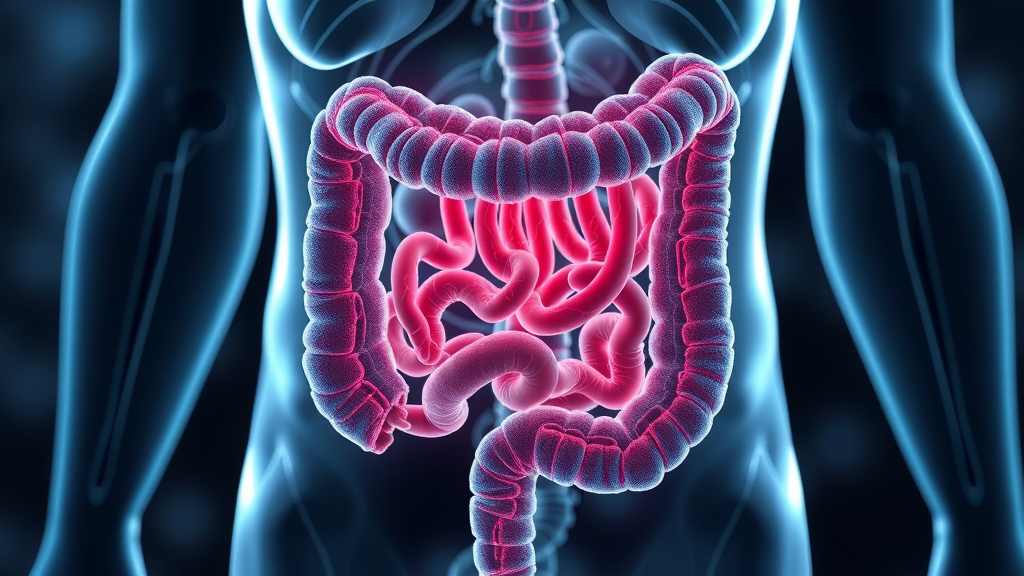
A protein long associated with nerve repair may hold an unexpected key to calming the inflamed gut. In a study published in Cell Death Discovery, researchers report that NINJ2, a molecule best known for its role in Schwann cell activation and peripheral nerve regeneration, protects against inflammatory bowel disease by restraining a lethal inflammatory program in macrophages. The finding positions a relatively obscure cell surface protein at the center of one of immunology’s most intensively studied cell death pathways, and it suggests that nudging NINJ2 upward in intestinal immune cells could offer a new therapeutic angle for Crohn’s disease and ulcerative colitis.
Inflammatory bowel disease affects millions of people worldwide, and its hallmark is a self-perpetuating loop of tissue damage. Barrier breakdown in the intestinal epithelium allows microbial products to flood the underlying tissue, where resident macrophages respond by releasing cytokines that recruit and activate further immune cells. When this response fails to resolve, the mucosa becomes a chronic battlefield. Current therapies, including corticosteroids, anti-TNF antibodies, and integrin blockers, help many patients but lose effectiveness in a substantial fraction, which is why researchers continue to search for checkpoints within innate immune cells that could be exploited pharmacologically.
The new work focuses on PANoptosis, an inflammatory form of programmed cell death that has attracted intense attention since it was first defined. Unlike apoptosis, which quietly removes cells without alarming the immune system, PANoptosis combines features of pyroptosis, apoptosis, and necroptosis in a single, highly inflammatory package. At its core sits a multiprotein assembly called the PANoptosome, which in many contexts is organized around the sensor protein ZBP1, a nucleic acid receptor better known for detecting viral RNA. When ZBP1 is engaged, it recruits RIPK3, caspase-8, and other partners, driving cells to die in a way that releases danger signals and amplifies inflammation. Uncontrolled ZBP1-driven PANoptosis has been implicated in several sterile inflammatory diseases, making it a tempting but delicate target.
Using mouse models of colitis, the research team found that NINJ2 expression in intestinal macrophages changed markedly as inflammation developed. When the researchers deleted the Ninj2 gene specifically in myeloid cells, the animals fared substantially worse: colitis induced by dextran sulfate sodium produced greater weight loss, more pronounced colon shortening, higher histological damage scores, and elevated levels of pro-inflammatory cytokines such as TNF, IL-1β, and IL-6. The worsened disease was not simply a matter of more macrophages arriving in the tissue. Instead, the macrophages that remained appeared locked into a hyperinflammatory state, suggesting that NINJ2 normally functions as an intrinsic regulator of how these cells respond to danger.
The mechanistic thread connecting NINJ2 to disease severity ran directly through the ZBP1 pathway. In macrophages lacking NINJ2, the investigators documented increased activation of the molecular machinery of PANoptosis, including enhanced phosphorylation of RIPK3 and mixed lineage kinase domain-like protein, the executioner of necroptosis, together with evidence of caspase activation and gasdermin cleavage. Levels of ZBP1 itself rose in the absence of NINJ2, and the assembly of the PANoptosome appeared more robust. Conversely, when the team reduced ZBP1 genetically in the NINJ2-deficient setting, the exaggerated inflammatory response was tamed and colitis pathology eased, placing ZBP1 downstream of NINJ2 in the causal chain and confirming that the benefit of NINJ2 depends on keeping this sensor in check.
To probe how NINJ2 accomplishes this restraint, the researchers examined transcriptional regulation. Their data indicate that NINJ2 influences the expression of ZBP1 at the level of messenger RNA, effectively lowering the dose of the danger sensor available to assemble into a PANoptosome. This dose-control mechanism matters because ZBP1 is unusual among innate immune receptors: it can be activated not only by foreign RNA but also by endogenous nucleic acid motifs, meaning that even modest increases in its abundance can lower the threshold for spontaneous inflammatory cell death. By holding ZBP1 transcription down, NINJ2 appears to act as a dimmer switch on an otherwise hair-trigger pathway.
Cell culture experiments reinforced the picture. When macrophages were stimulated with inflammatory ligands, those lacking NINJ2 died more readily and secreted more cytokines, while restoring NINJ2 expression rescued both outcomes. The rescue was abolished when ZBP1 was experimentally elevated, underlining the epistatic relationship between the two proteins. The team also observed that the PANoptosome components physically associated more extensively in NINJ2-deficient cells, consistent with a model in which NINJ2 limits both the quantity of ZBP1 and the downstream assembly of the death complex. Together, the in vivo and in vitro results form a coherent loop: NINJ2 restrains ZBP1, restrained ZBP1 limits PANoptosis, and limited PANoptosis means fewer danger signals to perpetuate intestinal inflammation.
What makes the discovery particularly striking is NINJ2’s résumé. The protein was originally characterized in the nervous system, where it is strongly upregulated in Schwann cells after peripheral nerve injury and contributes to axonal regeneration and remyelination. Its presence in macrophages had been noted, but its immunological function was largely unexplored. The new data suggest a broader physiological role in which the same molecule that helps damaged nerves recover also helps immune tissue recover from inflammatory assault. That kind of cross-system redeployment is increasingly common in immunology, where molecules first discovered in one organ are later found to be central choreographers of innate immune behavior elsewhere.
The therapeutic implications are tentative but concrete. If NINJ2’s protective effect can be mimicked, either by small molecules that increase its expression in intestinal macrophages or by delivery systems that supply the protein or its downstream effectors, patients with inflammatory bowel disease might gain a treatment that works at the source of cytokine storm rather than neutralizing individual cytokines after release. Targeting upstream regulators also carries risks, however. PANoptosis serves host defense, particularly against viruses, so wholesale suppression could impair pathogen clearance. The NINJ2-ZBP1 axis is attractive precisely because it appears to modulate the pathway’s set point rather than abolish it, but any clinical translation would need to define carefully how much damping is safe. Biomarkers of NINJ2 expression in patient biopsies could help identify which individuals are most likely to benefit.
Open questions remain. The precise molecular contacts, if any, between NINJ2 and the transcriptional machinery governing ZBP1 have not been fully mapped, and it is not yet clear whether NINJ2 acts directly on the ZBP1 promoter or through intermediate regulators. It is also unknown whether the pathway operates identically in human intestinal macrophages, which differ from their murine counterparts in several respects. Nonetheless, by connecting a nerve-associated protein to the ZBP1-PANoptosis cascade in the gut, the study adds a new node to the network that decides when macrophages choose inflammatory death, and it offers researchers a fresh candidate for intervention in a disease that still lacks a durable cure for many patients. Follow-up work will determine whether raising NINJ2 in the inflamed intestine can turn that candidate into a therapy.
Subject of Research: The role of NINJ2 in regulating macrophage ZBP1-PANoptosis during inflammatory bowel disease
Article Title: NINJ2 alleviates inflammatory bowel disease by regulating the macrophage ZBP1-PANoptosis pathway
Article References: Peng, H., Yu, Y., Du, Y., Guo, X., Yu, Q., Xu, C., & Song, W. (2026). NINJ2 alleviates inflammatory bowel disease by regulating the macrophage ZBP1-PANoptosis pathway. Cell Death Discovery. https://doi.org/10.1038/s41420-026-03353-y
Image Credits: AI Generated
DOI: 10.1038/s41420-026-03353-y
Keywords: NINJ2, inflammatory bowel disease, PANoptosis, ZBP1, macrophages, colitis, innate immunity, cell death, cytokines, intestinal inflammation, RIPK3, Schwann cells
Cite Scienmag News
Kristina Jarvis. (September 20, 2026). Nerve Injury Protein NINJ2 Emerges as a Brake on Inflammatory Bowel Disease. Scienmag. https://scienmag.com/nerve-injury-protein-ninj2-emerges-as-a-brake-on-inflammatory-bowel-disease/
Kristina Jarvis. "Nerve Injury Protein NINJ2 Emerges as a Brake on Inflammatory Bowel Disease." Scienmag, 20 September 2026, https://scienmag.com/nerve-injury-protein-ninj2-emerges-as-a-brake-on-inflammatory-bowel-disease/. Accessed 5 October 2026.
Kristina Jarvis. "Nerve Injury Protein NINJ2 Emerges as a Brake on Inflammatory Bowel Disease." Scienmag. September 20, 2026. https://scienmag.com/nerve-injury-protein-ninj2-emerges-as-a-brake-on-inflammatory-bowel-disease/


