


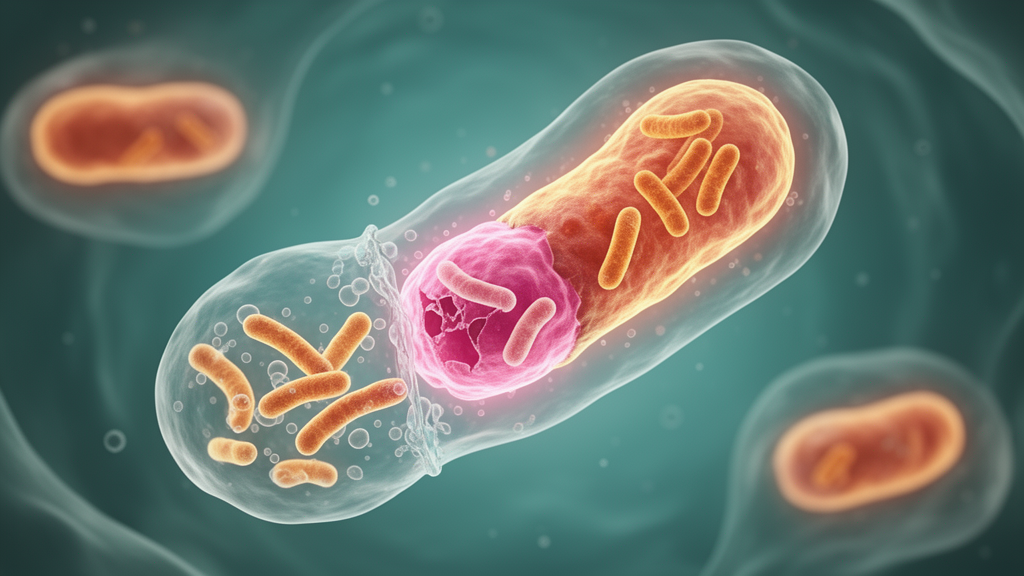
Inside every cell, mitochondria are constantly being inspected, repaired, and, when they fail beyond repair, destroyed. This selective destruction, known as mitophagy, is a specialized branch of autophagy in which damaged or dysfunctional mitochondria are engulfed by autophagosomes and delivered to lysosomes for degradation. A comprehensive review published in Experimental & Molecular Medicine by Bokeum Jung, Bomi Lee, Eun-Kyeong Jo and colleagues at Chungnam National University now pulls together the rapidly expanding evidence that mitophagy sits at the heart of the battle between hosts and pathogens, shaping everything from antibacterial killing to antiviral interferon signaling and the runaway inflammation of sepsis.
The review first lays out the molecular machinery. In the canonical pathway, loss of mitochondrial membrane potential stabilizes the serine/threonine kinase PINK1 on the outer mitochondrial membrane, where it phosphorylates and activates the E3 ubiquitin ligase Parkin. Parkin then decorates outer membrane proteins such as mitofusin-2 and VDAC1 with ubiquitin chains, which are recognized by cargo receptors including p62/SQSTM1, NDP52, optineurin, NBR1 and Tax1-binding protein 1. These receptors carry both ubiquitin-binding domains and LC3-interacting regions, physically bridging ubiquitinated mitochondria to LC3-positive autophagosomal membranes. Alongside this ubiquitin-driven route, noncanonical receptor-mediated mitophagy relies on mitochondrial proteins such as FUNDC1, BNIP3, BNIP3L/NIX, BCL2L13, AMBRA1, FKBP8, PHB2 and NLRX1, which bind LC3 and GABARAP family proteins directly through their own LIR motifs. Even mitochondrial lipids can act as eat-me signals: cardiolipin is externalized from the inner membrane by NDPK-D, and C18-ceramide generated by CerS1 binds LC3-II to trigger clearance.
The authors also describe mitochondria-derived vesicles, or MDVs, as a first-line quality-control system sometimes termed micromitophagy. Under basal conditions, single-membrane vesicles enriched in TOMM20 are formed in a DRP1- and MIRO-dependent manner, while stress induces PINK1/Parkin-dependent double-membrane vesicles containing matrix cargo such as pyruvate dehydrogenase, generated through OPA1, syntaxin 17 and sorting nexin 9. These vesicles ferry selected mitochondrial components to lysosomes, peroxisomes or multivesicular bodies, and can even be released as extracellular vesicles. Dysregulated MDV trafficking has been implicated in diseases including cancer metastasis, underscoring that mitochondrial quality control operates on several tiers before whole-organelle mitophagy is engaged.
Why does this matter for immunity? Because when mitophagy fails, mitochondria spill their contents. Mitochondrial DNA is rich in hypomethylated CpG motifs, making it a potent danger signal once it escapes into the cytosol or endosomes. Cytosolic mtDNA is sensed by cyclic GMP-AMP synthase, absent in melanoma 2 and Z-DNA binding protein 1, while endosomal mtDNA activates Toll-like receptor 9, and both native and oxidized mtDNA can fire the NLRP3 inflammasome. The cGAS-STING axis in particular drives interferon regulatory factor 3 activation, robust type I interferon production and NF-κB, STAT6 and MAPK signaling. Cells lacking PINK1 or Parkin accumulate cytosolic mtDNA and mount exaggerated cGAS-STING-dependent interferon responses, and impaired BNIP3L-dependent mitophagy promotes aggregation of the antiviral adaptor MAVS with heightened inflammatory cytokine output. Excessive type I interferon signaling, notably, is associated with worse outcomes in active pulmonary tuberculosis, illustrating that more immune activation is not always better.
Against this backdrop, the review catalogs how bacterial pathogens manipulate mitophagy to their advantage. Staphylococcus aureus induces mitophagy in macrophages through an HDAC11-suppression/IL-10 axis that dampens mTOR signaling, scavenging mitochondrial reactive oxygen species and promoting intracellular survival; the bacterium also hyperactivates the MEK1-ERK1/2 axis to suppress CHEK2, driving excessive mitophagy that impairs bactericidal activity. Burkholderia pseudomallei uses its type III secretion needle tip protein BipD to hijack a Kelch-like 9-kelch-like 13-cullin3 ubiquitin ligase complex, K63-ubiquitinating the inner membrane protein mitofilin and triggering p62-mediated mitophagy that suppresses mtROS. Neisseria gonorrhoeae delivers the porin PorB via outer membrane vesicles, dissipating membrane potential to activate PINK1- and OPTN/NDP52-dependent mitophagy while also recruiting RNF213 for K63-linked ubiquitination. Salmonella Typhimurium’s effector SseJ activates PINK1/Parkin mitophagy through the receptor PHB2, promoting bacterial persistence, and Listeria monocytogenes uses its virulence factor listeriolysin O to oligomerize NLRX1 and induce host mitophagy that keeps the bacterium alive.
Not all bacteria push mitophagy in the same direction, however, and the review is careful to note the exceptions. Helicobacter pylori’s CagA protein binds redistributed CYP11A1 and accelerates mitochondrial cholesterol accumulation, blocking mitophagy and thereby NLRP3 inflammasome activation and apoptosis of infected cells. Porphyromonas gingivalis disrupts mitophagic flux and lysosomal acidification in endothelial cells, preventing autophagic clearance and enabling persistent intracellular infection, even though PINK1/Parkin-mediated mitophagy can attenuate inflammation in periodontitis. In Mycobacterium tuberculosis infection, BNIP3-dependent mitophagy in macrophages lowers mtROS and favors bacterial survival, whereas Brucella abortus requires BNIP3L-mediated mitophagy for its egress from cells and cell-to-cell spread. Strikingly, in a model of bleomycin-induced lung injury, overgrowth of tissue-resident Klebsiella quasipneumoniae drove macrophage mitophagy and TGF-β1 production, linking mitophagy activation to pulmonary fibrosis through microbiota dysregulation.
Viruses, if anything, are even more inventive. Protective mitophagy is documented in coxsackievirus B3 myocarditis, where Parkin- and BNIP3-mediated clearance maintains cardiac function, and in Zika virus infection, where PINK1 activation suppresses replication and the uncoupling agent niclosamide inhibits the virus by promoting PINK1/Parkin mitophagy. But many viral effectors subvert the pathway. Herpes simplex virus 1 proteins ICP34.5 and US11 repress Parkin transcription through the EIF2S1-ATF axis, promoting infection and NF-κB-mediated neuroinflammation, while ICP0 depletes the autophagy adaptors p62 and optineurin. SARS-CoV-2 deploys multiple tools: ORF9b co-localizes with MAVS to suppress RIG-I-like receptor signaling, ORF10 translocates to mitochondria and degrades MAVS through mitophagy, and Spike 1 protein inhibits mitophagy while enhancing mtROS, NLRP3 activation and IL-18 maturation that drive cardiopulmonary inflammation. The influenza A virus proteins PB1-F2 and the nucleoprotein both induce TUFM- or toll-interacting protein-dependent mitophagy that blunts MAVS signaling, and respiratory syncytial virus NS1 acts as a bona fide mitophagy receptor by binding LC3B and TUFM.
The viral catalog extends across the animal and human pathogen spectrum. Varicella zoster virus glycoprotein E promotes DRP1-dependent fission and PINK1/Parkin mitophagy to block MAVS oligomerization and STING translocation. The severe fever with thrombocytopenia syndrome virus nucleoprotein recruits TUFM to degrade MAVS. Hepatitis C virus NS5A recruits NDP52 and optineurin to mitochondria; Senecavirus A protein 2C binds K27-ubiquitinated TUFM; African swine fever virus p17 links p62 to TOMM70; and classical swine fever virus nonstructural proteins co-opt the ESCRT machinery to close phagophores and accelerate mitophagy. Even the oncolytic Newcastle disease virus reprograms metabolism, degrading SIRT3 via PINK1/Parkin mitophagy to support replication, while enterovirus 71 uses PINK1/Parkin mitophagy to degrade MAVS and release virion-containing mitochondria into the extracellular space, aiding dissemination.
In sepsis, the picture becomes genuinely double-edged. Restoring mitophagy is generally beneficial: PINK1 protects dendritic cell function in cecal ligation puncture models; TMBIM1 and TMBIM6 preserve cardiac mitochondrial quality control; FUNDC1 ameliorates septic cardiomyopathy by suppressing ferroptosis; and bioinformatic clustering of 348 sepsis samples showed that the cluster with the highest mitophagy activity had the lowest disease severity, with prohibitin 1 negatively correlated with severity. Sirtuins are central players, with SIRT1-Rab7 and SIRT3-Parkin axes suppressing STING, NLRP3 and pyroptosis in lung injury, and melatonin attenuating septic kidney injury through SIRT3-mediated deacetylation of mitochondrial transcription factor A. Yet in polymicrobial sepsis, PINK1/Parkin-mediated mitophagy suppresses macrophage activation and impairs bacterial clearance, reducing mouse survival, a reminder that context determines whether mitophagy helps the host or the pathogen.
Therapeutically, the review highlights a growing pharmacopeia. The mitophagy activator ALT001 promotes ULK1/Rab9-dependent mitophagy and interferon-mediated antiviral defense against HSV-1; gut microbial metabolites nicotinamide N-oxide and taurine restore mitophagy in herpes simplex encephalitis; verbenalin, emodin, bergapten, dendrobine, puerarin, olaparib and even high-concentration hydrogen show protective effects in sepsis models through pathway-specific mitophagy activation. Conversely, mitochondrial division inhibitor-1 enhances SARS-CoV-2-specific CD8+ T cell responses by blocking excessive mitophagy-linked metabolic remodeling, and protopine and Liang-Ge-San alleviate lung injury by downregulating mitophagy in specific compartments. The authors conclude that selectively inducing or inhibiting mitophagy, tailored to pathogen and disease stage, represents a promising but still immature strategy, with key questions remaining about which mitophagy modes matter for which infections and how microbial effectors precisely co-opt the machinery. As the field matures, mitophagy modulation may become an adjunctive weapon against intractable infections and the inflammatory storm of sepsis.
Subject of Research: The role of mitophagy in bacterial and viral infection pathogenesis and sepsis, and its therapeutic modulation
Article Title: Mitophagy in pathogenesis and therapeutic implications for infection
Article References: Jung, B., Lee, B., Sapkota, A., Roh, T., Seo, W., Kim, J. K., & Jo, E.-K. (2026). Mitophagy in pathogenesis and therapeutic implications for infection. Experimental & Molecular Medicine. https://doi.org/10.1038/s12276-026-01852-7
Image Credits: AI Generated
DOI: 10.1038/s12276-026-01852-7
Keywords: mitophagy, autophagy, PINK1, Parkin, bacterial infection, viral infection, sepsis, mtDNA, cGAS-STING, NLRP3 inflammasome, MAVS, innate immunity
Cite Scienmag News
Kristina Jarvis. (October 9, 2026). How Pathogens Hijack Mitophagy and What It Means for Treating Infection. Scienmag. https://scienmag.com/how-pathogens-hijack-mitophagy-and-what-it-means-for-treating-infection/
Kristina Jarvis. "How Pathogens Hijack Mitophagy and What It Means for Treating Infection." Scienmag, 9 October 2026, https://scienmag.com/how-pathogens-hijack-mitophagy-and-what-it-means-for-treating-infection/. Accessed 9 October 2026.
Kristina Jarvis. "How Pathogens Hijack Mitophagy and What It Means for Treating Infection." Scienmag. October 9, 2026. https://scienmag.com/how-pathogens-hijack-mitophagy-and-what-it-means-for-treating-infection/


