


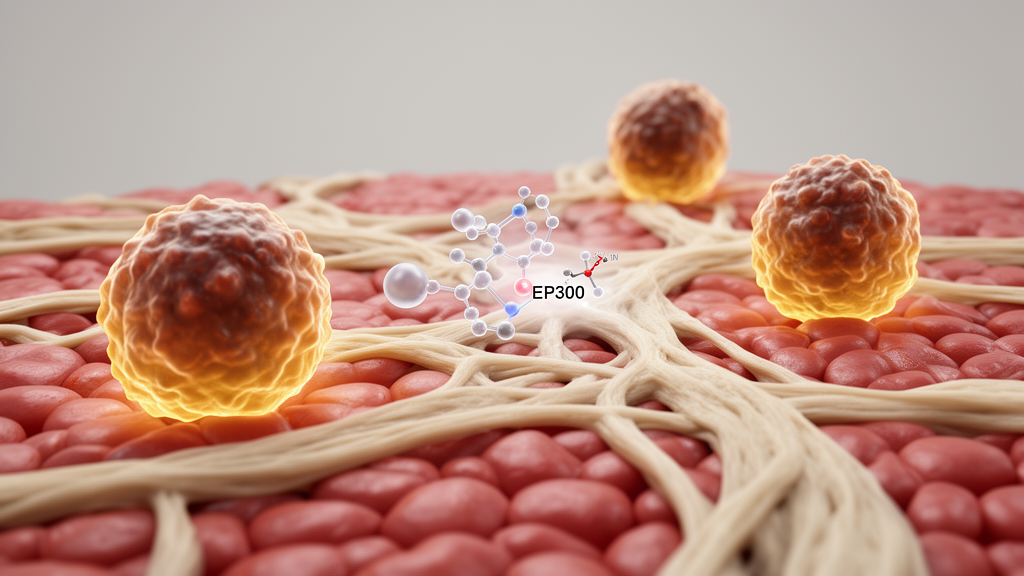
Acute-on-chronic liver failure is one of the most feared syndromes in hepatology. It strikes patients who already carry the burden of chronic liver disease, and a sudden insult, often an infection, pushes their failing organ over the edge. Short-term mortality is high, and clinicians currently have little to offer beyond supportive care and, for a fortunate few, liver transplantation. Against this grim backdrop, a new study published in Nature Communications points to an unexpected therapeutic target: an epigenetic enzyme called EP300, whose inhibition appears to rescue the liver by reprogramming a specialized population of immune cells embedded in scar tissue.
The research, led by Panyu Chen, Bingyuan Huang, Wentao Chen and Xiao Lin, with corresponding authors including Cheng Luo, Min Shi, Yuanyuan Zhang, Yugang Wang and Xiong Ma, brings together teams from Shanghai Jiao Tong University School of Medicine, the Shanghai Institute of Materia Medica of the Chinese Academy of Sciences and collaborating institutions across China. Their central discovery is that a subset of macrophages known as scar-associated macrophages proliferates as acute-on-chronic liver failure progresses, and that these cells lose a critical antibacterial function precisely when patients need it most. That functional collapse, the authors report, is linked to poor prognosis in the disease.
Macrophages are the tissue-resident sentinels of the innate immune system, and in the liver they include Kupffer cells that patrol the sinusoids, engulfing bacteria, cellular debris and other threats. Scar-associated macrophages are a distinct population that accumulates within fibrotic, scarred regions of chronically injured liver. In cirrhotic tissue they are often viewed as accomplices of fibrosis, promoting the deposition of extracellular matrix that stiffens the organ. The new work reframes them as pivotal players in the acute decompensation that defines liver failure, not merely as passive markers of scarring but as cells whose behavior can determine whether a patient survives a bacterial challenge.
The team’s mechanistic focus landed on EP300, a histone acetyltransferase that decorates histone proteins with acetyl groups and thereby helps open chromatin and activate gene transcription programs. Because EP300 sits at the interface of signaling pathways and gene expression, pharmacologically blocking it can broadly reshape the transcriptional identity of a cell. Using an inhibitor approach, the researchers found that EP300 inhibition enhanced the antibacterial activity of scar-associated macrophages rather than dampening it. The key mediator of this effect turned out to be transcriptional repression of a gene called ACOD1, which encodes aconitate decarboxylase 1, an enzyme tied to itaconate metabolism and inflammatory regulation.
According to the study, ACOD1 expression is induced in scar-associated macrophages during acute-on-chronic liver failure. In other words, as the disease takes hold, these macrophages ramp up ACOD1, and this shift appears to compromise their ability to engulf and destroy bacteria. When the researchers genetically removed ACOD1, the consequences were striking: loss of the enzyme mitigated hepatic destruction and prolonged survival in male mice with acute-on-chronic liver failure. The protective effect was traced to enhanced phagocytic function, the capacity of macrophages to swallow and neutralize invading pathogens, which is a cornerstone of host defense in a liver constantly exposed to gut-derived microbes.
This chain of evidence, from EP300 to ACOD1 to phagocytosis to survival, sketches a coherent mechanistic pathway. EP300, by supporting ACOD1 transcription in scar-associated macrophages, inadvertently disarms the liver’s antibacterial frontline at the worst possible moment. Inhibiting EP300 lifts that repression, restoring the cells’ appetite for bacteria and thereby limiting the infectious cascade that drives much of the mortality in acute-on-chronic liver failure. Bacterial infection and sepsis are among the most common precipitants of acute decompensation in cirrhotic patients, which makes a therapy that strengthens bacterial clearance particularly attractive.
The translational implications are considerable. Liver transplantation remains the definitive treatment for acute-on-chronic liver failure, but donor organs are scarce, and many patients deteriorate or die while waiting. Supportive care in intensive care units can manage complications, yet it does not reverse the underlying hepatic collapse. A pharmacological strategy that reprograms immune cells within the scarred liver to fight infection more effectively would address a mechanism that existing treatments ignore entirely. The authors describe EP300 inhibition as a promising therapeutic strategy for the syndrome, one that operates through ACOD1-dependent reprogramming of scar-associated macrophages.
Several caveats temper the enthusiasm. The survival benefit from ACOD1 loss was demonstrated in male mice, and rodent models of acute-on-chronic liver failure, while informative, cannot fully capture the heterogeneity of human disease, which arises on diverse backgrounds of viral hepatitis, alcohol-associated liver disease and metabolic dysfunction. The study’s human dimension, built on specimens contributed by organ donors and their families, with support from clinicians at Renji and Ruijin Hospitals of Shanghai Jiao Tong University, links ACOD1 induction and impaired macrophage function to poor outcomes, but clinical trials will be needed to establish whether EP300 inhibitors can deliver the same benefit in patients. EP300 also participates in many processes throughout the body, so systemic inhibition raises questions about safety that a liver-directed or disease-windowed approach would need to answer.
The work also adds to a growing appreciation that macrophage metabolism and epigenetics are intertwined levers of immune function. ACOD1 sits within the itaconate branch of the tricarboxylic acid cycle, a pathway that immunologists have increasingly recognized as a regulator of inflammation and antimicrobial activity. By showing that an epigenetic enzyme controls ACOD1 expression in a disease-relevant macrophage subset, the study connects chromatin regulation, immunometabolism and phagocyte function in a single axis. That kind of mechanistic clarity is exactly what the field has lacked, since acute-on-chronic liver failure has historically been treated as a clinical syndrome defined by organ failure scores rather than by targetable molecular pathways.
For researchers, the immediate agenda will be to identify which EP300 inhibitors are best suited to hepatic indications, to define the precise chromatin events through which EP300 drives ACOD1 transcription, and to test whether pharmacological repression of ACOD1 reproduces the genetic findings in models that more closely mirror human decompensation. For clinicians, the study offers a biomarker lead: scar-associated macrophage ACOD1 expression could eventually help stratify patients at highest risk of infection-driven deterioration. And for patients with cirrhosis living one insult away from liver failure, the research provides something rare in this field, a concrete molecular mechanism and a druggable node standing between a scarred liver and catastrophic collapse. The findings appeared in Nature Communications on 7 October 2026, in an open-access article by Chen and colleagues.
Subject of Research: EP300 inhibition and ACOD1-dependent reprogramming of scar-associated macrophages in acute-on-chronic liver failure
Article Title: EP300 inhibition alleviates acute-on-chronic liver failure through modulation of scar-associated macrophages
Article References: Chen, P., Huang, B., Chen, W., Lin, X., Yang, C., Wang, C., Su, W., Zeng, Z., Ren, Y., Fan, S., Song, Y., Fu, R., Xu, Y., Chen, X., Xiang, X., Li, G., Chen, K., Ma, X., Wang, Y., … Luo, C. (2026). EP300 inhibition alleviates acute-on-chronic liver failure through modulation of scar-associated macrophages. Nature Communications. https://doi.org/10.1038/s41467-026-78245-x
Image Credits: AI Generated
DOI: 10.1038/s41467-026-78245-x
Keywords: acute-on-chronic liver failure, EP300, ACOD1, scar-associated macrophages, macrophages, phagocytosis, epigenetics, histone acetyltransferase, liver fibrosis, immunometabolism, bacterial infection, Nature Communications
Cite Scienmag News
Kristina Jarvis. (October 8, 2026). Blocking EP300 Rewires Scar-Associated Macrophages to Fight Acute Liver Failure. Scienmag. https://scienmag.com/blocking-ep300-rewires-scar-associated-macrophages-to-fight-acute-liver-failure/
Kristina Jarvis. "Blocking EP300 Rewires Scar-Associated Macrophages to Fight Acute Liver Failure." Scienmag, 8 October 2026, https://scienmag.com/blocking-ep300-rewires-scar-associated-macrophages-to-fight-acute-liver-failure/. Accessed 8 October 2026.
Kristina Jarvis. "Blocking EP300 Rewires Scar-Associated Macrophages to Fight Acute Liver Failure." Scienmag. October 8, 2026. https://scienmag.com/blocking-ep300-rewires-scar-associated-macrophages-to-fight-acute-liver-failure/


