


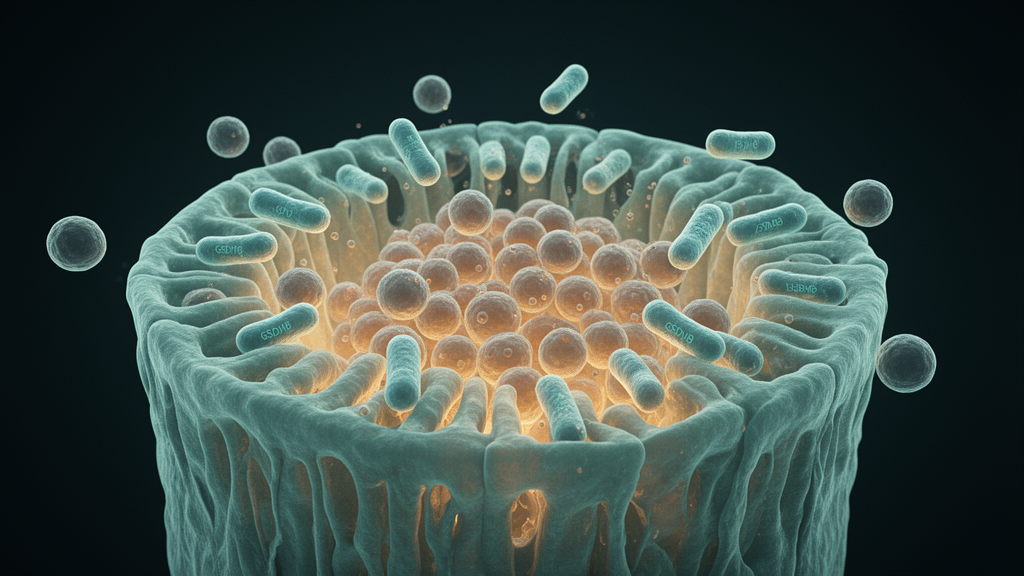
Bladder cancer remains one of the most common malignancies of the urinary tract, and while immune checkpoint inhibitors have transformed its treatment landscape, a substantial proportion of patients fail to respond to these drugs. Now, a team of researchers in Shanghai has uncovered a molecular mechanism that may explain why some bladder tumors respond better to anti-PD-1 immunotherapy than others, and their findings point to an unexpected role for a protein better known for its involvement in inflammatory cell death. The study, published in the journal Cancer Immunology, Immunotherapy, identifies the gasdermin B protein, or GSDMB, as a key amplifier of anti-tumor immunity in bladder cancer, and suggests that measuring this protein could help clinicians predict which patients are likely to benefit from checkpoint blockade.
The research, led by Yu Shen and Haibo Shen of the Department of Urology at Xinhua Hospital, Shanghai Jiao Tong University School of Medicine, together with colleagues at Shanghai Jing’an District Central Hospital and the Shanghai Institute of Immunology, set out to resolve a longstanding puzzle. GSDMB is known to be highly expressed in bladder cancer, and previous work had implicated the gasdermin family in anti-tumor immunity, but the precise functional role of GSDMB in shaping the response to immune checkpoint inhibitors had remained unclear. The new study provides what the authors describe as a novel mechanism linking a tumor-intrinsic signaling pathway to the recruitment and activation of cytotoxic immune cells within the tumor microenvironment.
At the heart of the discovery is a signaling axis that the researchers designate as GSDMB–DDX5–Sema7a–CD8+ T cell. According to the study, when GSDMB is overexpressed in bladder cancer cells, it does something unexpected for a protein of its class: it translocates to the nucleus. Once inside the nucleus, GSDMB physically interacts with DEAD-box helicase 5, or DDX5, a well-characterized RNA helicase that participates in the regulation of transcription. Through this interaction, the GSDMB–DDX5 complex upregulates the expression of Semaphorin 7A, or Sema7a, a secreted signaling molecule that the study identifies as the critical downstream effector of the pathway.
Sema7a, once produced by the tumor cells, is secreted into the surrounding tumor microenvironment, where it performs a crucial recruiting function. The researchers demonstrate that secreted Sema7a facilitates the infiltration of CD8+ T cells into the tumor. These cytotoxic T lymphocytes are the principal assassins of the adaptive immune system, capable of recognizing and killing tumor cells directly, and their presence within a tumor, rather than merely around its margins, is one of the strongest predictors of response to immunotherapy. Tumors that are densely infiltrated by CD8+ T cells are often described as immunologically hot, whereas tumors that exclude these cells tend to resist checkpoint inhibitors regardless of how many T cells circulate in the bloodstream.
The study goes further than simply counting infiltrating cells. The researchers found that the CD8+ T cells recruited into GSDMB-expressing tumors were not only more numerous but also more functionally potent. Tumor-infiltrating CD8+ T cells in this setting showed enhanced expression of three hallmark mediators of cytotoxic anti-tumor activity: interferon-gamma, tumor necrosis factor-alpha, and granzyme B. Interferon-gamma and tumor necrosis factor-alpha are inflammatory cytokines that coordinate and amplify immune attacks on tumors, while granzyme B is a serine protease that T cells deliver into target cells to trigger their death. The coordinated elevation of all three molecules indicates that the recruited T cells arrive in an activated, tumor-killing state rather than in an exhausted or suppressed condition.
This mechanism has direct consequences for anti-PD-1 therapy. Immune checkpoint inhibitors such as anti-PD-1 antibodies work by releasing the molecular brakes that tumors place on T cells, but they can only succeed if tumor-reactive T cells are present in the tumor microenvironment in the first place. By promoting the infiltration and activation of CD8+ T cells, GSDMB effectively increases the supply of targetable immune cells, allowing anti-PD-1 treatment to operate on a larger and more vigorous T cell population. The authors report that GSDMB synergizes with the efficacy of immune checkpoint inhibitor therapy in bladder cancer through this promotion of CD8+ T cell infiltration and effector function, establishing the protein as a genuine partner to checkpoint blockade rather than an incidental correlate.
The mechanistic findings are notable because they assign a transcriptional regulatory role to GSDMB, a member of the gasdermin family whose members are classically associated with pyroptosis, a form of inflammatory programmed cell death. The demonstration that GSDMB can move into the nucleus and, through its interaction with the helicase DDX5, drive the transcription of Sema7a expands the known functional repertoire of this protein family. It also reframes gasdermin biology in the context of cancer immunology: rather than acting solely as an executor of cell death, GSDMB in bladder cancer appears to function as a tumor-intrinsic organizer of the immune microenvironment, shaping which immune cells enter the tumor and how aggressively they behave once inside.
Beyond its mechanistic interest, the study carries practical implications for patient care. The authors conclude that GSDMB may serve as a potential prognostic biomarker for outcomes in patients with bladder cancer treated with anti-PD-1 therapy. If validated in larger clinical cohorts, a GSDMB-based test could help oncologists identify, before treatment begins, which patients are likely to respond to checkpoint inhibitors and which might be better served by alternative or combination strategies. This kind of predictive stratification is a pressing unmet need in bladder cancer, where anti-PD-1 agents are used in both metastatic settings and in certain non-muscle-invasive disease contexts, yet response rates vary widely between individuals.
The research also suggests potential therapeutic avenues that extend beyond biomarker development. If the GSDMB–DDX5–Sema7a pathway can be pharmacologically enhanced in tumors with low endogenous GSDMB activity, or if Sema7a itself can be delivered or mimicked to draw CD8+ T cells into immunologically cold tumors, clinicians might one day convert non-responsive bladder cancers into responsive ones. Conversely, the pathway offers a mechanistic explanation for resistance that could be targeted diagnostically: patients whose tumors lack GSDMB expression, and therefore lack the Sema7a-driven recruitment signal, might be candidates for therapies that recruit immune cells through alternative routes, such as oncolytic viruses, cancer vaccines, or chemokine-modulating agents.
The study was conducted with oversight from the Institutional Animal Care and Use Committee of Xinhua Hospital and the hospital’s Ethics Committee, with informed consent obtained from all human participants, and it was supported by grants from the Shanghai Jing’an District Health Commission and the Cross-disciplinary Fund of Xinhua Hospital. Published as an open-access article, the work adds bladder cancer to the growing list of malignancies in which tumor-intrinsic molecular programs are being mapped onto the architecture of the immune microenvironment. As the field of immuno-oncology moves from broad checkpoint blockade toward rational, mechanism-guided combination therapy, findings such as the GSDMB–DDX5–Sema7a axis illustrate how a single tumor protein can orchestrate an entire chain of immune events, from gene transcription in the cancer cell nucleus to the arrival of armed cytotoxic T cells at the tumor front, and how understanding that chain may ultimately determine whether a patient’s immune system can be mobilized to fight back.
Subject of Research: The role of GSDMB in enhancing anti-PD-1 immunotherapy response through Sema7a-mediated CD8+ T cell infiltration in bladder cancer
Article Title: GSDMB synergizes anti-PD-1 efficacy via Sema7a-mediated CD8+ T Cell infiltration in bladder cancer
Article References: Shen, Y., Zhang, S., Yu, S., Chen, K., Li, J., Chen, Z., Ren, T., Liu, H., Xu, D., Wang, Y., & Shen, H. (2026). GSDMB synergizes anti-PD-1 efficacy via Sema7a-mediated CD8+ T Cell infiltration in bladder cancer. Cancer Immunology, Immunotherapy. https://doi.org/10.1007/s00262-026-04597-4
Image Credits: AI Generated
DOI: 10.1007/s00262-026-04597-4
Keywords: bladder cancer, GSDMB, Sema7a, DDX5, CD8+ T cells, anti-PD-1, immune checkpoint inhibitors, immunotherapy, tumor microenvironment, biomarker, granzyme B, interferon-gamma
Cite Scienmag News
Nathaniel Bowman. (October 17, 2026). Bladder Cancer Protein GSDMB Boosts Immunotherapy by Recruiting Immune Cells. Scienmag. https://scienmag.com/bladder-cancer-protein-gsdmb-boosts-immunotherapy-by-recruiting-immune-cells/
Nathaniel Bowman. "Bladder Cancer Protein GSDMB Boosts Immunotherapy by Recruiting Immune Cells." Scienmag, 17 October 2026, https://scienmag.com/bladder-cancer-protein-gsdmb-boosts-immunotherapy-by-recruiting-immune-cells/. Accessed 17 October 2026.
Nathaniel Bowman. "Bladder Cancer Protein GSDMB Boosts Immunotherapy by Recruiting Immune Cells." Scienmag. October 17, 2026. https://scienmag.com/bladder-cancer-protein-gsdmb-boosts-immunotherapy-by-recruiting-immune-cells/


