


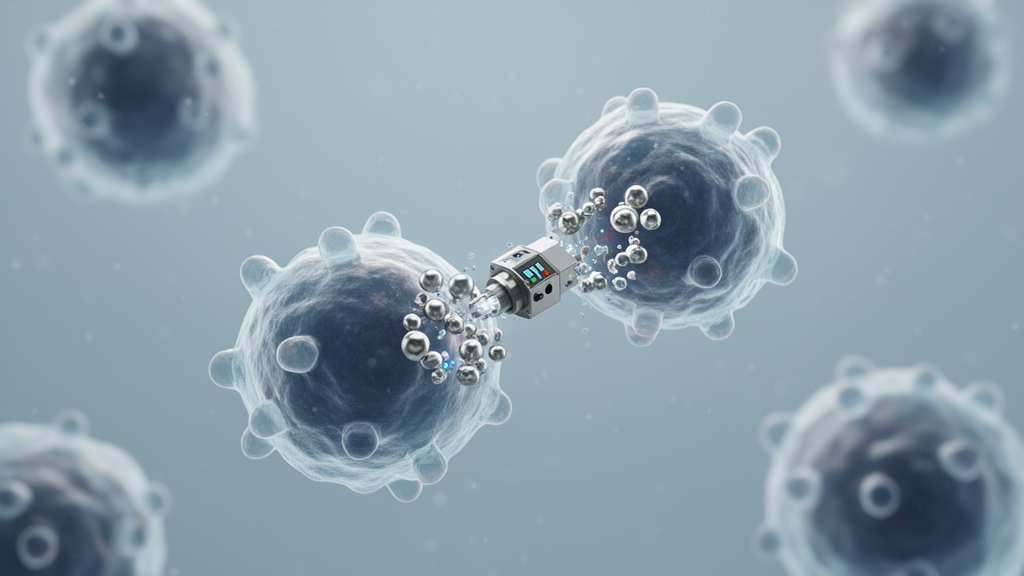
Researchers at City of Hope have developed and tested a preclinical “plug-and-play” platform for chimeric antigen receptor T cells that can accept engineered molecules after the cells have been administered. In the animal study, published in Cancer Immunology Research on September 7, 2026, the redesigned cells were equipped with different add-ons that supported tracking, growth and recognition of a wider range of cancer cells. The work provides a laboratory demonstration that CAR T cells can be designed with a molecular docking system, potentially allowing researchers to redirect engineered immune cells toward different cancer targets as a tumor changes.
The approach builds on meditope, a molecular docking technology developed in earlier research by City of Hope investigators. In the new study, researchers redesigned CAR T cells so they could connect with a small molecule called meP, creating a new type of engineered cell known as meCAR T. Rather than hardwiring every function into the receptor, this architecture separates the recognition machinery from adaptor molecules that can provide or modify particular capabilities. A cell could therefore be paired with one adaptor to assist with tracking, another to promote growth, or another to broaden the range of cancer cells it recognizes.
CAR T therapy genetically reprograms a patient’s immune cells to seek out and kill cancer. Although the approach has transformed treatment for some blood cancers, today’s therapies remain largely fixed after the engineered cells are infused. They also have a short lifespan, can cause serious side effects and generally cannot be altered after administration. That inflexibility is a major concern when tumors evolve or develop ways to escape immune attack. As malignant cells change, CAR T cells can lose effectiveness, allowing some cancer cells to survive and contribute to relapse.
City of Hope investigators John Williams, Ph.D., and Christine Brown, Ph.D., framed the project as an effort to make therapeutic cells as adaptable as the tumors they confront. “The bottom line is that tumors adapt to CAR T therapies, leading to treatment failure and cancer relapse,” Williams said in the research announcement. “To remain effective, our therapies need to adapt, too.” The meditope-based platform was created to reconfigure potent cancer-fighting cells as a tumor progresses, giving researchers an option to add functions when needed rather than relying on a receptor whose functions were all fixed in advance.
In the reported animal experiments, meCAR T cells accepted different engineered add-ons designed to support several distinct experimental purposes. One adaptor enabled the research team to track the cells, while others were used to help the cells grow or recognize a wider range of cancer cells. The investigators also programmed the engineered cells to perform new functions, allowing them to exercise greater control over how the cells found and attacked their targets. The central result was that a modular CAR design could separate a T cell’s receptor from the adaptor molecules that supply or modify its capabilities.
The flexibility could matter particularly in solid tumors, where malignant cells can differ from one another in the molecular features they display. A conventional CAR T cell engineered to recognize one target may not respond equally to every cancer cell in that population. The plug-and-play design offers a way to use different adaptor configurations and, according to the researchers, potentially adjust the treatment as the target landscape changes. Brown said the protein-adaptor plug-ins could improve the ability of CAR T cells to overcome tumor heterogeneity and other barriers that limit CAR T therapy in solid tumors.
Williams compared the concept to updating software on a smartphone after purchase: meditope is intended to allow new instructions to be sent to CAR T cells already in the body. In the study, the added instructions were supplied through engineered adaptor molecules rather than by rebuilding each cell with a new hardwired receptor. The reported experiments showed that the redesigned cells could receive these molecular components and use them for tracking, growth, cancer recognition and other programmed functions. The work therefore tested the flexibility of the platform in the preclinical setting rather than establishing a treatment outcome in people.
Clinical evaluation remains the next step. The peer-reviewed study was an experimental preclinical study involving animals, and the supplied research record does not establish safety, effectiveness, durability or patient benefit in humans. The researchers said they were developing two Phase I clinical trials to evaluate the safety and activity of meCAR T cells as a platform for treating patients with solid tumors and acute myeloid leukemia. The announcement did not report enrollment, clinical results or other evidence about the platform’s effects in patients, so the proposed ability to reconfigure treatment after infusion has not yet been demonstrated in a human study.
City of Hope disclosed financial and professional interests linked to the technology. The institution holds equity and royalty interests in Meditope Biosciences Inc., which has licensed the core technology but does not hold rights to the meCAR asset. Williams holds equity in the company, receives royalties related to the technology and serves as a consultant. The study was funded by grants from the National Cancer Institute, the Marcus Foundation, the Dr. Richard Merkin and Merkin Family Foundation, Buster for T-cell Therapy and the City of Hope Integrated Drug Development Venture program. These disclosures apply to the investigators and institutions associated with the work and form part of the context for interpreting the preclinical findings.
The study’s significance lies in showing that modularity can be built into an engineered T-cell receptor and used to vary the functions of the same cellular platform. The animal experiments support the design goal of adding or changing capabilities after treatment, while the planned clinical studies will be needed to determine how safely and effectively the approach can be controlled in people. meCAR T cells are not shown here to prevent relapse, defeat heterogeneous solid tumors or improve survival. Instead, the research identifies a potentially adjustable approach to controlling engineered immune cells and moves a configurable CAR T platform toward evaluation in patients with solid tumors and acute myeloid leukemia.
Subject of Research: Preclinical development of a modular CAR T-cell platform that can accept protein adaptors after treatment
Article Title: Study unveils ‘plug-and-play’ CAR T technology designed to adapt as cancer changes
Article References: Study unveils ‘plug-and-play’ CAR T technology designed to adapt as cancer changes. Original publication (Bibliographic details unavailable.)
Image Credits: AI Generated
DOI: Not provided
Keywords: CAR T cells, cancer immunotherapy, protein adaptors, meCAR T cells, solid tumors, acute myeloid leukemia, tumor heterogeneity, City of Hope, preclinical research, unveils, plug-and-play, technology
Cite Scienmag News
Nathaniel Bowman. (October 26, 2026). Preclinical plug-and-play CAR T cells can be reconfigured after treatment. Scienmag. https://scienmag.com/preclinical-plug-and-play-car-t-cells-can-be-reconfigured-after-treatment/
Nathaniel Bowman. "Preclinical plug-and-play CAR T cells can be reconfigured after treatment." Scienmag, 26 October 2026, https://scienmag.com/preclinical-plug-and-play-car-t-cells-can-be-reconfigured-after-treatment/. Accessed 26 October 2026.
Nathaniel Bowman. "Preclinical plug-and-play CAR T cells can be reconfigured after treatment." Scienmag. October 26, 2026. https://scienmag.com/preclinical-plug-and-play-car-t-cells-can-be-reconfigured-after-treatment/


