


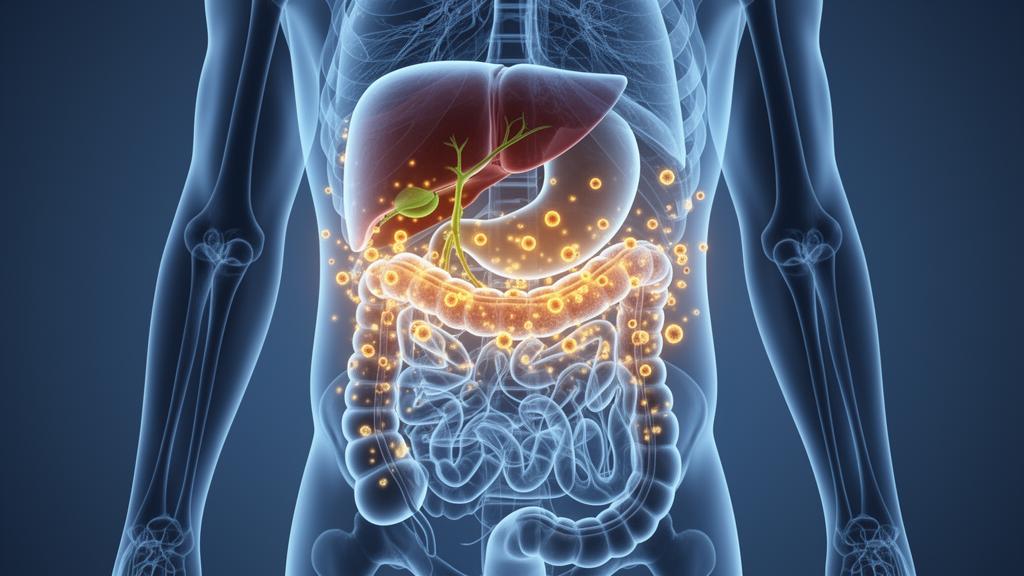
People with inflammatory bowel disease associated with primary sclerosing cholangitis (PSC) can have colon tissue that appears uninflamed under routine examination while still containing unusually concentrated cytotoxic, or cell-killing, immune cells, according to an observational study from the Garvan Institute of Medical Research. The finding may help explain why this group faces a colorectal cancer risk reported to be three times higher than that of people with ulcerative colitis alone, despite experiencing less severe bowel flare-ups. Researchers compared colon biopsies from patients with PSC-associated inflammatory bowel disease, patients with ulcerative colitis and healthy volunteers, using single-cell sequencing, spatial mapping and microbiome analysis. The work was published in Nature Communications.
PSC is a chronic liver disease that blocks the bile ducts and causes scarring of the liver, affecting around 1,000 Australians. About 70% of people with PSC also have a form of inflammatory bowel disease resembling ulcerative colitis. The two conditions can therefore look similar when clinicians assess the bowel, but their biological profiles are not identical. The contrast between apparently milder disease and substantially greater colorectal cancer risk has long puzzled researchers and raised questions about whether standard endoscopy and biopsy assessment capture the processes most relevant to cancer development.
The study involved biopsies from eight patients with PSC-associated inflammatory bowel disease, 11 patients with ulcerative colitis alone and 10 people without gastrointestinal disease. Researchers examined samples taken from several regions of the colon rather than relying on a single biopsy. This approach allowed them to compare cellular organization, immune states and microbial communities across the bowel. The team reported that PSC-associated inflammatory bowel disease was accompanied by a distinct microbiome and greater immune activity, even in tissue without visible inflammation or clinical flare-ups. The study did not directly test whether the observed immune activity causes cancer, but it identified a possible biological explanation for the elevated risk.
The most striking result was found in tissue that a pathologist had classified as free of inflammation. Rather than being biologically quiet, these apparently normal areas contained a build-up of cytotoxic immune cells in the colon of patients with PSC-related bowel disease. These cells are a normal component of the immune system, but their concentration in tissue considered uninflamed was unexpected. The affected region is also where these patients face their highest colorectal cancer risk, making the finding relevant to the question of why cancer can develop despite a relatively mild-looking clinical course. Dr Kylie James, a lab head at the Garvan Institute and lead author of the paper, said the results open the door to more specialized approaches for people with PSC.
“Chronic, low-level inflammation is a known contributor to cancer risk, and our findings may explain why these patients with a milder-looking disease have a much greater chance of developing colorectal cancer,” James said. “Knowing more about this disease means we can now look to develop more targeted treatments against the inflammation, even when the person isn’t having obvious symptoms of an IBD flare.” The study therefore shifts attention away from symptoms alone toward cellular inflammation that may remain hidden from conventional clinical assessment. It also raises the possibility that sustained remission should involve more than the absence of outward signs of disease, with immune activity in the tissue providing additional information about biological activity. The observations do not establish that targeted treatments will reduce cancer risk, but they provide a biological rationale for investigating that possibility.
Dr Jacqueline Tearle, a postdoctoral researcher at the Garvan Institute and first author of the study, described the findings as the first mapping of this type of immune activity in these patients. “We’re finding here goes further – there’s immune activity happening in tissue that a pathologist would call quiet, and it’s in the very part of the colon where these patients face their highest cancer risk,” Tearle said. “We think this constant, background inflammation could be driving the development of colorectal cancer.” The authors’ wording reflects a mechanistic hypothesis rather than a demonstrated causal chain: the observations support the idea that persistent inflammation may contribute to cancer risk, but the observational study cannot establish that the immune cells directly initiate tumors or that reducing them would prevent cancer. It also cannot show how long the activity persists in an individual patient or whether it varies over time.
Another major finding emerged when the researchers analyzed samples collected during active flare-ups. In both PSC-associated inflammatory bowel disease and ulcerative colitis alone, a population of mast cells accumulated in the gut when disease was active. Mast cells participate in inflammation and allergic responses, and the gene-expression pattern of the population observed in this study suggested that it could contribute to cancer risk during periods of active inflammation. Importantly, the researchers did not describe the mast-cell response as a feature unique to PSC. Instead, it was a shared cellular state during flare-ups, whereas the background immune activity identified in apparently quiet tissue distinguished PSC-associated disease.
One technical advance may have helped reveal the mast-cell signal. Mast cells are fragile and are commonly destroyed when biopsy samples are frozen in the standard way, meaning they can be missed in routine tissue studies. The Garvan team processed patient tissue immediately after collection, preserving the cells so they could be studied in greater detail. This workflow made it possible to detect a distinctive mast-cell population and compare its gene activity across the two diseases. The finding illustrates how sample handling can shape the conclusions drawn from histopathology: cells that are present in a biopsy may not survive standard preservation, and their absence from an earlier analysis does not necessarily indicate an absence in the patient.
Associate Professor Simon Ghaly, a gastroenterologist at St Vincent’s Hospital Sydney who led patient recruitment, said current monitoring tools do not always capture what is happening in the gut of people with PSC-related bowel disease. “Findings like these bring us closer to a more informed way of monitoring, and eventually treating, these patients,” he said. The results provide a rationale for investigating whether clinical tests could detect hidden cellular inflammation and whether treatments tailored to the biology of PSC-associated bowel disease could be more appropriate than approaches based mainly on shared symptoms. The next step is not a clinical recommendation; it is further experimental work to determine how the cellular changes translate into cancer risk. The small observational sample also means the findings should be interpreted as an explanation of disease biology and a guide for future studies rather than as a test of clinical benefit.
To pursue that question, the team is examining changes in the cells lining the colon using gut models grown from patients’ own cells. These models may help researchers investigate how immune states and epithelial-cell behavior are connected, and whether the distinctive cellular environment of PSC-associated disease can be reproduced outside the patient. The broader goal is to characterize biological features that distinguish PSC-associated inflammatory bowel disease from ulcerative colitis alone and to develop treatments matched to the underlying biology of each condition, rather than to shared symptoms alone. The study also highlights a broader challenge for monitoring: the absence of visible inflammation does not necessarily mean the absence of immune activity. By combining cellular sequencing, spatial mapping, microbiome analysis and careful tissue processing, the researchers have identified a difference that conventional examination alone did not reveal. Whether that difference can be measured routinely, translated into more precise monitoring or addressed with effective treatments remains to be determined.
Subject of Research: Colonic immune activity and colorectal cancer risk in PSC-associated inflammatory bowel disease
Article Title: ‘Invisible’ inflammation in rare bowel disease may explain heightened colon cancer risk
Article References: ‘Invisible’ inflammation in rare bowel disease may explain heightened colon cancer risk. Original publication (Bibliographic details unavailable.)
Image Credits: AI Generated
DOI: Not provided
Keywords: PSC, inflammatory bowel disease, colorectal cancer, ulcerative colitis, chronic inflammation, cytotoxic immune cells, mast cells, microbiome, single-cell sequencing, colon biopsies, Invisible, inflammation
Cite Scienmag News
Nathaniel Bowman. (October 26, 2026). Hidden immune activity may explain colorectal cancer risk in PSC. Scienmag. https://scienmag.com/hidden-immune-activity-may-explain-colorectal-cancer-risk-in-psc/
Nathaniel Bowman. "Hidden immune activity may explain colorectal cancer risk in PSC." Scienmag, 26 October 2026, https://scienmag.com/hidden-immune-activity-may-explain-colorectal-cancer-risk-in-psc/. Accessed 26 October 2026.
Nathaniel Bowman. "Hidden immune activity may explain colorectal cancer risk in PSC." Scienmag. October 26, 2026. https://scienmag.com/hidden-immune-activity-may-explain-colorectal-cancer-risk-in-psc/


