


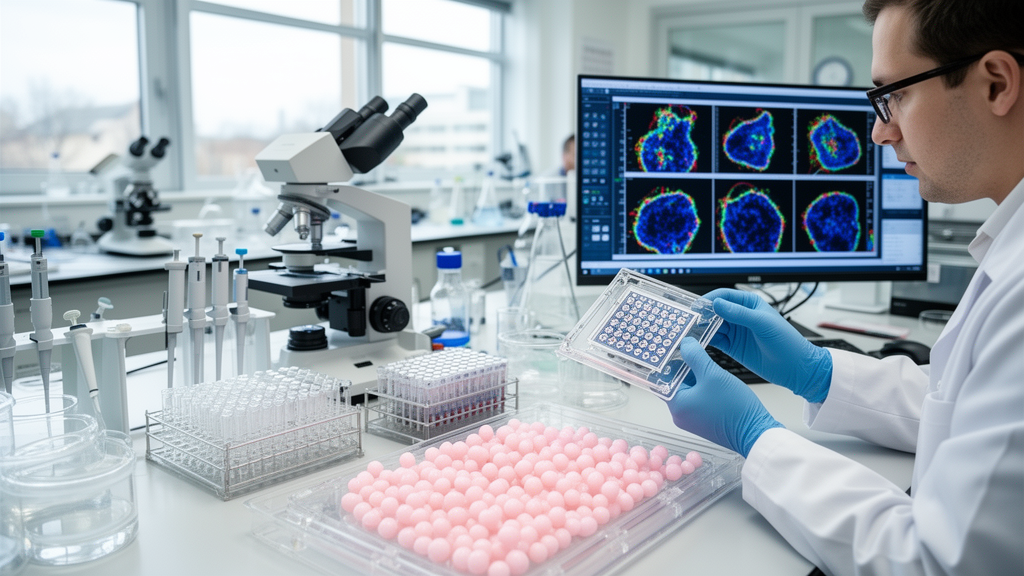
Two Binghamton University researchers have received seed funding through the State University of New York Technology Accelerator Fund to advance separate technologies aimed at cancer diagnosis and the delivery of RNA medicines. Professor of Empire Innovation Nancy Guo is working on ClinSegAI, an artificial-intelligence model designed to detect biomarkers in standard pathology imaging and reduce the time required for treatment decisions. Assistant Professor of Pharmaceutical Sciences John Fetse is developing PeptoLNP, an amino-acid-based lipid-nanoparticle platform intended to improve the delivery of RNA therapeutics while reducing toxicity concerns.
The grants support early development rather than proof of clinical effectiveness: the available evidence describes proposed capabilities, planned testing and the aim of demonstrating commercial potential. Guo, a faculty member in the Thomas J. Watson College of Engineering and Applied Science’s School of Computing, received accelerator funding for ClinSegAI. The predictive model uses artificial intelligence to identify biomarkers in standard pathology imaging, with the stated goal of accelerating treatment decisions.
It is also intended to incorporate molecular-biology insights that may reveal indicators of tumor progression before those changes become visible through conventional radiological assessment. The announcement does not report patient studies, diagnostic-accuracy results, earlier cancer detection in a clinical population or improvements in patient outcomes. The current milestone is financial and developmental support: the researchers have funding to evaluate the technology’s feasibility and commercial potential, not evidence that ClinSegAI already improves cancer care.
Fetse’s project addresses a separate problem in RNA therapeutics: how to deliver medicines to the appropriate place in the body while limiting harmful effects. The university reports that current lipid-nanoparticle methods can have poor delivery efficiency and raise toxicity concerns that restrict proper dosing. By incorporating amino acids directly into the lipids, Fetse says he has reduced toxicity risk and improved delivery rates in his experimental system.
PeptoLNP is described as a delivery vehicle built from amino acids, making it naturally biodegradable and adaptable for targeting different tissues. The accelerator award will support additional testing intended to establish whether the platform can move RNA medicines toward practical use. Those development aims should not be confused with demonstrated benefits in people; the source provides no clinical efficacy, safety or dosing results for PeptoLNP.
The funding comes from a SUNY program whose broader purpose is to help early-stage research demonstrate technical and commercial potential. Studies at five SUNY institutions—Albany, Binghamton, Buffalo, Stony Brook and Upstate Medical University—shared $400,000 in Technology Accelerator Fund grants. Supported work can include feasibility studies, prototyping and testing, with the ultimate goal of accelerating time to market and increasing readiness for potential investors, strategic partners and customers.
For Guo and Fetse, the awards therefore mark a research-development milestone rather than a clinical milestone. ClinSegAI remains an AI-assisted pathology-analysis concept under development, while PeptoLNP remains an experimental RNA-delivery platform.
Subject of Research: Early-stage artificial-intelligence cancer pathology and RNA-therapeutic delivery research
Article Title: Binghamton researchers receive funding to advance technologies that could improve cancer diagnostic and drug delivery
Article References: Binghamton researchers receive funding to advance technologies that could improve cancer diagnostic and drug delivery. Original publication (Bibliographic details unavailable.)
Image Credits: AI Generated
DOI: Not provided
Keywords: Binghamton University, SUNY Technology Accelerator Fund, artificial intelligence, cancer pathology, biomarker detection, RNA therapeutics, lipid nanoparticles, drug delivery, Binghamton, researchers, receive, funding
Cite Scienmag News
Nathaniel Bowman. (October 26, 2026). SUNY funds Binghamton AI cancer diagnostics and RNA delivery research. Scienmag. https://scienmag.com/suny-funds-binghamton-ai-cancer-diagnostics-and-rna-delivery-research/
Nathaniel Bowman. "SUNY funds Binghamton AI cancer diagnostics and RNA delivery research." Scienmag, 26 October 2026, https://scienmag.com/suny-funds-binghamton-ai-cancer-diagnostics-and-rna-delivery-research/. Accessed 26 October 2026.
Nathaniel Bowman. "SUNY funds Binghamton AI cancer diagnostics and RNA delivery research." Scienmag. October 26, 2026. https://scienmag.com/suny-funds-binghamton-ai-cancer-diagnostics-and-rna-delivery-research/


