


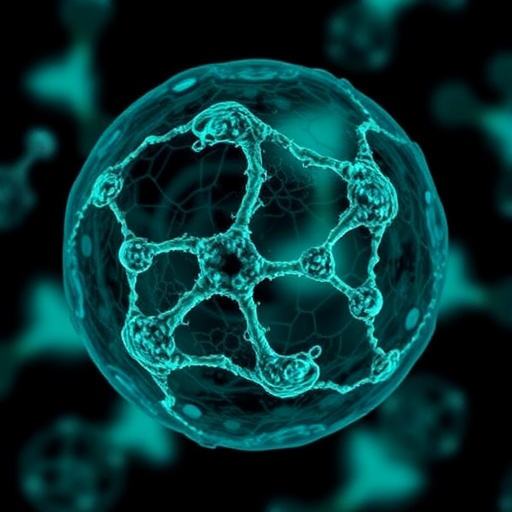
In a groundbreaking development at the intersection of cell biology and therapeutic innovation, researchers have unveiled a novel technique for targeted mitochondrial transplantation using engineered protein binders displayed on the mitochondrial surface. This cutting-edge approach enables highly selective delivery of functional mitochondria to specific cell types, overcoming longstanding challenges in mitochondrial therapy aimed at rescuing cellular degeneration.
The research team employed camelid-derived nanobodies fused to mitochondrial outer membrane proteins, such as OMP25, effectively decorating the mitochondria with highly specific molecular hooks. These engineered mitochondria demonstrated remarkable affinity for cells expressing complementary surface markers, dramatically enhancing targeting fidelity as compared to non-specific approaches. When mitochondria displaying anti-GFP nanobodies were introduced to GFP-expressing cells, over 60% of those cells exhibited successful nanobody binding, an efficiency nearly nonexistent in control populations expressing irrelevant markers.
Advancing their methodology, donor mitochondria were fluorescently labeled within their matrix to facilitate real-time tracking post-transplantation. This enabled visualization of internalized mitochondria escaping endosomal compartments and avoiding lysosomal degradation pathways within recipient endothelial cells. Such observations highlight not only efficient delivery but also intracellular mitochondrial survival and potential functional integration, a crucial milestone in therapeutic mitochondria transfer.
The researchers further demonstrated the durability and network integration of transplanted mitochondria by monitoring their persistence and interaction within host cells over multiple days. Mitochondria adorned with anti-GFP nanobodies formed intricate tubular networks, actively interconnecting with endogenous mitochondrial structures. This dynamic fusion suggests the potential restoration or enhancement of mitochondrial function following transplantation.
Target specificity was refined by generating nanobodies against physiologically relevant human cell surface proteins, such as CD71, a receptor upregulated in activated immune and cardiac cells. Employing mitochondria decorated with anti-CD71 nanobodies achieved substantial targeting efficiency in primary human cardiac cells and activated CD8+ T lymphocytes. This selectivity underscores the promise of cell-type-specific mitochondrial therapy for treating diverse tissue pathologies.
The team expanded their proof of concept by targeting mitochondria to retinal photoreceptor cells via nanobodies recognizing CD73, a photoreceptor-specific surface marker. Mitochondria displaying anti-CD73 nanobodies accumulated preferentially within the photoreceptor layer of human retinal organoids, demonstrating the adaptability of this approach for nervous system applications and potential ophthalmological interventions.
Importantly, investigations into immunogenicity revealed that mitochondrial surface decoration with nanobodies did not enhance immune recognition or antibody generation against mitochondrial components in murine models. This finding alleviates concerns over potential adverse immune responses, which have historically limited the application of mitochondrial transplantation across tissue types.
Functionalization of mitochondria with diverse targeting moieties was pushed further through the incorporation of designed ankyrin repeat proteins (DARPins) and full-length antibodies against cell-specific markers such as CD31 on endothelial cells and CD8 on T cells. These strategies consistently resulted in significantly enhanced binding and uptake, suggesting a modular platform adaptable to a broad range of cell types and clinical indications.
High-resolution atomic force microscopy measurements quantified the biophysical forces mediating mitochondrion-cell adhesion, revealing that mitochondria presenting nanobodies exhibited markedly increased adhesion strength and rupture event frequency compared to controls. This mechanistic insight confirms that surface-displayed binders actively promote stable interactions necessary for efficient mitochondrial delivery.
The study also evaluated the intracellular fate of transplanted mitochondria, observing that targeted mitochondria could evade lysosomal acidification, thereby preserving their integrity post-internalization. This phenomenon is critical, as lysosomal degradation traditionally represents a major hurdle in organelle transplantation approaches, often curtailing therapeutic efficacy.
Moreover, the mitochondrial delivery system demonstrated adaptability to immune cell modulation, providing evidence that anti-CD71 nanobody-coated mitochondria preferentially interacted with activated T cells exhibiting elevated CD71 surface levels. While targeting efficiency in this context was moderate, the data elucidate receptor density as a determining factor, paving the way for further optimization in immune-related therapies.
Collectively, this pioneering work establishes a versatile, targeted mitochondrial transplantation platform with high specificity, durable intracellular persistence, and minimal immunogenicity. By harnessing precise molecular recognition elements, this strategy holds transformative potential for treating mitochondrial dysfunction and degenerative diseases rooted in cellular energetics failures.
As the field progresses, integrating this technology with gene editing and bioengineering modalities could usher in unprecedented therapeutic capabilities, enabling customized and cell-type selective mitochondrial replenishment. The implications span neurodegeneration, cardiomyopathies, metabolic syndromes, and immune disorders, marking a pivotal advance toward organelle-level precision medicine.
Cite Scienmag News
Denise Maddox. (April 15, 2026). Targeted Mitochondrial Transplants Reverse Cell Degeneration. Scienmag. https://scienmag.com/targeted-mitochondrial-transplants-reverse-cell-degeneration/
Denise Maddox. "Targeted Mitochondrial Transplants Reverse Cell Degeneration." Scienmag, 15 April 2026, https://scienmag.com/targeted-mitochondrial-transplants-reverse-cell-degeneration/. Accessed 4 September 2026.
Denise Maddox. "Targeted Mitochondrial Transplants Reverse Cell Degeneration." Scienmag. April 15, 2026. https://scienmag.com/targeted-mitochondrial-transplants-reverse-cell-degeneration/


