


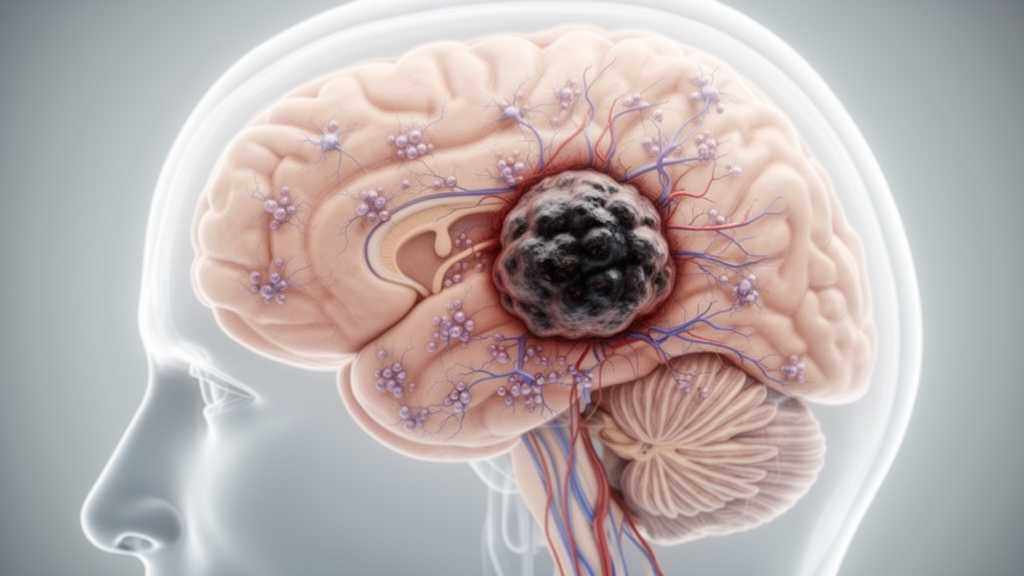
A peer-reviewed literature review concludes that biological changes in the aging brain may help shape the microenvironment in which brain tumors develop and progress. The article, “Navigating the aging brain: The interplay between brain malignancy and the aging microenvironment,” published in Ageing and Cancer Research & Treatment , synthesizes previously published evidence from aging biology, cancer neuroscience and neuro-oncology. It is not a clinical trial or a report of new patient outcomes.
Instead, it proposes a bidirectional framework in which age-related nervous-system changes may affect tumor behavior, while tumors and their treatments may alter nearby neural tissue. Several processes associated with brain aging could collectively reshape that environment. The review identifies the accumulation of senescent cells, chronic low-grade inflammation, metabolic dysfunction, altered neurotransmitter signaling, ion-channel dysregulation and changes in the blood-brain barrier.
These processes affect cellular, vascular and neural components of the brain, potentially influencing how tumors arise and progress within it. The authors frame biological aging not simply as a background characteristic of older patients, but as an active feature of the tissue environment that may interact with malignant cells. This is a conceptual synthesis, however, and the review does not provide direct clinical evidence that any single age-related process determines outcomes for a particular patient.
Cellular senescence has a dual role in the review. It can suppress the proliferation of damaged or abnormal cells, but senescent cells can also release inflammatory and tissue-remodeling factors collectively termed the senescence-associated secretory phenotype, or SASP. The accumulation of senescent neurons, astrocytes, microglia and endothelial cells in an aging brain may therefore create conditions favorable to tumor progression.
The proposed connection spans multiple cell types rather than resting on one mechanism: it links cellular aging with immune signaling, vascular biology and neural regulation. The authors do not claim that senescence initiates brain tumors, and the review does not establish whether targeting senescent cells would improve tumor control or patient survival. Another major strand of the reviewed evidence concerns functional communication between glioma cells and neurons.
The review describes interactions involving neuron-to-tumor synapses and neurotransmitter signaling, indicating that malignant cells can engage with parts of the nervous system rather than simply grow in isolation. It also reports that brain tumors and their treatments may promote senescence in nearby neurons and glial cells. These observations support the possibility of a feedback loop in which tumor cells alter neural tissue, those tissue changes influence tumor behavior or response to treatment, and the associated effects may also contribute to neurological or cognitive impairment.
The authors present this as a conceptual framework grounded in prior studies rather than as proof that the loop causes cognitive decline in patients. The review identifies research directions for age-aware neuro-oncology, including senescence-modulating approaches, neuroinflammation and blood-brain barrier biology, ion channels, neurotransmitter systems and advanced patient-derived organoid models. Interventions aimed specifically at aging-related mechanisms in brain tumors remain largely preclinical and require direct clinical evaluation.
The authors further caution that chronological age alone should not determine care for older people with brain tumors. Instead, tumor molecular features, physiological fitness, frailty, cognitive reserve, neurological function, comorbidities, treatment tolerance and quality of life should inform clinical decisions. The broader research aim is to consider tumor control and brain health as interconnected outcomes, potentially revealing mechanisms that connect treatment resistance with neurological decline while opening avenues for interventions addressing both cancer and the aging brain.
Whether such strategies can translate into clinical benefit remains unresolved.
Subject of Research: A literature review of interactions between brain aging, tumor progression, treatment resistance and neurological outcomes
Article Title: Aging brain biology may help shape brain tumor progression
Article References: Aging brain biology may help shape brain tumor progression. Original publication (Bibliographic details unavailable.)
Image Credits: AI Generated
DOI: Not provided
Keywords: brain aging, brain tumors, glioma, cellular senescence, neuroinflammation, blood-brain barrier, treatment resistance, neuron-tumor communication, cognitive decline, neuro-oncology, organoid models, literature review
Cite Scienmag News
Cassandra Pierce. (October 26, 2026). Review links aging brain biology with tumor progression. Scienmag. https://scienmag.com/review-links-aging-brain-biology-with-tumor-progression/
Cassandra Pierce. "Review links aging brain biology with tumor progression." Scienmag, 26 October 2026, https://scienmag.com/review-links-aging-brain-biology-with-tumor-progression/. Accessed 26 October 2026.
Cassandra Pierce. "Review links aging brain biology with tumor progression." Scienmag. October 26, 2026. https://scienmag.com/review-links-aging-brain-biology-with-tumor-progression/


