


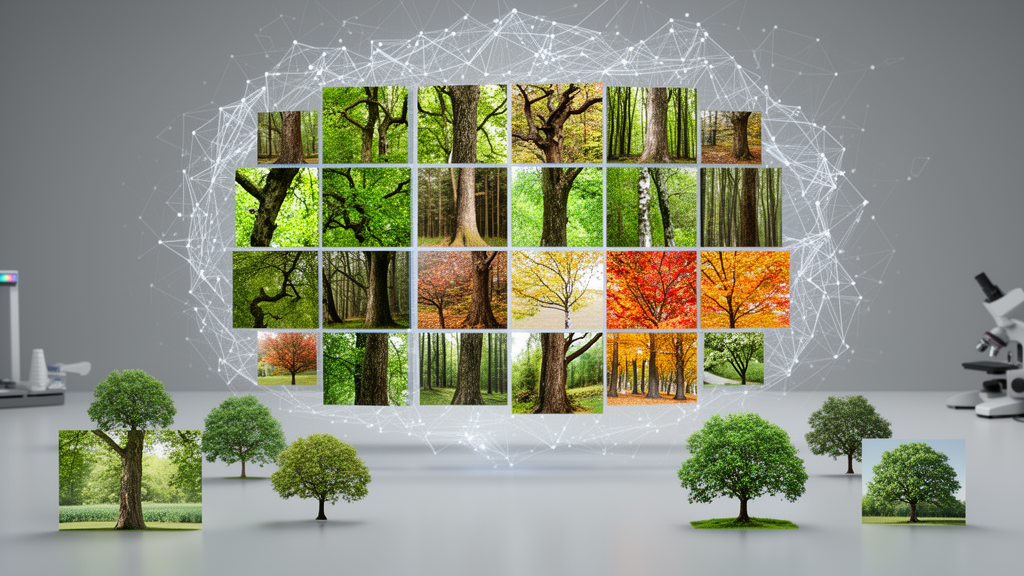
AI-generated images improved the performance of a standard image-recognition model when real training photographs were limited, according to a peer-reviewed computational modeling study by researchers at North Carolina State University. The experiments focused on 20 common North American tree species and combined synthetic images with photographs from iNaturalist and the Auto Arborist Dataset. The results suggest that generated imagery can supplement scarce real-world data for species-identification models, although it performed less effectively than authentic images overall and did not replace the need for field observations.
The researchers trained a standard image-recognition model using different combinations of real and AI-generated tree images, then assessed its ability to identify the species represented in the training data. The study’s central finding was conditional: synthetic images helped when the available real-image collection was limited, but they did not make generated photographs equivalent to genuine ones. The work was a computational modeling study rather than a field trial, and its scope was limited to a focused set of tree species.
It did not test complete biodiversity-monitoring workflows or measure conservation outcomes in the field. Real-world image collections can be uneven because some species, places, seasons and viewpoints are photographed more frequently than others. Real photographs also capture variation that generated images may miss, including leaf shape, bark texture and growth form.
These details can be important for recognizing species. The study therefore cautions against judging synthetic images solely by whether they appear realistic: an image can look convincing while omitting subtle information that matters in practice. Study lead author Thomas Lake, a research scholar in NC State’s Center for Geospatial Analytics, said synthetic images may have the greatest potential for studying species and places that are relatively poorly documented.
A small collection of real observations could potentially be supplemented with generated images to build an initial model while scientists continue collecting authentic photographs. Co-author Chris Jones, also a senior research scholar in the Center for Geospatial Analytics, noted that even common species may have photographs only from certain locations, seasons or perspectives. The findings do not establish that synthetic training would produce similar gains for animals, other plants or monitoring systems operating at larger scales, nor do they quantify effects on field decisions or long-term ecological outcomes.
Within the tested setting, however, the results position AI-generated imagery as a possible aid for training recognition tools where observations are limited, while real images remain the foundation for conservation data and community science continues to document the natural world.
Subject of Research: Computational testing of synthetic tree imagery for training species-recognition models with limited real-image data
Article Title: Study suggests AI-generated images could support conservation, but real-world data remains essential
Article References: Study suggests AI-generated images could support conservation, but real-world data remains essential. Original publication (Bibliographic details unavailable.)
Image Credits: AI Generated
DOI: Not provided
Keywords: artificial intelligence, synthetic imagery, tree species, image recognition, computer vision, biodiversity monitoring, conservation, community science, iNaturalist, remote sensing, suggests, AI-generated
Cite Scienmag News
Elena Sutton. (October 26, 2026). AI-Generated Tree Images Aid Recognition When Real Data Are Scarce, Study Finds. Scienmag. https://scienmag.com/ai-generated-tree-images-aid-recognition-when-real-data-are-scarce-study-finds/
Elena Sutton. "AI-Generated Tree Images Aid Recognition When Real Data Are Scarce, Study Finds." Scienmag, 26 October 2026, https://scienmag.com/ai-generated-tree-images-aid-recognition-when-real-data-are-scarce-study-finds/. Accessed 26 October 2026.
Elena Sutton. "AI-Generated Tree Images Aid Recognition When Real Data Are Scarce, Study Finds." Scienmag. October 26, 2026. https://scienmag.com/ai-generated-tree-images-aid-recognition-when-real-data-are-scarce-study-finds/


