


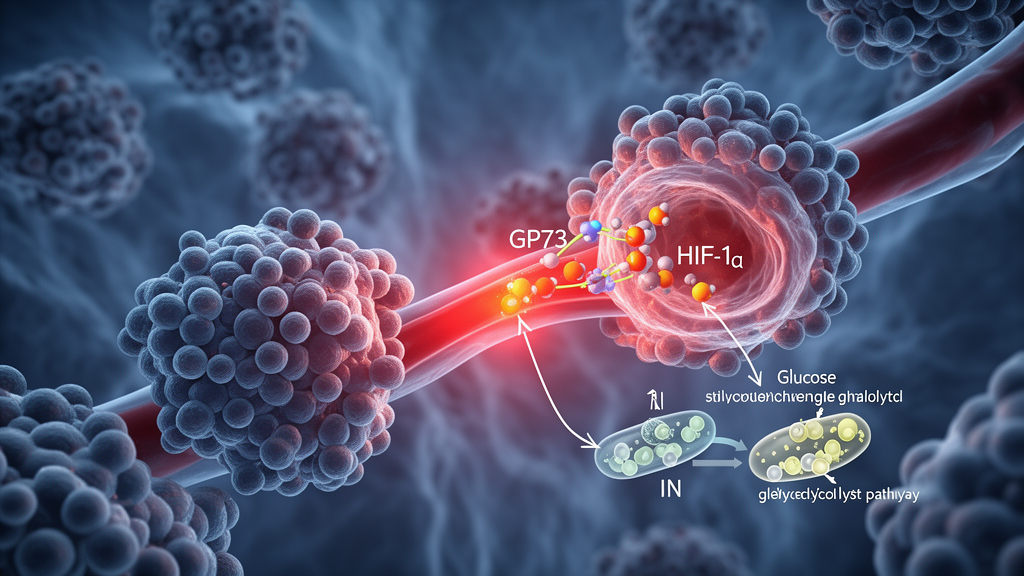
In laboratory experiments using human hepatocellular carcinoma cells, increased expression of Golgi protein 73 (GP73) enhanced glycolytic activity, cell growth, migration and invasion under low-oxygen conditions. The study reports that these effects depended on hypoxia-inducible factor 1α (HIF-1α), which was also linked to changes in epithelial–mesenchymal transition (EMT) markers. The findings provide a mechanistic link between a hypoxia-associated protein, cancer-cell metabolism and malignant behavior, but the main experiments were conducted in one cell line.
Researchers exposed HepG2 cells to hypoxia at 1% oxygen and used lentivirus-mediated GP73 overexpression, with a negative-control vector included for comparison. Separate experiments used small interfering RNA to knock down HIF-1α. The investigators assessed proliferation through colony formation, apoptosis through flow cytometry, and migration and invasion through Transwell assays.
Biochemical kits and a Seahorse XFe24 analyzer were used to evaluate glycolysis, mitochondrial respiration, oxygen consumption and extracellular acidification, while Western blotting measured HIF-1α, glycolytic enzymes and proteins associated with EMT. Under hypoxia, GP73 overexpression significantly increased colony formation, glucose consumption, lactate production, lactate dehydrogenase activity, cellular ATP levels and extracellular acidification rate. It also reduced apoptosis and showed a decreasing trend in oxygen consumption rate, consistent with the metabolic pattern the authors describe as the Warburg effect.
At the molecular level, GP73 overexpression increased HIF-1α and the glycolytic enzymes hexokinase 2 (HK2), SLC2A1, lactate dehydrogenase A and phosphoglycerate kinase 1. It also increased vimentin and decreased E-cadherin. These findings were observed in the laboratory model and do not by themselves establish that GP73 produces the same metabolic or invasive effects in patients.
Knocking down HIF-1α reversed the pro-tumorigenic phenotypes, metabolic reprogramming and molecular changes associated with GP73 overexpression. Reduced HIF-1α counteracted the increases in colony formation, migration, invasion, glucose consumption, lactate production, ATP and extracellular acidification, as well as the decrease in apoptosis and the decreasing trend in oxygen consumption. It also shifted the measured levels of glycolytic enzymes, vimentin and E-cadherin toward the comparison condition.
Within this experimental system, the results therefore indicate that HIF-1α is required for the GP73-associated effects in hypoxic HepG2 cells; the study did not test whether inhibiting GP73 or HIF-1α would improve outcomes in people with hepatocellular carcinoma. The researchers also analyzed peripheral blood mononuclear cells from 169 hepatocellular carcinoma patients who had undergone transarterial chemoembolization (TACE), which the study identifies as a source of tumor hypoxia. Patients classified as TACE-resistant had significantly elevated GP73, HIF-1α and HK2 expression at both messenger RNA and protein levels compared with non-resistant patients, with all reported P values below 0.001.
This clinical result is consistent with the cell experiments, but it remains an association: the summary does not report the criteria used to classify resistance or establish how PBMC expression relates to activity inside individual tumors. Overall, the study proposes that hypoxia-induced GP73 promotes the Warburg effect and EMT through HIF-1α stabilization and identifies the GP73–HIF-1α axis as a potential therapeutic target and basis for PBMC-based monitoring of TACE resistance. Those applications remain prospective and require further validation beyond the single cell line and patient cohort.
Subject of Research: Mechanistic study of the GP73–HIF-1α pathway in hypoxic hepatocellular carcinoma and TACE resistance
Article Title: Hypoxia-induced GP73 promotes the Warburg effect in hepatocellular carcinoma via HIF-1α
Article References: Abudureheman, M., Zhu, D., & Ren, W. (2026). Hypoxia-induced GP73 promotes the Warburg effect in hepatocellular carcinoma via HIF-1α. Molecular Biology Reports, 53(1), Article 1785. https://doi.org/10.1007/s11033-026-12991-5
Image Credits: AI Generated
DOI: 10.1007/s11033-026-12991-5
Keywords: hepatocellular carcinoma, GP73, HIF-1α, hypoxia, Warburg effect, glycolysis, TACE resistance, epithelial–mesenchymal transition, cancer metabolism, liver cancer, Hypoxia-induced, promotes
Cite Scienmag News
Nathaniel Bowman. (October 26, 2026). Research report: Hypoxia-induced GP73 promotes the Warburg effect in hepatocellular carcinoma via HIF-1α. Scienmag. https://scienmag.com/research-report-hypoxia-induced-gp73-promotes-the-warburg-effect-in-hepatocellular-carcinoma-via-hif-1%ce%b1/
Nathaniel Bowman. "Research report: Hypoxia-induced GP73 promotes the Warburg effect in hepatocellular carcinoma via HIF-1α." Scienmag, 26 October 2026, https://scienmag.com/research-report-hypoxia-induced-gp73-promotes-the-warburg-effect-in-hepatocellular-carcinoma-via-hif-1%ce%b1/. Accessed 26 October 2026.
Nathaniel Bowman. "Research report: Hypoxia-induced GP73 promotes the Warburg effect in hepatocellular carcinoma via HIF-1α." Scienmag. October 26, 2026. https://scienmag.com/research-report-hypoxia-induced-gp73-promotes-the-warburg-effect-in-hepatocellular-carcinoma-via-hif-1%ce%b1/


