


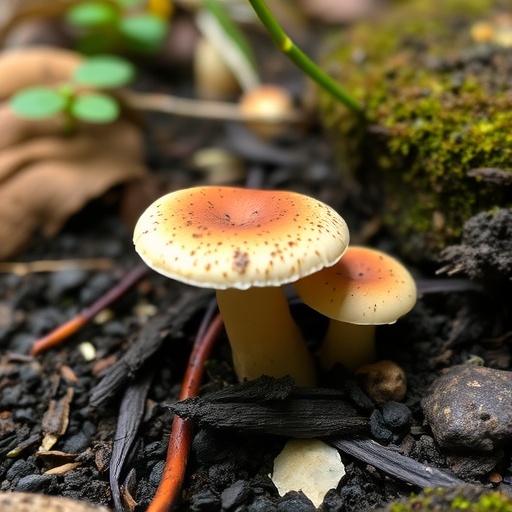
Beneath the surface of Earth’s terrestrial landscapes lies a vast, intricate world essential for the survival and health of nearly all aboveground life. This underground realm of mycorrhizal fungi forms symbiotic networks with plant roots, enabling the exchange of carbon, nutrients, and water that sustain the productivity and resilience of ecosystems worldwide. Despite their critical ecological role, new research reveals a striking oversight in global conservation strategies: these fungi are largely neglected in current protected area designs, leaving much of their diversity vulnerable to loss.
A groundbreaking study recently published in Conservation Letters presents the most extensive range maps ever developed for mycorrhizal fungi, profiling 2,858 species from both major groups—arbuscular mycorrhizal (AM) and ectomycorrhizal (EM) fungi. Employing an astonishing dataset of over 16.5 million fungal observations, collected globally through meticulous soil sampling and DNA barcoding, the research team leveraged advanced ecological modeling to predict species distributions across continents and biomes. This high-resolution mapping revealed that more than half of these essential organisms receive less protection within existing conservation areas than would be expected if protected zones were delineated randomly.
This mismatch highlights what the authors describe as a systematic bias: conservation efforts have traditionally concentrated on charismatic megafauna and plants visible above ground, inadvertently sidelining the subterranean life that underpins ecosystem functioning. Mycorrhizal fungi mediate vital ecological processes by mobilizing phosphorous, nitrogen, and water for plants, dramatically influencing plant health, growth, and community dynamics. These networks also act as natural buffers against environmental stressors such as drought, disease, and invasive species, enhancing the resilience and stability of forests, savannas, croplands, and grasslands.
The study’s lead author, data scientist Clara Qin, emphasizes that the historical focus on larger organisms has left a significant gap in biodiversity protection. “Our analyses demonstrate that the majority of mycorrhizal fungal species are underrepresented or absent in protected areas,” Qin states. This underrepresentation is especially acute for AM fungi, which partner with the majority of Earth’s plant species and predominantly inhabit landscapes like croplands and grasslands, habitats generally less covered by conservation efforts compared to forests where many EM fungi thrive.
Senior author Michael Van Nuland, an ecologist with the Society for the Protection of Underground Networks (SPUN), explains that this detailed mapping provides a crucial roadmap for future conservation prioritization. By pinpointing regions where establishing new protected areas would safeguard the greatest mycorrhizal diversity, the findings offer a strategic blueprint to reconcile biodiversity protection with ecological functionality. “With this atlas, we can target fungal-rich areas that maximize conservation outcomes, ensuring these hidden networks continue to support aboveground ecosystems,” he affirms.
Mycorrhizal fungi’s ability to sequester carbon also positions them as key players in strategies to mitigate climate change. They contribute billions of tons of carbon storage globally, reinforcing ecosystem carbon sinks and aiding in climate regulation. Preservation of these fungal networks therefore has profound implications for global carbon budgets and ecosystem services, especially as anthropogenic pressures and climate disturbances intensify.
The two dominant groups of mycorrhizal fungi, AM and EM, have distinct ecological niches and conservation statuses. While EM fungi are dominant in temperate hardwood and coniferous forests — ecosystems benefiting from more substantial protection — an alarming number of these species are already classified as threatened according to the International Union for Conservation of Nature (IUCN). Conversely, AM fungi, though more ubiquitous and critical for the bulk of plant species, have not been systematically evaluated for extinction risks, revealing a glaring deficiency in ecological risk assessments.
This research builds upon prior studies that identified biodiversity hotspots of mycorrhizal fungi and consistently found these hotspots poorly represented within protected areas. The novelty of this work lies in its focus at the species level, ecological precision made possible by integrating massive datasets and sophisticated spatial modeling tools. This approach allows conservationists to consider species-specific vulnerabilities and biogeographical patterns with unprecedented clarity.
Underlying the study’s success is the global collaborative network fostered by SPUN. Since its founding in 2021, the nonprofit has championed the mapping and protection of underground fungal networks, supporting over 140 researchers worldwide engaged in “underground exploration.” Through integrating citizen science, academic inquiry, and conservation action, SPUN is pioneering methodologies to systematically safeguard an invisible yet indispensable component of global biodiversity.
Evolutionary biologist and SPUN co-founder Toby Kiers, whose pioneering work on fungal symbioses garnered her the Tyler Prize and MacArthur “Genius” Fellowship, underscores the study’s transformative potential. “Recognizing and conserving fungal diversity is foundational to fostering resilient ecosystems and sustainable land management,” Kiers observes. Protecting these belowground networks is a strategic imperative to conserve the full spectrum of life and ecosystem services under escalating environmental change.
As land-use changes and climate perturbations accelerate, integrating fungal conservation into protected area design offers a vital means to secure these symbiotic partnerships. Ensuring fungi can continue to partner effectively with plants supports not only biodiversity but also agriculture, forestry, and ecosystem restoration initiatives striving for sustainability in a warming world. This work signals a paradigm shift, elevating the subterranean biota from obscurity to a central role in conservation science and policy.
The unprecedented scale and detail of this fungal range atlas mark a significant leap forward in ecological knowledge and conservation planning. It equips scientists, policymakers, and land managers with actionable insights to reverse significant biases in biodiversity protection. As the dataset expands to include many more fungal species, ongoing efforts promise to refine our capacity to defend the essential, yet invisible, fungal allies that maintain the planet’s terrestrial life support systems.
Cite Scienmag News
Margaret Porter. (May 19, 2026). Protected Areas Benefiting Wildlife Often Overlook Crucial Soil Fungi for Plants. Scienmag. https://scienmag.com/protected-areas-benefiting-wildlife-often-overlook-crucial-soil-fungi-for-plants/
Margaret Porter. "Protected Areas Benefiting Wildlife Often Overlook Crucial Soil Fungi for Plants." Scienmag, 19 May 2026, https://scienmag.com/protected-areas-benefiting-wildlife-often-overlook-crucial-soil-fungi-for-plants/. Accessed 4 September 2026.
Margaret Porter. "Protected Areas Benefiting Wildlife Often Overlook Crucial Soil Fungi for Plants." Scienmag. May 19, 2026. https://scienmag.com/protected-areas-benefiting-wildlife-often-overlook-crucial-soil-fungi-for-plants/


