Salicylic acid has long been celebrated as the master switch of plant immunity, a hormone that lets crops detect pathogens and mount a broad-spectrum defense known as systemic acquired resistance. In laboratory experiments, spraying plants with this simple phenolic compound consistently enhances resistance against biotrophic and hemibiotrophic pathogens. Yet in farmers’ fields, the story collapses: disease control is inconsistent, plants can become phytotoxic, and yields often drop. A new review published in Discover Plants by Laxmi Kanta Paudel and Prashant P. Jambhulkar argues that this gap is not a failure of the molecule itself but a mismatch between how salicylic acid is applied and how plant biology actually works. The authors contend that the future of salicylic acid in agriculture lies not in high-dose field sprays but in intelligent, climate-resilient priming systems that prepare a plant’s immune system for rapid deployment without keeping it in a costly state of constant alarm.
The molecular machinery behind salicylic acid signaling is elegant in model systems. Plants synthesize the hormone through two distinct routes. The isochorismate synthase pathway, activated when a pathogen is detected, operates mainly in chloroplasts of Arabidopsis and involves a marked upregulation of the genes ICS1, EDS5, PBS3, and EPS1. For nearly two decades, researchers could not find the plant enzyme equivalent to the bacterial isochorismate pyruvate lyase that converts isochorismate directly into salicylic acid. That mystery was resolved in 2019, when two independent studies showed that the pathway instead relies on cytosolic export through the MATE transporter EDS5, conjugation of isochorismate with L-glutamate by PBS3, and a final conversion catalyzed by EPS1, an unprecedented isochorismate pyruvate-glutamate lyase, or by spontaneous decay in plants lacking that enzyme. A second, cytoplasmic route runs through phenylalanine ammonia-lyase and peroxisomal beta-oxidation, producing salicylic acid via benzyl salicylate intermediates.
Crucially, the balance between these two biosynthetic pathways is not universal across species. While the isochorismate route is fully characterized in Arabidopsis, perennials such as poplar depend on a partially understood phenylalanine ammonia-lyase pathway for both constitutive and pathogen-stimulated synthesis, and poplar accumulates roughly ten times more salicylic acid glucoside than the annual herb. In soybean, both pathways work together, and silencing either one halts biosynthesis. The relative contribution of each route across major crop families, including the grasses, legumes, nightshades, and brassicas, has not been systematically quantified. This species-specificity matters enormously for agronomy: results from annual herbs may simply not transfer to perennial and woody crops, where salicylic acid and jasmonic acid can even act synergistically rather than in the antagonism familiar from Arabidopsis.
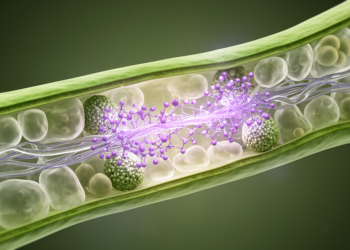
Once synthesized, salicylic acid is perceived through NPR1, the central regulator of systemic acquired resistance. In uninfected cells, NPR1 sits as an oligomer in the cytosol. Rising salicylic acid levels reduce its disulfide bonds, liberating monomers that translocate to the nucleus and coactivate TGA transcription factors, which drive expression of pathogenesis-related genes encoding chitinases, glucanases, and antimicrobial proteins. Two paralogues, NPR3 and NPR4, act as concentration-dependent receptors that prevent over-activation: NPR4 clears NPR1 from the nucleus at low salicylic acid levels, while NPR3, a low-affinity receptor, targets NPR1 for degradation when levels climb too high. The signaling network is further intertwined with reactive oxygen species, which salicylic acid stimulates and which in turn amplify salicylic acid signaling, a reciprocal feedback balanced by antioxidant enzymes such as catalase, peroxidase, and polyphenol oxidase. Recent work has also revealed that nuclear import of NPR1 requires a second, salicylic-acid-independent systemic signal that induces the kinase SnRK2.8, whose phosphorylation of NPR1 is indispensable for establishing systemic immunity in distal tissues.
Forcing this system with exogenous sprays carries a steep biological price. Systemic acquired resistance is a metabolically expensive state of emergency that reallocates photoassimilates, nitrogen, and energy away from cell division, elongation, and biomass accumulation toward defensive secondary metabolites, pathogenesis-related proteins, and reinforcing compounds like lignin and suberin. The cost is quantifiable: constitutively active salicylic acid signaling in Arabidopsis produces a fifty percent reduction in growth. The trade-off is executed through hormonal antagonism. Salicylic acid disrupts auxin signaling, which many pathogens rely on for host cell expansion, but this simultaneously stunts root and shoot development. The Gretchen H3 gene family encodes auxin-amido synthetases that conjugate active indole-3-acetic acid to amino acids, depleting the free auxin pool during biotic stress. Salicylic acid also antagonizes gibberellin and brassinosteroid pathways by stabilizing DELLA proteins, potent repressors of growth-related gene expression, producing the familiar phenotype of shorter stature, reduced leaf area, and compromised root systems. Pathogens exploit this crosstalk: the litchi downy blight pathogen Peronophythora litchi manipulates host microRNA LcmiR160 to suppress the auxin response factor LcARF18, interrupting salicylic acid-mediated defense.
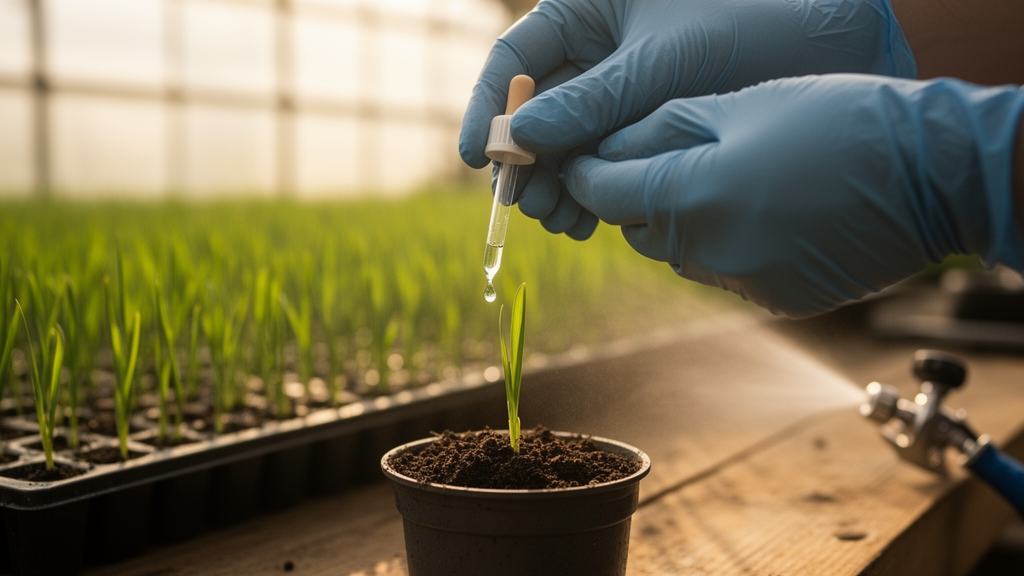
The review argues that priming offers a way to sidestep these costs by separating threat perception from defense execution. A primed plant, such as soybean pre-treated with a low dose of synthetic salicylic acid twenty-four hours before infection, shows no immediate growth penalty but mounts a faster, stronger response upon pathogen attack. Priming operates across three interconnected levels. Epigenetically, salicylic acid or its analogues increase histone acetylation on H3 and H4 at the promoters of defense genes like WRKY transcription factors and pathogenesis-related genes, and priming is also linked with permissive H3K4me2 and active H3K4me3 methylation marks, leaving chromatin poised for rapid transcription without sustained expression during the priming phase. Priming agents such as valeric acid can inhibit the histone deacetylases HDA6 and HDA19, which normally repress salicylic acid defense genes. At the signaling level, priming doses keep salicylic acid high enough to disrupt the NPR1-NPR4 interaction but below the threshold that triggers NPR3-mediated degradation and the physiologically expensive hypersensitive response. Metabolically, priming shifts primary metabolism toward gluconeogenesis and the accumulation of starch and acetate, creating energy reserves the plant can draw upon during an attack rather than constantly diverting resources from growth.
Field conditions erode salicylic acid efficacy through physicochemical and environmental barriers. The pure molecule is highly photosensitive, degrading rapidly under ultraviolet light through photo-oxidative reactions that destabilize its aromatic structure. It persists poorly in soil because of microbial metabolism, and its moderate water solubility complicates formulation while narrowing the effective dose range; in peach, a relatively high concentration of eight millimolar was needed to control post-harvest rot. More ominously, salicylic acid signaling is thermally labile. When growing-season temperatures exceed twenty-eight to thirty degrees Celsius, heat suppresses the key transcription factors CBP60g and SARD1, which activate ICS1, the major biosynthetic gene of the isochorismate pathway. This thermal silencing constrains salicylic acid biosynthesis and downstream defense signaling, and the phenylalanine ammonia-lyase route, which contributes significantly to salicylic acid accumulation in rice, can also be downregulated under high temperatures. The authors caution, however, that whether this molecular bottleneck directly reduces the efficacy of exogenously applied salicylic acid under field heat stress remains to be experimentally established, and its uniformity across perennial and woody species is uncertain, though poplar relies on an analogous PdPAD4-PdCBP60E-PdlCS1 module.
Genotype-dependent variability compounds the unpredictability. In maize, the Rabee and Al-Maha genotypes showed superior physiological and yield responses to foliar salicylic acid, while several other genotypes responded minimally, and eight spring wheat genotypes exhibited varied antioxidant responses under drought. Under heat stress at forty-two degrees Celsius, spraying one millimolar salicylic acid on strawberry induced cultivar-specific strategies: Camarosa upregulated phenylalanine ammonia-lyase activity by 56.3 percent, while Paros showed constitutive tolerance, yet fruit weight dropped 34.3 percent in Paros against 15.6 percent in Camarosa, and exogenous salicylic acid did not mitigate yield loss in either cultivar. Multi-stress environments add further complexity, since salicylic acid also coordinates responses to drought, salinity, and heavy metal toxicity through crosstalk with nitric oxide, abscisic acid, and hydrogen sulfide donors, but the interactive effects of combined stresses on salicylic acid efficacy remain poorly characterized. Regulatory fragmentation, in which salicylic acid products are classified variously as biostimulants or pesticides across countries, along with high formulation costs and shelf-life problems, further restricts commercial adoption.
Against these constraints, the review catalogs emerging strategies that embody the priming paradigm. Nano-formulations promise controlled release: silicon nanoparticles loaded with salicylic acid released the hormone slowly over about three days, reducing twig blight severity in bayberry by 47.5 percent and outperforming conventional sprays, while salicylic acid-functionalized alginate nanogels improved leaf wettability and showed dual action against Tobacco Mosaic Virus through direct physical disruption of viral particles and classical immune activation via calcium signaling and antioxidant induction. Chitosan-salicylic acid nanocomposites enhanced delivery against Cucumber Mosaic Virus by exploiting chitosan’s own elicitor properties, and sustained release prevents harmful surges, achieving effectiveness at lower dosages with reduced phytotoxicity. Synthetic analogues offer stability: acibenzolar-s-methyl, the most commercially successful, binds NPR receptors and activates systemic acquired resistance more consistently than natural salicylic acid, though it cannot circumvent the growth-defense trade-off and its European Union approval was withdrawn over suspected endocrine-disrupting activity. The related compound 2,6-dichloroisonicotinic acid activates defenses without acting as free salicylic acid, and its diester derivatives reduced necrotic areas caused by tobacco mosaic virus by up to 97 percent in tobacco.
Microbial and pharmacological approaches round out the toolkit. Bacterial quorum-sensing molecules, N-acyl-homoserine lactones, applied to Arabidopsis roots prime the salicylic acid pathway, with long-chain variants such as 3-oxo-C14-HSL inducing systemic resistance with minimal yield penalties, though efficacy depends critically on acyl side chain length, concentration, solubility, and plant species. The human antitussive drug Pipazethate HCl was identified as a salicylic acid analog in rice, activating OsWRKY45 and OsNPR1 and reducing blast disease severity and fungal sporulation, with a well-characterized mammalian safety profile that could streamline regulatory approval. Spray-Induced Gene Silencing combines nanocarriers with double-stranded RNA that silences pathogen virulence genes such as CYP51 and CHS3b in Fusarium graminearum while simultaneously acting as a pathogen-associated molecular pattern that primes salicylic acid-dependent immunity, and by preventing expression of the fungal salicylic acid hydroxylase FgNahG it restores host salicylic acid pathways. The authors conclude that future research must screen for thermotolerant variants of CBP60g and SARD1 regulators, quantify biosynthetic pathway contributions across crop families with isotopic tracing and CRISPR knockouts, conduct systematic field dose-response studies, and resolve how drought, heat, and pathogen stress interact. The goal, they argue, is no longer to override plant physiology with a protective spray but to collaborate with it, so crops can defend themselves effectively without compromising productivity.
Subject of Research: The future of salicylic acid in agriculture lies in precision priming
Article Title: The future of salicylic acid in agriculture lies in precision priming
Article References: Paudel, L. K., & Jambhulkar, P. P. (2026). The future of salicylic acid in agriculture lies in precision priming. Discover Plants, 3(1), Article 487. https://doi.org/10.1007/s44372-026-00986-2
Image Credits: AI Generated
DOI: 10.1007/s44372-026-00986-2
Keywords: future, salicylic, acid, agriculture, lies, precision, priming, scientific research
Cite Scienmag News
Alan Morgan. (October 25, 2026). Precision priming, not spraying, may unlock salicylic acid for crops. Scienmag. https://scienmag.com/precision-priming-not-spraying-may-unlock-salicylic-acid-for-crops/
Alan Morgan. "Precision priming, not spraying, may unlock salicylic acid for crops." Scienmag, 25 October 2026, https://scienmag.com/precision-priming-not-spraying-may-unlock-salicylic-acid-for-crops/. Accessed 25 October 2026.
Alan Morgan. "Precision priming, not spraying, may unlock salicylic acid for crops." Scienmag. October 25, 2026. https://scienmag.com/precision-priming-not-spraying-may-unlock-salicylic-acid-for-crops/