

Sunday, October 25, 2026
Science
No Result
View All Result
  • Login
  • HOME
  • SCIENCE NEWS
  • CONTACT US
  • HOME
  • SCIENCE NEWS
  • CONTACT US
No Result
View All Result
Scienmag
No Result
View All Result
Home Science News Biology

Seven Gene Candidates for Parkinson’s Disease Emerge From Combined Data and Mouse Model Analysis

October 25, 2026
in Biology
Juliet Wilcox
By Juliet Wilcox Scienmag Editorial Profile - Human Genetics
Reading Time: 3 mins read
0
Seven Gene Candidates for Parkinson’s Disease Emerge From Combined Data and Mouse Model Analysis

Seven Gene Candidates for Parkinson's Disease Emerge From Combined Data and Mouse Model Analysis

65
SHARES
587
VIEWS
Share on FacebookShare on Twitter
ADVERTISEMENT

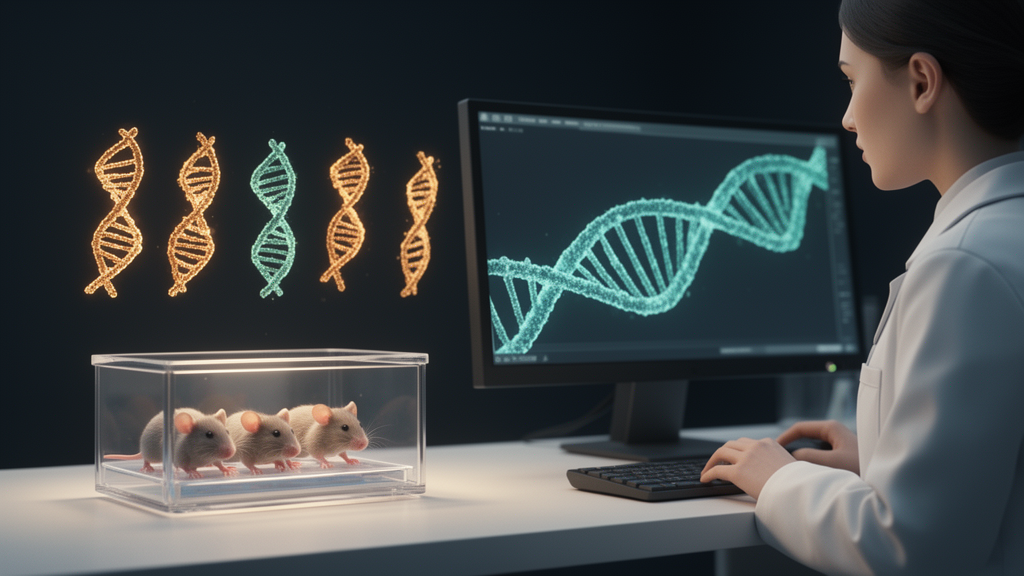
Researchers have identified seven candidate biomarker genes for Parkinson’s disease by combining transcriptomic data analysis, Mendelian randomization, and machine learning, then validating selected genes in an animal model of the condition. The study, published in Molecular Biology Reports, pinpointed AMIGO2, ATG7, CDK2AP2, CYP27A1, MT1X, NIPSNAP1, and TTC19 as potential core genes associated with the disease, offering a shortlist of molecular targets for future diagnostic and therapeutic research.

The team applied differential expression analysis to Parkinson’s disease transcriptomic datasets, cross-referencing the results with Mendelian randomization, a statistical technique that uses genetic variation to probe whether associations reflect potential causal relationships, and machine learning algorithms to narrow down candidate genes. The analysis revealed distinct expression patterns among the seven genes: AMIGO2, ATG7, NIPSNAP1, and TTC19 were downregulated, while CDK2AP2, CYP27A1, and MT1X were upregulated in the disease context.

To move beyond computational prediction, the researchers turned to laboratory validation. They used quantitative PCR to measure gene expression in an MPTP-induced Parkinson’s disease mouse model. The animal experiments confirmed abnormal expression of five of the candidate genes: ATG7, NIPSNAP1, TTC19, CYP27A1, and MT1X. This experimental confirmation strengthens the case that these genes are genuinely perturbed in the model rather than being artifacts of the data-mining process, although the findings remain at the level of an animal model and do not yet establish clinical utility in humans.

The study also explored potential treatments. Screening the DSigDB database of drug-gene signatures produced 239 candidate compounds, of which five met the study’s screening criteria. The researchers then assessed the most promising drug-target pairings computationally. Molecular docking predicted how the compounds fit into the binding sites of their target proteins, and 100-nanosecond molecular dynamics simulations tested whether the resulting protein-ligand complexes remained stable over time. According to the authors, the docking and simulation results provided computational support for relatively stable interactions in the top three drug-target complexes.

The authors emphasize that the identified compounds are candidates for further experimental investigation rather than proven therapies. Computational drug screening of this kind can prioritize molecules for laboratory testing, but predicted binding stability does not demonstrate efficacy, safety, or suitability for human use. Similarly, the validated gene expression changes in the MPTP mouse model support the relevance of the candidate biomarkers in an animal setting, while the diagnostic value of these genes in human patients would require separate clinical studies. By triangulating across observational gene expression data, genetic instruments, machine learning classification, and animal model validation, the study assembled converging lines of evidence for its seven candidate genes. The researchers suggest that the identified biomarkers and the computationally prioritized compounds provide a foundation for further experimental work aimed at improving early diagnosis and treatment of Parkinson’s disease.

Subject of Research: Identification and experimental validation of candidate biomarkers for Parkinson’s Disease through integrated bioinformatics, Mendelian randomization, and machine learning

Article Title: Identification and experimental validation of candidate biomarkers for Parkinson’s Disease through integrated bioinformatics, Mendelian randomization, and machine learning

Article References: Guan, X., & Yu, W. (2026). Identification and experimental validation of candidate biomarkers for Parkinson’s Disease through integrated bioinformatics, Mendelian randomization, and machine learning. Molecular Biology Reports, 53(1), Article 1822. https://doi.org/10.1007/s11033-026-12988-0

Image Credits: AI Generated

DOI: 10.1007/s11033-026-12988-0

Keywords: Parkinson's disease, biomarkers, Mendelian randomization, machine learning, transcriptomics, MPTP mouse model, quantitative PCR, molecular docking, drug screening, Molecular Biology Reports, Identification, experimental

Cite Scienmag News

Juliet Wilcox. (October 25, 2026). Seven Gene Candidates for Parkinson’s Disease Emerge From Combined Data and Mouse Model Analysis. Scienmag. https://scienmag.com/seven-gene-candidates-for-parkinsons-disease-emerge-from-combined-data-and-mouse-model-analysis/


Juliet Wilcox. "Seven Gene Candidates for Parkinson’s Disease Emerge From Combined Data and Mouse Model Analysis." Scienmag, 25 October 2026, https://scienmag.com/seven-gene-candidates-for-parkinsons-disease-emerge-from-combined-data-and-mouse-model-analysis/. Accessed 25 October 2026.

Juliet Wilcox. "Seven Gene Candidates for Parkinson’s Disease Emerge From Combined Data and Mouse Model Analysis." Scienmag. October 25, 2026. https://scienmag.com/seven-gene-candidates-for-parkinsons-disease-emerge-from-combined-data-and-mouse-model-analysis/

Tags: animal models for Parkinson's disease validationATG7BiomarkersCYP27differential gene expression analysis in Parkinson'sdrug screeningExperimentalgene expression profiling in Parkinson's diseaseidentificationMachine learningmachine learning for gene candidate identificationMendelian randomizationMendelian randomization in disease causalityMolecular Biology Reportsmolecular dockingmolecular targets for Parkinson's diagnosisMPTP mouse modelNIPSNAP1Parkinson's diseaseParkinson's disease biomarker genespotential therapeutic targets for Parkinson'squantitative PCRrole of AMIGO2transcriptomic data analysis in neurodegenerative disordersTranscriptomicsTTC19validation of candidate genes in mouse models
Share26Tweet16
Previous Post

Collagen-Targeted MRI Agent Spots Tiny Lung Tumors and Hidden Metastases in Preclinical Tests

Next Post

Malaria messages linked to net use, not knowledge mediation in Ugandan women

Related Posts

Simple Stain Choice Shifts Avian Blood Cell Counts and Stress Ratios
Biology

Simple Stain Choice Shifts Avian Blood Cell Counts and Stress Ratios

October 25, 2026
Yeast-derived microcapsules shield probiotic bacteria through spray drying and digestion
Biology

Yeast-derived microcapsules shield probiotic bacteria through spray drying and digestion

October 25, 2026
Cohesin keeps compact active genome domains from mixing in living cells
Biology

Cohesin keeps compact active genome domains from mixing in living cells

October 25, 2026
INHA Gene Variant Linked to Litter Size in Kreishi Ewes
Biology

INHA Gene Variant Linked to Litter Size in Kreishi Ewes

October 25, 2026
Root Rivals, Shoot Allies: Soil Moisture Rewrites the Rules of Plant Neighborhoods
Biology

Root Rivals, Shoot Allies: Soil Moisture Rewrites the Rules of Plant Neighborhoods

October 25, 2026
Rats Emit Distinct 40 kHz Ultrasonic Calls While Eating Chocolate
Biology

Rats Emit Distinct 40 kHz Ultrasonic Calls While Eating Chocolate

October 25, 2026
Next Post
Malaria messages linked to net use, not knowledge mediation in Ugandan women

Malaria messages linked to net use, not knowledge mediation in Ugandan women

  • Mothers who receive childcare support from maternal grandparents show more optimized

    Mothers who receive childcare support from maternal grandparents show more parental warmth, finds NTU Singapore study

    27656 shares
    Share 11059 Tweet 6912
  • University of Seville Breaks 120-Year-Old Mystery, Revises a Key Einstein Concept

    1061 shares
    Share 424 Tweet 265
  • Bee body mass, pathogens and local climate influence heat tolerance

    682 shares
    Share 273 Tweet 171
  • Researchers record first-ever images and data of a shark experiencing a boat strike

    546 shares
    Share 218 Tweet 137
  • Groundbreaking Clinical Trial Reveals Lubiprostone Enhances Kidney Function

    531 shares
    Share 212 Tweet 133
Science

Embark on a thrilling journey of discovery with Scienmag.com—your ultimate source for cutting-edge breakthroughs. Immerse yourself in a world where curiosity knows no limits and tomorrow’s possibilities become today’s reality!

RECENT NEWS

  • Malaria messages linked to net use, not knowledge mediation in Ugandan women
  • Seven Gene Candidates for Parkinson’s Disease Emerge From Combined Data and Mouse Model Analysis
  • Collagen-Targeted MRI Agent Spots Tiny Lung Tumors and Hidden Metastases in Preclinical Tests
  • Online review analysis maps demand for Chinese red cultural products

Categories

  • Agriculture
  • Anthropology
  • Archaeology
  • Athmospheric
  • Biology
  • Biotechnology
  • Blog
  • Bussines
  • Cancer
  • Chemistry
  • Climate
  • Earth Science
  • Editorial Policy
  • Marine
  • Mathematics
  • Medicine
  • Pediatry
  • Policy
  • Psychology & Psychiatry
  • Science Education
  • Science News
  • Social Science
  • Space
  • Technology and Engineering

Subscribe to Blog via Email

Enter your email address to subscribe to this blog and receive notifications of new posts by email.

Join 5,151 other subscribers

© 2025 Scienmag - Science Magazine

Welcome Back!

Login to your account below

Forgotten Password?

Retrieve your password

Please enter your username or email address to reset your password.

Log In
No Result
View All Result
  • HOME
  • SCIENCE NEWS
  • CONTACT US

© 2025 Scienmag - Science Magazine

Discover more from Science

Subscribe now to keep reading and get access to the full archive.

Continue reading