


Ensemble Algorithms Improve Detection of When Children Stop Wearing Accelerometers
Unsupervised ensemble methods combining Choi, NHANES and HMM classifiers detected accelerometer non-wear in children more stably than individual algorithms.
Unsupervised ensemble methods combining Choi, NHANES and HMM classifiers detected accelerometer non-wear in children more stably than individual algorithms.
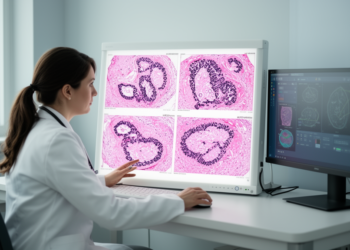
A new five-dimension trustworthiness framework applied to HER2 breast cancer prediction shows that model rankings shift across reliability, explainability, stability, ...

A two-center study reports that a random forest model using five bacterial species detected by probe capture-based metagenomic sequencing classified ...

A motion capture and EMG study of twenty male basketball enthusiasts found that one-motion and two-motion free throws differ in ...

A scoping review of 12 studies finds that risk prediction models for stroke-associated sarcopenia show promising discrimination but almost universally ...

A machine learning framework analysing 33,975 strokes from Grand Slam men's singles matches shows that the tactical value of redirecting ...

The expert-annotated CODIPAD dataset provides 5,055 labeled fragments of written patient discourse for training systems that detect and classify cognitive ...

A systematic review of 26 lung cancer pneumonia risk models finds a pooled AUC of 0.89 but high risk of ...

Machine learning can predict the dynamic alpha-zero factor governing wastewater aeration efficiency with high accuracy on random data splits, but ...

A single-center retrospective study of 702 hospitalized children with Mycoplasma pneumoniae pneumonia developed eight machine learning models that identified nine ...


Embark on a thrilling journey of discovery with Scienmag.com—your ultimate source for cutting-edge breakthroughs. Immerse yourself in a world where curiosity knows no limits and tomorrow’s possibilities become today’s reality!