


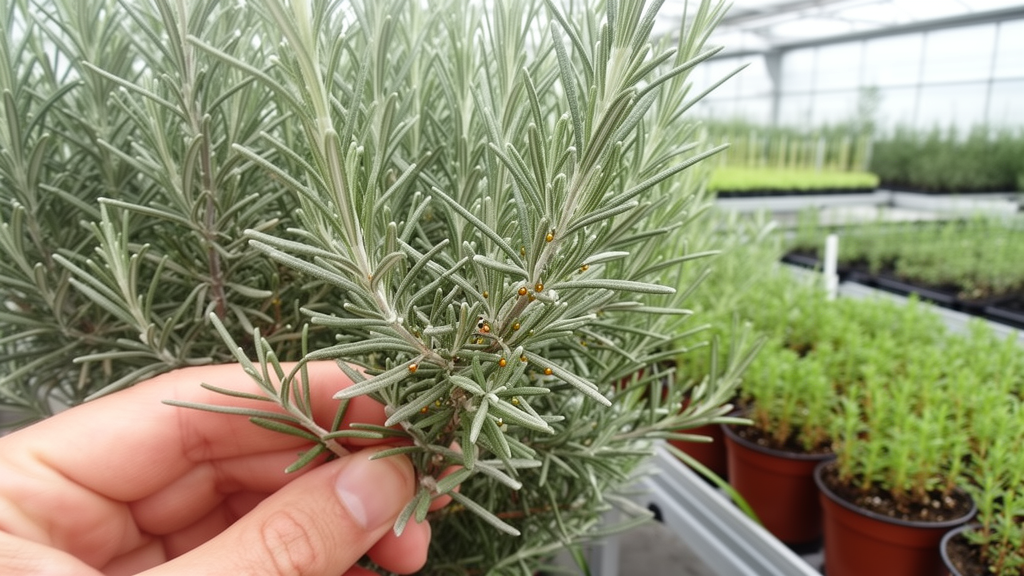
Researchers have created promising rosemary germplasm with denser leaf glandular secretory trichomes and elevated levels of both volatile and non-volatile functional compounds. The study combined crossbreeding between two contrasting rosemary varieties with molecular confirmation of hybrid ancestry, followed by selection from second-generation progeny. Seven candidate resources had glandular trichome densities higher than those of both parents, while several lines also showed high levels of the compounds measured.
The research began with two rosemary varieties that exhibited significant differences in leaf glandular secretory trichome density and in their volatile and non-volatile components. Those differences provided the basis for using the varieties as parents in a crossbreeding program. The researchers generated first-generation hybrid progeny and then crossed three confirmed hybrids to produce second-generation lines.
To assess the ancestry of the first-generation plants, the team used haplotype-based whole-genome sequencing, described in the source as unpublished data, to develop 200 pairs of simple sequence repeat markers. These SSR markers were used to evaluate the hybrid authenticity of the first-generation lines. Three lines were confirmed as hybrids and then self-crossed to construct the second-generation populations.
Screening of the second-generation offspring with the SSR marker system identified 56 true hybrid progenies. This molecular verification established a set of plants whose hybrid status could be documented before the researchers proceeded to evaluate their glandular trichome density and chemical composition. The approach therefore joined breeding with a genetic check of the material used in subsequent generations.
The researchers observed glandular secretory trichome densities in the two parent varieties, the confirmed first-generation lines and the second-generation lines. From these observations, they selected seven promising germplasm resources with higher glandular trichome densities than both parents. The result was not simply a collection of unverified seedlings: the selected material came from a pedigree in which first-generation hybrid authenticity and second-generation hybrid identity had been assessed with SSR markers.
The researchers determined the volatile and non-volatile functional components in the parents, the first-generation lines and the second-generation lines. Several promising germplasm resources had high levels of these components. Together with the seven resources selected for greater glandular trichome density, these findings provide material for selecting and breeding rosemary with elevated levels of volatile and non-volatile substances.
The reported work is a plant-breeding and germplasm-development study. It documents the creation and characterization of rosemary resources, including confirmation of hybrid lines, identification of second-generation progenies and selection according to gland density and component levels. The evidence concerns the selection and characterization of plant resources rather than outcomes in people.
The researchers say the new germplasm can provide a foundation for breeding high-yield and high-quality rosemary varieties. They also identify future genetic work based on the resources, including constructing a genetic linkage map and localizing quantitative trait loci related to important functional components and their yields. These are proposed downstream research objectives, not results completed in the reported study.
Overall, the study linked crossbreeding, SSR-based hybrid verification, glandular trichome observation and chemical profiling in two rosemary varieties and their F1 and F2 progeny. Its main outcome was the creation of seven candidate resources with denser glandular trichomes than either parent, alongside several resources with high levels of measured volatile and non-volatile components. The resulting material may support future genetic analysis and selection of rosemary varieties with enhanced chemical traits, although those broader outcomes remain to be demonstrated.
Subject of Research: Development of rosemary germplasm with dense glandular trichomes and elevated functional-component levels
Article Title: Creation of rosemary germplasm resources with high glandular trichome density and elevated levels of volatile and non-volatile functional components
Article References: Sun, M., Yang, X., Miao, J., Zhang, J., Li, H., Wang, D., Xia, F., & Shi, L. (2026). Creation of rosemary germplasm resources with high glandular trichome density and elevated levels of volatile and non-volatile functional components. BMC Plant Biology. https://doi.org/10.1186/s12870-026-09876-x
Image Credits: AI Generated
DOI: 10.1186/s12870-026-09876-x
Keywords: rosemary, plant breeding, germplasm, glandular trichomes, SSR markers, hybrid progeny, volatile compounds, non-volatile compounds, rosemary genomics, quantitative trait loci, Creation, resources
Cite Scienmag News
Alan Morgan. (October 25, 2026). Rosemary breeding produces lines with denser glands and richer compounds. Scienmag. https://scienmag.com/rosemary-breeding-produces-lines-with-denser-glands-and-richer-compounds/
Alan Morgan. "Rosemary breeding produces lines with denser glands and richer compounds." Scienmag, 25 October 2026, https://scienmag.com/rosemary-breeding-produces-lines-with-denser-glands-and-richer-compounds/. Accessed 25 October 2026.
Alan Morgan. "Rosemary breeding produces lines with denser glands and richer compounds." Scienmag. October 25, 2026. https://scienmag.com/rosemary-breeding-produces-lines-with-denser-glands-and-richer-compounds/


