Sunday, October 25, 2026
Science
No Result
View All Result
  • Login
  • HOME
  • SCIENCE NEWS
  • CONTACT US
  • HOME
  • SCIENCE NEWS
  • CONTACT US
No Result
View All Result
Scienmag
No Result
View All Result
Home Science News Medicine

Treat CKD: Decision support tool brings kidney risk calculations into primary care records

October 25, 2026
in Medicine
Ophelia Keating
By Ophelia Keating Scienmag Editorial Profile - Health Services Research
Reading Time: 3 mins read
0
Treat CKD: Decision support tool brings kidney risk calculations into primary care records

Treat CKD: Decision support tool brings kidney risk calculations into primary care records

65
SHARES
587
VIEWS
Share on FacebookShare on Twitter
ADVERTISEMENT

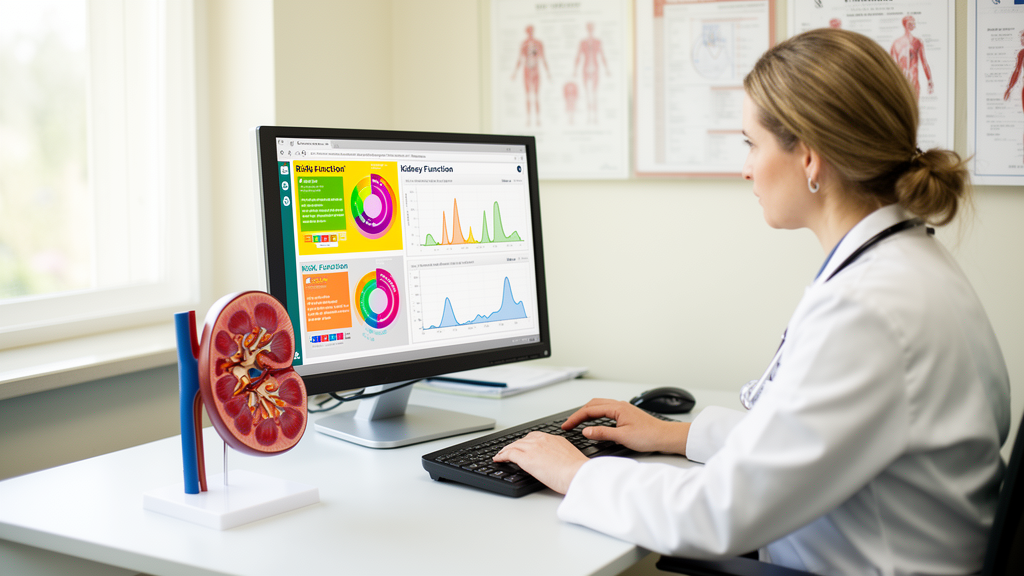
Investigators have developed and validated a clinical decision support tool designed to improve the diagnosis and treatment of chronic kidney disease (CKD) directly at the point of care. The tool, called Treat CKD, was presented at ASN Kidney Week 2026, held October 22–25 in Denver, Colorado. Treat CKD draws on data already stored in patients' electronic health records to identify CKD automatically.

The tool then layers two additional risk models onto that classification. In parallel, it estimates cardiovascular risk with the American Heart Association PREVENT equations, extending the assessment beyond the kidneys to the cardiovascular complications closely tied to kidney disease. Based on these combined calculations, Treat CKD generates specific clinical recommendations.

The system prompts primary care health professionals to consider albuminuria testing, blood pressure management, cholesterol-lowering therapy, cardio-kidney therapies, and nephrology referral, aligning suggested actions with the risk profile calculated for each individual patient. When the tool was incorporated into the University of California, San Francisco's electronic health record system, primary care health professionals who used it described it as easy to use, clinically relevant, and well-integrated into their existing workflows. Notably, the clinicians reported that the system did not add substantial workflow burden, a practical consideration for any decision support tool intended for routine primary care use.

"Treat CKD automates CKD risk classification and delivers guideline-concordant treatment recommendations within primary care workflows," the development team reported in their conference presentation. The investigators described the tool as accurately automating risk classification, estimating the likelihood of both kidney failure progression and cardiovascular events, and supporting treatment decisions without disrupting clinical routines. The reported evaluation reflects the tool's performance within a single health system's electronic health record environment and draws on clinician perceptions of usability and integration.

The authors themselves frame the results as supporting further evaluation of the approach as a scalable CKD detection and treatment strategy, rather than as evidence of the tool's effect on long-term patient outcomes. The presentation took place at ASN Kidney Week 2026, the American Society of Nephrology's annual meeting, which brings together more than 12,000 kidney professionals from across the globe. The conference, held in Denver with early programs beginning October 21 and the annual meeting running October 22–25, serves as a major venue for presenting new research in nephrology, including innovations in clinical care delivery such as embedded decision support systems.

By combining CKD identification, KDIGO risk classification, kidney failure risk prediction, cardiovascular risk estimation, and guideline-based treatment prompts in a single record-embedded system, Treat CKD illustrates how electronic health record infrastructure can be used to automate complex clinical calculations. The next phase of the work, according to the investigators, will focus on further evaluating whether this automated approach can be extended as a scalable strategy for detecting and treating chronic kidney disease in primary care settings.

Subject of Research: Clinical decision support tool for chronic kidney disease detection and treatment in primary care

Article Title: Clinical support tool helps primary care health professionals detect and treat chronic kidney disease

Article References: Clinical support tool helps primary care health professionals detect and treat chronic kidney disease. Original publication (Bibliographic details unavailable.)

Image Credits: AI Generated

DOI: Not provided

Keywords: chronic kidney disease, clinical decision support, electronic health records, primary care, KDIGO, Kidney Failure Risk Equation, PREVENT equations, ASN Kidney Week 2026, nephrology, University of California San Francisco, Clinical, support

Cite Scienmag News

Ophelia Keating. (October 25, 2026). Treat CKD: Decision support tool brings kidney risk calculations into primary care records. Scienmag. https://scienmag.com/treat-ckd-decision-support-tool-brings-kidney-risk-calculations-into-primary-care-records/


Ophelia Keating. "Treat CKD: Decision support tool brings kidney risk calculations into primary care records." Scienmag, 25 October 2026, https://scienmag.com/treat-ckd-decision-support-tool-brings-kidney-risk-calculations-into-primary-care-records/. Accessed 25 October 2026.

Ophelia Keating. "Treat CKD: Decision support tool brings kidney risk calculations into primary care records." Scienmag. October 25, 2026. https://scienmag.com/treat-ckd-decision-support-tool-brings-kidney-risk-calculations-into-primary-care-records/

Tags: albuminuria testing in CKDASN Kidney Week 2026blood pressure control in CKD patientscardio-renal therapy recommendationscardiovascular risk assessment in CKDcholesterol management in kidney diseaseChronic kidney diseaseChronic kidney disease diagnosisclinicalclinical decision supportclinical workflow optimization in primary careelectronic health record integrationelectronic health recordsKDIGOkidney disease management guidelinesKidney Failure Risk Equationnephrologynephrology referral decision-makingPREVENT equationsprimary careprimary care decision support toolssupportUniversity of California San Franciscovalidation of CKD risk models
Share26Tweet16
Previous Post

Review: Kidney fat compartments show distinct biology and treatment-linked remodeling

Next Post

Survey Maps Organisational Support for Evidence-Based Practice in Finnish Occupational Health

Related Posts

Three-Week Health Resort Program Eases Insomnia and Boosts Quality of Life Across BMI Categories
Medicine

Three-Week Health Resort Program Eases Insomnia and Boosts Quality of Life Across BMI Categories

October 25, 2026
Case report shows kidney preservation after renal hilar pheochromocytoma surgery
Medicine

Case report shows kidney preservation after renal hilar pheochromocytoma surgery

October 25, 2026
Survey Maps Organisational Support for Evidence-Based Practice in Finnish Occupational Health
Medicine

Survey Maps Organisational Support for Evidence-Based Practice in Finnish Occupational Health

October 25, 2026
Review: Kidney fat compartments show distinct biology and treatment-linked remodeling
Medicine

Review: Kidney fat compartments show distinct biology and treatment-linked remodeling

October 25, 2026
Brazil’s medicinal plant list is far ahead of clinical evidence
Medicine

Brazil’s medicinal plant list is far ahead of clinical evidence

October 25, 2026
Nurse Training and ICU Unit Size Associated With Microaspiration Prevention Adherence, Survey Finds
Medicine

Nurse Training and ICU Unit Size Associated With Microaspiration Prevention Adherence, Survey Finds

October 25, 2026
Next Post
Survey Maps Organisational Support for Evidence-Based Practice in Finnish Occupational Health

Survey Maps Organisational Support for Evidence-Based Practice in Finnish Occupational Health

  • Mothers who receive childcare support from maternal grandparents show more optimized

    Mothers who receive childcare support from maternal grandparents show more parental warmth, finds NTU Singapore study

    27656 shares
    Share 11059 Tweet 6912
  • University of Seville Breaks 120-Year-Old Mystery, Revises a Key Einstein Concept

    1061 shares
    Share 424 Tweet 265
  • Bee body mass, pathogens and local climate influence heat tolerance

    682 shares
    Share 273 Tweet 171
  • Researchers record first-ever images and data of a shark experiencing a boat strike

    546 shares
    Share 218 Tweet 137
  • Groundbreaking Clinical Trial Reveals Lubiprostone Enhances Kidney Function

    531 shares
    Share 212 Tweet 133
Science

Embark on a thrilling journey of discovery with Scienmag.com—your ultimate source for cutting-edge breakthroughs. Immerse yourself in a world where curiosity knows no limits and tomorrow’s possibilities become today’s reality!

RECENT NEWS

  • Resilience training for leaders shows promise but strains under polycrisis pressure
  • Empathy Boosts Lifelong Learning Through Teamwork, Peruvian Student Survey Finds
  • Financial Inclusion and Institutional Quality Linked to Welfare in Sub-Saharan Africa
  • Three-Week Health Resort Program Eases Insomnia and Boosts Quality of Life Across BMI Categories

Categories

  • Agriculture
  • Anthropology
  • Archaeology
  • Athmospheric
  • Biology
  • Biotechnology
  • Blog
  • Bussines
  • Cancer
  • Chemistry
  • Climate
  • Earth Science
  • Editorial Policy
  • Marine
  • Mathematics
  • Medicine
  • Pediatry
  • Policy
  • Psychology & Psychiatry
  • Science Education
  • Science News
  • Social Science
  • Space
  • Technology and Engineering

Subscribe to Blog via Email

Enter your email address to subscribe to this blog and receive notifications of new posts by email.

Join 5,151 other subscribers

© 2025 Scienmag - Science Magazine

Welcome Back!

Login to your account below

Forgotten Password?

Retrieve your password

Please enter your username or email address to reset your password.

Log In
No Result
View All Result
  • HOME
  • SCIENCE NEWS
  • CONTACT US

© 2025 Scienmag - Science Magazine

Discover more from Science

Subscribe now to keep reading and get access to the full archive.

Continue reading