A new review published in Biological Procedures Online on 5 October 2026 brings together accumulating evidence that Parkin, an E3 ubiquitin ligase best known for its connection to Parkinson’s disease, also acts as a tumor suppressor by regulating cellular metabolism. The article, authored by Juan Liu, Weiwei Wang, Wenwei Hu, Zhaohui Feng and colleagues, is an open-access review that synthesizes recent advances rather than reporting a single new experiment.
The PARK2 gene, which encodes Parkin, was originally identified as a gene associated with Parkinson’s disease. According to the review, Parkin has been studied extensively for its role in mitochondrial quality control, but a growing body of work now points to an important additional function in suppressing tumors. This reframing places a protein long examined in neurodegeneration research squarely within cancer biology.
The authors report that genetic alterations of PARK2, as well as loss or reduced expression of the Parkin protein, are frequently observed in many types of human cancers. These changes are often associated with poor clinical outcomes, the review states. In addition, Parkin deficiency has been shown to promote tumor progression in various experimental models, strengthening the case that the protein’s loss contributes actively to cancer development rather than merely marking it.
Despite this evidence, the review emphasizes that the molecular mechanisms underlying Parkin’s tumor-suppressive function remain incompletely understood. The authors position metabolic regulation as one important mechanism through which Parkin appears to exert its anti-cancer effects, drawing on emerging findings from recent studies across multiple experimental systems.
Metabolic reprogramming is described in the review as a hallmark of cancer that plays a key role in tumor progression. By meeting the energetic and biosynthetic demands of cancer cells and facilitating their adaptation to the tumor microenvironment, these metabolic changes help tumors grow and survive.
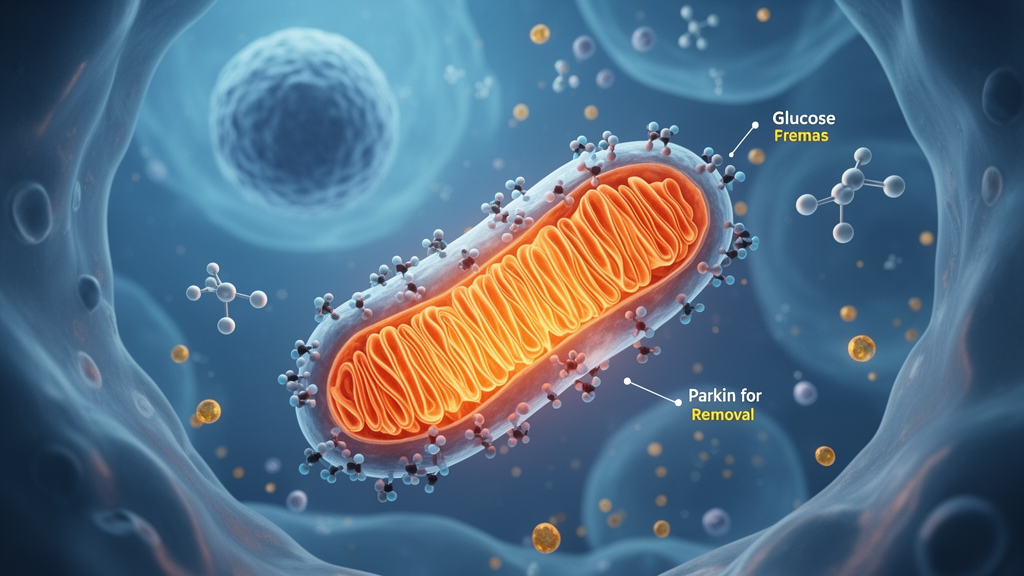
Beyond its well-established role in mitophagy, Parkin is reported to regulate a diverse set of metabolic pathways. Recent studies cited in the review have implicated the protein in the regulation of mitochondrial function, cellular redox homeostasis, glucose metabolism, lipid metabolism, amino acid metabolism, and other metabolic processes.
The consequences of losing this regulation are significant, according to the authors. Dysregulation of these processes following Parkin deficiency can promote metabolic reprogramming that supports cancer cell proliferation, survival, and cancer progression. In this way, the review connects a specific molecular defect to the broader behaviors that define malignant disease.
The review summarizes recent advances in understanding the roles and mechanisms of Parkin in cancer metabolism and how Parkin-mediated metabolic regulation contributes to tumor suppression. It also discusses potential therapeutic opportunities arising from the metabolic vulnerabilities associated with Parkin deficiency, suggesting that tumors lacking functional Parkin may carry exploitable weaknesses rooted in their altered metabolism.
As a review article, the publication does not present new experimental data of its own but consolidates findings from recent studies into a unified framework. Its open-access status makes the synthesis freely available to researchers working on both neurodegeneration and cancer, fields that increasingly intersect around mitochondrial biology and cellular metabolism.
For readers following cancer metabolism research, the review’s central message is that a protein defined by its role in Parkinson’s disease may shape tumor behavior through metabolic control. The authors note that further work is needed to fully understand the mechanisms involved, and the therapeutic possibilities they describe remain opportunities for future investigation rather than established clinical options.
Subject of Research: The role of the Parkin protein in metabolic regulation and tumor suppression
Article Title: Parkin in Metabolic Regulation and Tumor Suppression
Article References: Liu, J., Wang, W., Hu, W., & Feng, Z. (2026). Parkin in Metabolic Regulation and Tumor Suppression. Biological Procedures Online. https://doi.org/10.1186/s12575-026-00368-8
Image Credits: AI Generated
DOI: 10.1186/s12575-026-00368-8
Keywords: Parkin, PARK2, tumor suppression, metabolic reprogramming, mitophagy, cancer metabolism, mitochondrial function, redox homeostasis, glucose metabolism, lipid metabolism, amino acid metabolism, review
Cite Scienmag News
Nathaniel Bowman. (October 28, 2026). Parkin’s Metabolic Control Emerges as a Key Route to Tumor Suppression. Scienmag. https://scienmag.com/parkins-metabolic-control-emerges-as-a-key-route-to-tumor-suppression/
Nathaniel Bowman. "Parkin’s Metabolic Control Emerges as a Key Route to Tumor Suppression." Scienmag, 28 October 2026, https://scienmag.com/parkins-metabolic-control-emerges-as-a-key-route-to-tumor-suppression/. Accessed 28 October 2026.
Nathaniel Bowman. "Parkin’s Metabolic Control Emerges as a Key Route to Tumor Suppression." Scienmag. October 28, 2026. https://scienmag.com/parkins-metabolic-control-emerges-as-a-key-route-to-tumor-suppression/