Wednesday, October 28, 2026
Science
No Result
View All Result
  • Login
  • HOME
  • SCIENCE NEWS
  • CONTACT US
  • HOME
  • SCIENCE NEWS
  • CONTACT US
No Result
View All Result
Scienmag
No Result
View All Result
Home Science News Psychology & Psychiatry

Dorsal and ventral hippocampus play distinct roles in memory span and supraspan performance in mice

October 28, 2026
in Medicine, Psychology & Psychiatry
Cassandra Pierce
By Cassandra Pierce Scienmag Editorial Profile - Systems Neuroscience
Reading Time: 3 mins read
0
Dorsal and ventral hippocampus play distinct roles in memory span and supraspan performance in mice

Dorsal and ventral hippocampus play distinct roles in memory span and supraspan performance in mice

65
SHARES
587
VIEWS
Share on FacebookShare on Twitter
ADVERTISEMENT

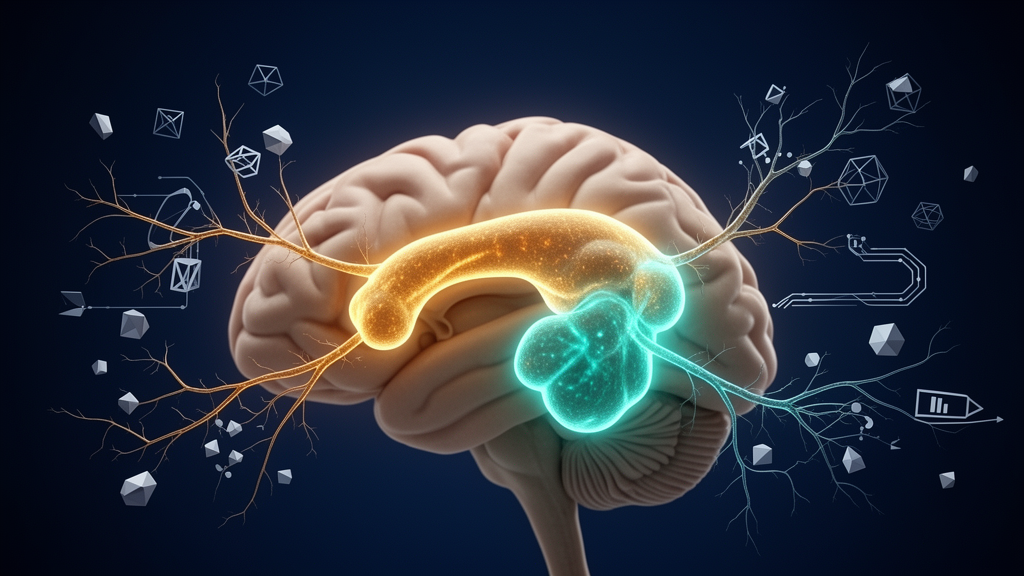
A new mouse study, published in Behavioral and Brain Functions, maps that transition onto the hippocampus and finds that different regions along the organ’s long axis make distinct contributions to memory span and to performance beyond it.

Memory span defines the number of items that can be maintained over a short time interval before performance deteriorates. When this limit is exceeded, performance enters what researchers call a supraspan condition. Human studies have implicated the medial temporal lobe, and particularly the hippocampus, in supraspan performance, but no animal model had explicitly captured this transition before.

In the new work, researchers led by Filomena Grazia Alvino and Elvira De Leonibus investigated the contribution of the dorsal and intermediate-ventral hippocampus to span and supraspan-like performance in mice. They used selective N-methyl-D-aspartate (NMDA) lesions combined with modified versions of the object recognition task and the radial arm maze (RAM), manipulating memory load and strategy constraints to dissociate subregion-specific contributions.

The results reveal a clear functional dissociation along the hippocampal axis. Dorsal hippocampus lesions impaired object memory under high memory load, whereas intermediate-ventral hippocampus lesions did not. This suggests that the dorsal portion of the structure is specifically required when object recognition demands exceed ordinary capacity.

In the radial arm maze under allocentric conditions, neither lesion significantly affected span, which the team operationally defined as the number of correct choices before the first error within a trial. However, both lesions increased supraspan errors, defined as the mean number of errors committed after span had been exceeded. Sustaining performance beyond the span limit therefore appears to depend on both hippocampal regions working together.

The picture changed when egocentric strategies were permitted. Under those conditions, intermediate-ventral hippocampus lesions selectively reduced the span, increased errors, and disrupted sequential choice strategies. The intermediate-ventral region thus supports egocentric spatial strategies, while the dorsal region supports high-load object memory, and both share a role in sustaining performance beyond span limits.

The authors are careful to note a limitation of the translational claim. The mouse paradigm is not directly homologous to human supraspan memory, since the tasks and the operational definitions of span differ from those used in human neuropsychology. Nevertheless, they argue that the paradigm provides a translational framework to investigate memory deficits associated with medial temporal lobe dysfunction, including Alzheimer’s disease.

Methodologically, the study stands out for combining lesion techniques with task designs that manipulate memory load and strategy constraints simultaneously. By dissociating what each hippocampal subregion contributes under different conditions, the work avoids attributing all memory functions to the structure as a whole.

The article was published on 10 September 2026 as an open access research paper, with the accepted version shared early to provide faster access; it is citable and carries a permanent DOI, subject to further edits before the final version of record.

Subject of Research: Functional specialization of the dorsal and intermediate-ventral hippocampus in memory span and supraspan performance in mice

Article Title: Functional specialization of the hippocampus along its dorso–ventral axis: from span to supraspan in memory capacity

Article References: Alvino, F. G., Carboncino, A., Carrella, D., Crain, J., Iemolo, A., Giordano, N. C., Olivito, L., Cavezza, D., De Risi, M., Treves, A., & De Leonibus, E. (2026). Functional specialization of the hippocampus along its dorso–ventral axis: from span to supraspan in memory capacity. Behavioral and Brain Functions. https://doi.org/10.1186/s12993-026-00368-4

Image Credits: AI Generated

DOI: 10.1186/s12993-026-00368-4

Keywords: hippocampus, memory span, supraspan, dorsal hippocampus, ventral hippocampus, NMDA lesion, radial arm maze, object recognition, allocentric, egocentric, medial temporal lobe, Alzheimer's disease

Cite Scienmag News

Cassandra Pierce. (October 28, 2026). Dorsal and ventral hippocampus play distinct roles in memory span and supraspan performance in mice. Scienmag. https://scienmag.com/dorsal-and-ventral-hippocampus-play-distinct-roles-in-memory-span-and-supraspan-performance-in-mice/


Cassandra Pierce. "Dorsal and ventral hippocampus play distinct roles in memory span and supraspan performance in mice." Scienmag, 28 October 2026, https://scienmag.com/dorsal-and-ventral-hippocampus-play-distinct-roles-in-memory-span-and-supraspan-performance-in-mice/. Accessed 28 October 2026.

Cassandra Pierce. "Dorsal and ventral hippocampus play distinct roles in memory span and supraspan performance in mice." Scienmag. October 28, 2026. https://scienmag.com/dorsal-and-ventral-hippocampus-play-distinct-roles-in-memory-span-and-supraspan-performance-in-mice/

Tags: allocentricAlzheimer's diseaseanimal models of human memory processesdorsal hippocampusdorsal vs ventral hippocampus functionsEgocentrichippocampal contribution to memory capacityhippocampal long-axis functional dissociationhippocampal segmentation and memory strategieshippocampal subregions in memoryhippocampushippocampus in radial arm maze performancehippocampus role in short-term memorymedial temporal lobememory spanmemory span and supraspan performance in miceneural basis of memory overloadNMDA lesionNMDA lesion studies in rodentsobject recognitionobject recognition memory loadradial-arm mazesupraspanventral hippocampus
Share26Tweet16
Previous Post

Blood on the Wall: DNA Survives Peroxide Scrubbing and a Fresh Coat of Paint

Next Post

Parkin’s Metabolic Control Emerges as a Key Route to Tumor Suppression

Related Posts

Systematic review maps end-of-life psychosocial and spiritual needs in physical disability
Medicine

Systematic review maps end-of-life psychosocial and spiritual needs in physical disability

October 28, 2026
Text Message Campaign Reached Only a Third of Patients Overdue for Colorectal Cancer Screening
Medicine

Text Message Campaign Reached Only a Third of Patients Overdue for Colorectal Cancer Screening

October 28, 2026
FOXO1 Emerges as Candidate Regulator and Biomarker in Hip Dysplasia
Medicine

FOXO1 Emerges as Candidate Regulator and Biomarker in Hip Dysplasia

October 28, 2026
Regulators, developers and clinicians in Shenzhen voice concerns over medical AI governance
Medicine

Regulators, developers and clinicians in Shenzhen voice concerns over medical AI governance

October 28, 2026
Modified One-Layer Vasovasostomy Matches Gold Standard in Vasectomy Reversal
Medicine

Modified One-Layer Vasovasostomy Matches Gold Standard in Vasectomy Reversal

October 28, 2026
Small Bone Window Surgery Completely Obliterates Rare C1 Dural Fistulas
Medicine

Small Bone Window Surgery Completely Obliterates Rare C1 Dural Fistulas

October 28, 2026
Next Post
Parkin’s Metabolic Control Emerges as a Key Route to Tumor Suppression

Parkin's Metabolic Control Emerges as a Key Route to Tumor Suppression

  • Mothers who receive childcare support from maternal grandparents show more optimized

    Mothers who receive childcare support from maternal grandparents show more parental warmth, finds NTU Singapore study

    27656 shares
    Share 11059 Tweet 6912
  • University of Seville Breaks 120-Year-Old Mystery, Revises a Key Einstein Concept

    1061 shares
    Share 424 Tweet 265
  • Bee body mass, pathogens and local climate influence heat tolerance

    682 shares
    Share 273 Tweet 171
  • Researchers record first-ever images and data of a shark experiencing a boat strike

    546 shares
    Share 218 Tweet 137
  • Groundbreaking Clinical Trial Reveals Lubiprostone Enhances Kidney Function

    531 shares
    Share 212 Tweet 133
Science

Embark on a thrilling journey of discovery with Scienmag.com—your ultimate source for cutting-edge breakthroughs. Immerse yourself in a world where curiosity knows no limits and tomorrow’s possibilities become today’s reality!

RECENT NEWS

  • Systematic review maps end-of-life psychosocial and spiritual needs in physical disability
  • Text Message Campaign Reached Only a Third of Patients Overdue for Colorectal Cancer Screening
  • FOXO1 Emerges as Candidate Regulator and Biomarker in Hip Dysplasia
  • Regulators, developers and clinicians in Shenzhen voice concerns over medical AI governance

Categories

  • Agriculture
  • Anthropology
  • Archaeology
  • Athmospheric
  • Biology
  • Biotechnology
  • Blog
  • Bussines
  • Cancer
  • Chemistry
  • Climate
  • Earth Science
  • Editorial Policy
  • Marine
  • Mathematics
  • Medicine
  • Pediatry
  • Policy
  • Psychology & Psychiatry
  • Science Education
  • Science News
  • Social Science
  • Space
  • Technology and Engineering

Subscribe to Blog via Email

Enter your email address to subscribe to this blog and receive notifications of new posts by email.

Join 5,151 other subscribers

© 2025 Scienmag - Science Magazine

Welcome Back!

Login to your account below

Forgotten Password?

Retrieve your password

Please enter your username or email address to reset your password.

Log In
No Result
View All Result
  • HOME
  • SCIENCE NEWS
  • CONTACT US

© 2025 Scienmag - Science Magazine

Discover more from Science

Subscribe now to keep reading and get access to the full archive.

Continue reading