

Tuesday, July 28, 2026
Science
No Result
View All Result
  • Login
  • HOME
  • SCIENCE NEWS
  • CONTACT US
  • HOME
  • SCIENCE NEWS
  • CONTACT US
No Result
View All Result
Scienmag
No Result
View All Result
Home Science News Medicine

OmniAge maps aging biomarkers, linking mitotic clocks to clonal hematopoiesis

July 28, 2026
in Medicine
Reading Time: 2 mins read
0
OmniAge maps aging biomarkers, linking mitotic clocks to clonal hematopoiesis

OmniAge maps aging biomarkers, linking mitotic clocks to clonal hematopoiesis

65
SHARES
587
VIEWS
Share on FacebookShare on Twitter
ADVERTISEMENT

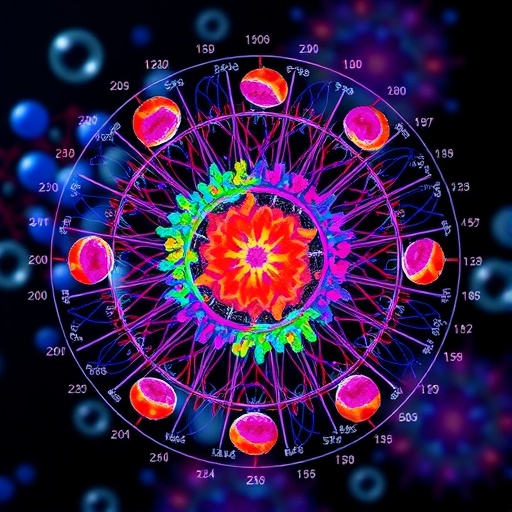
A new study in Nature Communications reports an ambitious “OmniAge” compendium that maps aging-associated biomarkers across multiple omic layers and then uses that map to trace biological causality. The work by Du, Ling, Tong and colleagues focuses on a long-debated question: how measures of cellular aging relate to clonal expansions in the blood system—specifically clonal hematopoiesis.

Clonal hematopoiesis arises when blood-forming stem cells accumulate mutations and expand into dominant clonal populations. While such expansions are common in older adults, not all are equally risky. The key challenge has been distinguishing which biomarkers merely correlate with clonal hematopoiesis from those that reflect upstream mechanisms driving it.

To address this, the researchers leveraged OmniAge to connect aging signatures to “mitotic clocks,” molecular patterns that track the cumulative number of cell divisions over time. Instead of treating age-related omics as a static snapshot, the team modeled how division-linked processes might predict the emergence and persistence of clones.

Methodologically, the study integrates biomarker discovery with causal inference strategies. By testing whether mitotic-clock–linked features explain variation in clonal hematopoiesis beyond conventional aging measures, the authors argue for a directional relationship rather than a purely observational one.

The results suggest that mitotic clocks capture biological strain that promotes clonal selection in hematopoietic lineages. In other words, accelerated or dysregulated cell division history may create the evolutionary conditions for certain mutant clones to outcompete their neighbors.

The OmniAge framework also provides a unified resource for researchers, consolidating aging-related omics markers that can be interrogated across cohorts. This is positioned as a step toward translating biomarker panels into mechanistic hypotheses that can be tested experimentally.

Crucially, the paper frames clonal hematopoiesis not only as a marker of aging but as a downstream outcome of division-linked processes with identifiable causal footprints. That framing could sharpen risk stratification and guide future interventions aimed at preserving hematopoietic function.

If validated across diverse populations, these findings may help clinicians interpret aging biomarker readouts in terms of underlying cellular history. More broadly, OmniAge may become a template for linking multi-omic aging data to causal pathways across diseases.

Subject of Research: Aging omic biomarkers; clonal hematopoiesis; mitotic clocks; causal inference
Article Title: The OmniAge compendium of aging omic biomarkers links mitotic clocks to clonal hematopoiesis and causality.
Article References: https://doi.org/10.1038/s41467-026-76038-w
DOI: 10.1038/s41467-026-76038-w
Keywords: OmniAge; aging biomarkers; mitotic clocks; clonal hematopoiesis; causality; multi-omics

Tags: aging-associated clonal evolutionbiomarkers of agingblood stem cell mutationscausal inference in aging researchcausality in aging biomarkerscellular aging mechanismsclonal expansion risk factorsclonal hematopoiesislongitudinal aging studiesmitotic clocksmolecular signatures of agingmulti-omic aging biomarker mapping
Share26Tweet16
Previous Post

Digital Health Tools Convert Screen Time into Active Time for Childhood Obesity

Next Post

Isotopic evidence reveals thermogenic methane beneath Greenland’s North Ice Sheet

Related Posts

Largest study finds genetic risk factors linked to fibromyalgia
Medicine

Largest study finds genetic risk factors linked to fibromyalgia

July 28, 2026
Family Medicine Journal Tip Sheet Highlights July/August 2026 Updates
Medicine

Family Medicine Journal Tip Sheet Highlights July/August 2026 Updates

July 28, 2026
Standardized referral process boosts early intervention enrollment for opioid-exposed infants
Medicine

Standardized referral process boosts early intervention enrollment for opioid-exposed infants

July 28, 2026
Taiwan Study Uses Cluster Analysis to Profile Elderly Emergency Patients
Medicine

Taiwan Study Uses Cluster Analysis to Profile Elderly Emergency Patients

July 28, 2026
Hepatitis Day 2026: Europe’s progress stalls as prevention gaps block targets
Medicine

Hepatitis Day 2026: Europe’s progress stalls as prevention gaps block targets

July 28, 2026
Molecular Profiling and Rare Cancer Treatment Access Expand across Europe
Medicine

Molecular Profiling and Rare Cancer Treatment Access Expand across Europe

July 28, 2026
Next Post
Isotopic evidence reveals thermogenic methane beneath Greenland’s North Ice Sheet

Isotopic evidence reveals thermogenic methane beneath Greenland’s North Ice Sheet

  • Mothers who receive childcare support from maternal grandparents show more

    Mothers who receive childcare support from maternal grandparents show more parental warmth, finds NTU Singapore study

    27656 shares
    Share 11059 Tweet 6912
  • University of Seville Breaks 120-Year-Old Mystery, Revises a Key Einstein Concept

    1061 shares
    Share 424 Tweet 265
  • Bee body mass, pathogens and local climate influence heat tolerance

    682 shares
    Share 273 Tweet 171
  • Researchers record first-ever images and data of a shark experiencing a boat strike

    546 shares
    Share 218 Tweet 137
  • Groundbreaking Clinical Trial Reveals Lubiprostone Enhances Kidney Function

    531 shares
    Share 212 Tweet 133
Science

Embark on a thrilling journey of discovery with Scienmag.com—your ultimate source for cutting-edge breakthroughs. Immerse yourself in a world where curiosity knows no limits and tomorrow’s possibilities become today’s reality!

RECENT NEWS

  • Scientists Reshape Molecules Internally to Build New Chiral Nanocarbons
  • Largest study finds genetic risk factors linked to fibromyalgia
  • Satellite era shows reduced global marine primary productivity and shifted hemispheres
  • AI and robotics speed search for improved gut microbiome therapies

Categories

  • Agriculture
  • Anthropology
  • Archaeology
  • Athmospheric
  • Biology
  • Biotechnology
  • Blog
  • Bussines
  • Cancer
  • Chemistry
  • Climate
  • Earth Science
  • Editorial Policy
  • Marine
  • Mathematics
  • Medicine
  • Pediatry
  • Policy
  • Psychology & Psychiatry
  • Science Education
  • Social Science
  • Space
  • Technology and Engineering

Subscribe to Blog via Email

Enter your email address to subscribe to this blog and receive notifications of new posts by email.

Join 5,146 other subscribers

© 2025 Scienmag - Science Magazine

Welcome Back!

Login to your account below

Forgotten Password?

Retrieve your password

Please enter your username or email address to reset your password.

Log In
No Result
View All Result
  • HOME
  • SCIENCE NEWS
  • CONTACT US

© 2025 Scienmag - Science Magazine

Discover more from Science

Subscribe now to keep reading and get access to the full archive.

Continue reading
