


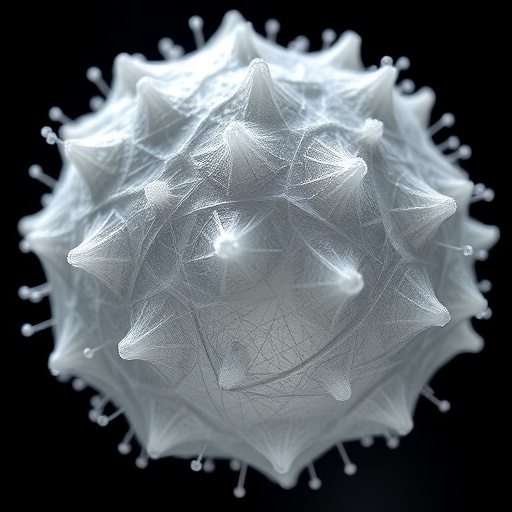
Researchers in Turkey have engineered an electrospun nanofiber wound dressing that closes nearly all of a full-thickness wound within two weeks, and their results suggest the material could become a new tool for treating injuries sustained in chemical, biological, radiological, and nuclear (CBRN) incidents. The study, published in Polymer Bulletin by Nilay Tufan, Halis Uğuz, and Serdar Karakurt of Selcuk University, combines polyvinyl alcohol (PVA), silver nanoparticles roughly 50 nanometers in diameter, and zeolite into a single antimicrobial mat that proved both safe to human skin cells and remarkably effective at accelerating tissue regeneration.
The skin is the body’s first line of defense, and when wounds are poorly managed, acute injuries can drift into chronic, hard-to-treat conditions. That risk is amplified in CBRN scenarios, where trauma is often compounded by exposure to hazardous agents and where infection control is paramount. The Selcuk team set out to design a dressing that could address several of these challenges simultaneously: kill bacteria on contact, support the migration of the cells responsible for re-covering the wound, and remain non-toxic to the tissue it is meant to protect.
The fabrication method at the heart of the work is electrospinning, a technique in which a polymer solution is subjected to a high-voltage electric field and drawn into ultrafine fibers that collect as a nonwoven mat. The resulting scaffolds mimic the architecture of the extracellular matrix, offering cells a fibrous substrate on which to attach, migrate, and proliferate. In this study, the researchers formulated PVA—a water-soluble, biocompatible polymer widely used in biomedical applications—as the fiber base, and enriched it with silver nanoparticles and zeolite before electrospinning.
Silver nanoparticles were chosen for their well-documented antibacterial properties. At the nanoscale, silver can disrupt bacterial membranes, generate reactive oxygen species, and interfere with microbial DNA replication, making it effective against a broad spectrum of pathogens. The particles used in this work averaged approximately 50 nanometers, a size range that balances antimicrobial potency with reduced risk of aggregation. Zeolite, an aluminosilicate mineral with a porous, cage-like crystalline structure, served as a stabilizing host for the silver and as an ion-exchange reservoir, allowing for a more controlled and sustained release of antimicrobial silver ions. This synergy between nanoparticle and mineral is what gives the composite its dual functionality—immediate antimicrobial action paired with longer-term protection.
Structural and chemical characterization of the resulting nanofiber mats was carried out using scanning electron microscopy (SEM) and Fourier transform infrared spectroscopy (FTIR). SEM imaging confirmed the formation of uniform, bead-free fibers with the characteristic morphology needed for a functional dressing, while FTIR verified the chemical incorporation of the silver nanoparticles and zeolite into the PVA matrix, confirming that the composite materials were successfully embedded rather than simply deposited on the fiber surface.
With the material’s structure confirmed, the team turned to biological testing. Antibacterial activity was assessed using the disk diffusion method against two clinically significant pathogens: Escherichia coli, a Gram-negative bacterium, and Staphylococcus aureus, a Gram-positive species notorious for wound infections and antibiotic resistance. The nanofiber dressings produced clear zones of inhibition against both organisms, demonstrating broad-spectrum antimicrobial performance without the need for conventional antibiotics.
Cytotoxicity testing followed, using human keratinocyte (HaCaT) cells—the workhorses of the outer skin layer. The assays showed that the dressings were non-toxic to these cells, a critical finding for any material intended for direct contact with open wounds. Perhaps more striking was the result of the in vitro scratch assay, a standard test that simulates wound closure by creating a gap in a confluent cell layer and measuring how quickly cells migrate to fill it. Treated cells achieved complete wound closure within 48 hours, indicating that the dressing actively promoted cellular migration rather than merely being tolerated by the cells.
The team then moved to an in vivo model, using Wistar albino rats with full-thickness dorsal excisional wounds. Animals treated with the AgNP/zeolite-loaded nanofiber dressings achieved approximately 96 percent wound closure by day 14, a rate that outperforms what is typically seen with standard wound care approaches in comparable models. Histopathological evaluation using hematoxylin and eosin (H&E) staining provided tissue-level confirmation: treated wounds showed enhanced re-epithelialization—the regrowth of the epidermal layer over the wound surface—and clear evidence of organized tissue regeneration rather than disorganized scar formation.
The implications of this work extend well beyond routine wound care. In CBRN contexts, where emergency responders and military personnel may suffer combined injuries involving physical trauma and exposure to chemical or biological agents, dressings that simultaneously combat infection and accelerate healing are urgently needed. The systematic review literature cited by the authors highlights significant gaps in preparedness for such incidents, and materials like the one developed here could help fill that gap by providing a self-contained, antimicrobial, regenerative treatment that requires no additional pharmaceutical intervention.
What makes this study particularly noteworthy is the rational combination of three well-characterized components into a single functional platform. PVA provides the biocompatible scaffold, silver nanoparticles deliver potent antibacterial action, and zeolite contributes both structural support and controlled ion release. Each element addresses a distinct aspect of wound healing—protection, infection control, and tissue regeneration—and the electrospinning process binds them into a form factor that is flexible, conformable, and easy to apply to irregular wound surfaces.
The work was supported by the Selcuk University Research Foundation and approved by the university’s Animal Experiments Ethics Committee. While the current findings are based on laboratory and animal models, the combination of strong in vitro safety data, complete in vitro wound closure, and near-total in vivo wound closure within two weeks positions this nanofiber dressing as a promising candidate for further development toward clinical evaluation. As antimicrobial resistance continues to complicate wound management worldwide, materials that harness the intrinsic antibacterial properties of nanoscale silver without relying on conventional antibiotics represent an increasingly important direction for biomedical materials research.
Cite Scienmag News
Bethany Barker. (September 4, 2026). Antimicrobial PVA silver nanoparticle zeolite nanofibers developed for wound dressings. Scienmag. https://scienmag.com/antimicrobial-pva-silver-nanoparticle-zeolite-nanofibers-developed-for-wound-dressings/
Bethany Barker. "Antimicrobial PVA silver nanoparticle zeolite nanofibers developed for wound dressings." Scienmag, 4 September 2026, https://scienmag.com/antimicrobial-pva-silver-nanoparticle-zeolite-nanofibers-developed-for-wound-dressings/. Accessed 4 September 2026.
Bethany Barker. "Antimicrobial PVA silver nanoparticle zeolite nanofibers developed for wound dressings." Scienmag. September 4, 2026. https://scienmag.com/antimicrobial-pva-silver-nanoparticle-zeolite-nanofibers-developed-for-wound-dressings/


