


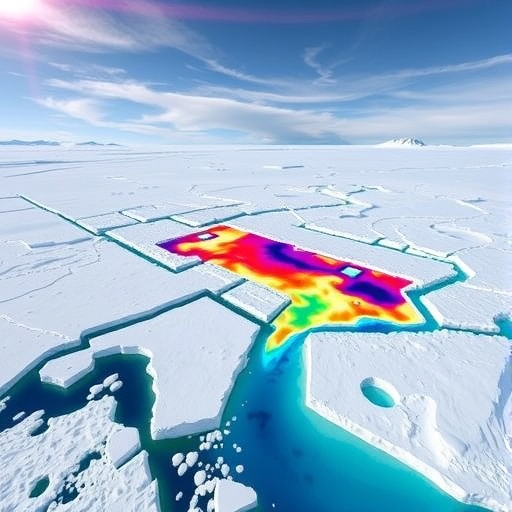
A new study has ignited debate about how far below Earth’s surface methane can persist—and where it might come from—by pointing to thermogenic gas beneath the North Greenland Ice Sheet. Using a combination of isotopic measurements and geological constraints, the researchers report evidence that the methane trapped under ice is not simply a relic of ancient microbes, but is more consistent with methane generated through deeper, heat-driven processes.
Methane is often treated as a microbial product in polar environments, yet the Greenland ice system is complex. Ice, sediments, and underlying bedrock create multiple pathways for gas storage and release. Determining methane’s origin is crucial because “who made the methane” strongly influences expectations for how stable it will be over time, and how sensitive it could be to rapid warming.
The team analyzed isotopic signatures—ratios of carbon and hydrogen isotopes within methane and related components—to infer the gas’s formation conditions. Isotopic patterns can act like a fingerprint, distinguishing thermogenic methane formed at elevated temperatures in subsurface settings from methane produced by hydrogenotrophic or acetoclastic microbial metabolisms.
Their geologic reasoning supported this chemical evidence. By linking methane occurrences to regional subsurface structures and sedimentary histories, the authors argue that processes capable of producing thermogenic methane likely occurred beneath Greenland before being sealed or slowed by overlying ice and sediments. In this view, the ice sheet functions less as the birthplace of methane and more as a long-term container.
The study also highlights the power of integrating isotopes with geology in environments where direct sampling is difficult. While Greenland’s ice record can store gases, interpreting those trapped molecules requires careful disentangling of atmospheric contamination, post-depositional alteration, and multiple potential sources.
Taken together, the work suggests that North Greenland may host a methane reservoir with a deeper origin than previously assumed. That matters for projections of Arctic greenhouse forcing, because thermogenic sources may respond differently to changing pressure, temperature, and hydrology than purely microbial systems.
Viral scientific headlines are likely to follow this research because it reshapes a familiar story: methane under ice may not always be “biological.” If thermogenic methane is widespread under polar ice margins, it could alter risk assessments for methane mobilization as ice dynamics and meltwater infiltration evolve.
Still, the authors emphasize that more measurements are needed to map the extent and variability of the signal. Future studies will likely focus on expanding isotopic datasets and coupling them to refined models of subsurface transport.
In an era when every new greenhouse-gas clue matters, the Greenland finding adds urgency—and nuance—to our understanding of Earth’s buried carbon.
Cite Scienmag News
Violet Maxwell. (July 28, 2026). Isotopic evidence reveals thermogenic methane beneath Greenland’s North Ice Sheet. Scienmag. https://scienmag.com/isotopic-evidence-reveals-thermogenic-methane-beneath-greenlands-north-ice-sheet/
Violet Maxwell. "Isotopic evidence reveals thermogenic methane beneath Greenland’s North Ice Sheet." Scienmag, 28 July 2026, https://scienmag.com/isotopic-evidence-reveals-thermogenic-methane-beneath-greenlands-north-ice-sheet/. Accessed 4 September 2026.
Violet Maxwell. "Isotopic evidence reveals thermogenic methane beneath Greenland’s North Ice Sheet." Scienmag. July 28, 2026. https://scienmag.com/isotopic-evidence-reveals-thermogenic-methane-beneath-greenlands-north-ice-sheet/


