

Tuesday, July 28, 2026
Science
No Result
View All Result
  • Login
  • HOME
  • SCIENCE NEWS
  • CONTACT US
  • HOME
  • SCIENCE NEWS
  • CONTACT US
No Result
View All Result
Scienmag
No Result
View All Result
Home Science News Psychology & Psychiatry

Meta-analysis Identifies Brain Functional Changes Linked to Suicidal Ideation

July 28, 2026
in Psychology & Psychiatry
Reading Time: 2 mins read
0
Meta-analysis Identifies Brain Functional Changes Linked to Suicidal Ideation

Meta-analysis Identifies Brain Functional Changes Linked to Suicidal Ideation

65
SHARES
587
VIEWS
Share on FacebookShare on Twitter
ADVERTISEMENT

In a new meta-analysis spanning task-based functional MRI (fMRI) studies, researchers report converging evidence for how the brain’s activity pattern changes alongside suicidal ideation and suicidal behaviors. The work, published in Translational Psychiatry, synthesizes results across experiments designed to probe cognition and emotion under controlled tasks, offering a more unified picture than any single dataset could provide.

The study focuses on functional changes—how different brain regions coordinate and respond during task performance—rather than purely structural differences. By pooling findings, the authors aim to identify reproducible neural signatures associated with suicidal thoughts and actions, an area where results have sometimes varied across cohorts, imaging protocols, and task paradigms.

Methodologically, the meta-analysis emphasizes task-based contrasts, allowing researchers to examine whether particular networks reliably show altered activation or connectivity-related patterns during specific cognitive or affective demands. This approach can help disentangle state-related processes—such as acute emotional distress—from broader patterns that may reflect vulnerability or persistence.

Among the most notable outcomes is the observation that brain systems involved in emotion regulation and cognitive control show disturbances that track with suicidal ideation and behaviors. These findings align with theories that link suicide risk to disruptions in top-down regulation, impaired evaluation of internal states, and altered responses to emotionally salient information.

The reported neural changes also suggest that multiple interacting circuits—not a single “suicide center”—may contribute to risk. Instead, the brain appears to shift in the balance between regions that generate or amplify distress signals and regions responsible for dampening, reappraising, or redirecting them during tasks.

Importantly, the analysis distinguishes between ideation and behaviors through aggregated imaging evidence, which could help clarify whether there are partially shared mechanisms or distinct patterns as risk progresses. Such stratification is crucial for translating neuroimaging findings into risk assessment strategies.

Because the review is based on existing task-based fMRI results, it also reflects typical limitations of the field, including differences in participant characteristics, scanner settings, and analytic pipelines. Nevertheless, the meta-analytic framework strengthens confidence by highlighting effects that replicate across studies.

For clinicians and researchers, the study’s takeaway is both practical and urgent: consistent functional alterations in affective and control networks may serve as targets for future biomarker development and for interventions designed to restore regulatory capacity.

Looking ahead, the authors argue that future work combining standardized tasks, harmonized preprocessing, and longitudinal designs could determine how these brain signals evolve over time—and whether they can predict transitions from ideation to attempted behaviors.

Subject of Research: Brain functional changes associated with suicidal ideation and behaviors (task-based fMRI)

Article Title: Brain functional changes of suicidal ideation and behaviours: a meta-analysis of task-based fMRI studies.

Article References: Xu, V.E., Fang, K.K. & Shao, R. Brain functional changes of suicidal ideation and behaviours: a meta-analysis of task-based fMRI studies. Translational Psychiatry (2026). https://doi.org/10.1038/s41398-026-04293-y

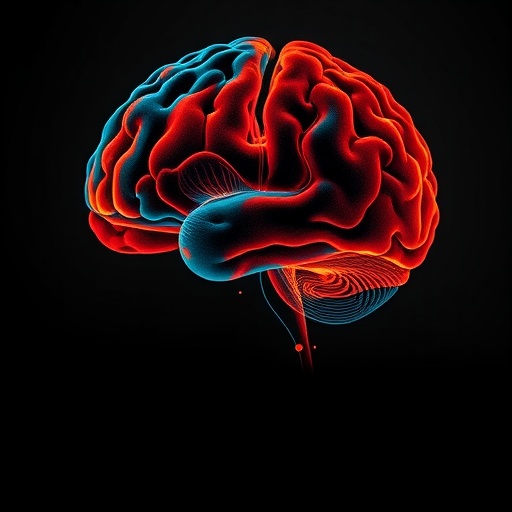
Image Credits: AI Generated

DOI: https://doi.org/10.1038/s41398-026-04293-y

Tags: brain network alterations in mental healthbrain regions involved in emotion regulationcognitive control disruptions in suicidal individualsfMRI studies of suicide riskfunctional connectivity changes in depressionneural mechanisms underlying suicidal thoughtsneural signatures of suicidal behaviorneuroimaging biomarkers for suicide preventionreproducibility of neuroimaging findings in mental healthstate vs. trait brain changes in suicidalitySuicidal ideation brain activitytask-based functional MRI meta-analysis
Share26Tweet16
Previous Post

Isotopic evidence reveals thermogenic methane beneath Greenland’s North Ice Sheet

Next Post

Renowned expert leads University of Maryland program for sickle cell disease

Related Posts

Physical Activity Duration and Fragmentation Predict Future Dementia, Depression, Anxiety in UK Biobank
Psychology & Psychiatry

Physical Activity Duration and Fragmentation Predict Future Dementia, Depression, Anxiety in UK Biobank

July 28, 2026
Tactile Discrimination in Adolescents With Anorexia Nervosa: Behavioral and Brain Study
Psychology & Psychiatry

Tactile Discrimination in Adolescents With Anorexia Nervosa: Behavioral and Brain Study

July 28, 2026
Early Adversity Tunes Brain and Behavior’s Oxytocin Response in Altruism
Psychology & Psychiatry

Early Adversity Tunes Brain and Behavior’s Oxytocin Response in Altruism

July 28, 2026
Brain Networks and Peripheral Biomarkers Identified for Major Depressive Disorder
Psychology & Psychiatry

Brain Networks and Peripheral Biomarkers Identified for Major Depressive Disorder

July 27, 2026
Connectome gradient changes linked to rumination and altered in depression
Psychology & Psychiatry

Connectome gradient changes linked to rumination and altered in depression

July 27, 2026
Gut microbiome shift links anhedonia and sensation-seeking in prodromal Parkinson’s mice
Psychology & Psychiatry

Gut microbiome shift links anhedonia and sensation-seeking in prodromal Parkinson’s mice

July 27, 2026
Next Post
Renowned expert leads University of Maryland program for sickle cell disease

Renowned expert leads University of Maryland program for sickle cell disease

  • Mothers who receive childcare support from maternal grandparents show more

    Mothers who receive childcare support from maternal grandparents show more parental warmth, finds NTU Singapore study

    27656 shares
    Share 11059 Tweet 6912
  • University of Seville Breaks 120-Year-Old Mystery, Revises a Key Einstein Concept

    1061 shares
    Share 424 Tweet 265
  • Bee body mass, pathogens and local climate influence heat tolerance

    682 shares
    Share 273 Tweet 171
  • Researchers record first-ever images and data of a shark experiencing a boat strike

    546 shares
    Share 218 Tweet 137
  • Groundbreaking Clinical Trial Reveals Lubiprostone Enhances Kidney Function

    531 shares
    Share 212 Tweet 133
Science

Embark on a thrilling journey of discovery with Scienmag.com—your ultimate source for cutting-edge breakthroughs. Immerse yourself in a world where curiosity knows no limits and tomorrow’s possibilities become today’s reality!

RECENT NEWS

  • Milk’s Nutritional Profile Changes With Production Methods and Seasons
  • Mechanoresistant cancer cells reveal survival strategies in high-stress environments
  • Scientists Reshape Molecules Internally to Build New Chiral Nanocarbons
  • Largest study finds genetic risk factors linked to fibromyalgia

Categories

  • Agriculture
  • Anthropology
  • Archaeology
  • Athmospheric
  • Biology
  • Biotechnology
  • Blog
  • Bussines
  • Cancer
  • Chemistry
  • Climate
  • Earth Science
  • Editorial Policy
  • Marine
  • Mathematics
  • Medicine
  • Pediatry
  • Policy
  • Psychology & Psychiatry
  • Science Education
  • Social Science
  • Space
  • Technology and Engineering

Subscribe to Blog via Email

Enter your email address to subscribe to this blog and receive notifications of new posts by email.

Join 5,146 other subscribers

© 2025 Scienmag - Science Magazine

Welcome Back!

Login to your account below

Forgotten Password?

Retrieve your password

Please enter your username or email address to reset your password.

Log In
No Result
View All Result
  • HOME
  • SCIENCE NEWS
  • CONTACT US

© 2025 Scienmag - Science Magazine

Discover more from Science

Subscribe now to keep reading and get access to the full archive.

Continue reading
